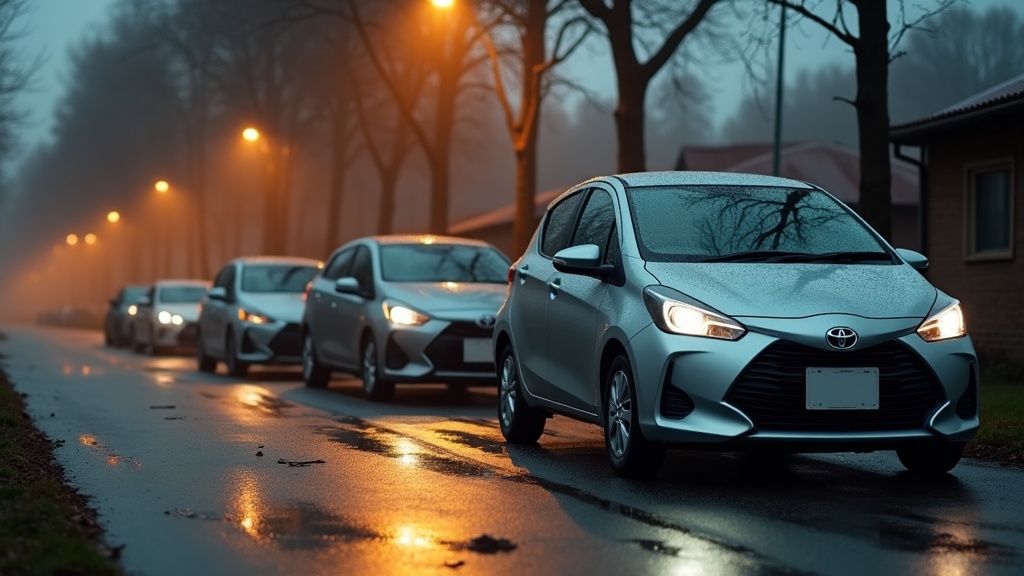
Japanese hybrid prices are softening — here's what that means for buyers
The NZ Angle
The Clean Car Discount ended in late 2023, and its ghost has been haunting the used-car market ever since. For a while, prices on Japanese hybrid imports held firm — dealers and private sellers alike were reluctant to let go of values that had been artificially inflated during the subsidy years. But by autumn 2026, that psychological floor is cracking. Wholesale clearance prices on Aquas, Prius C units, and Axio hybrids have been drifting down at Christchurch and Auckland yards, with some trade-in appraisals running 8–12% below equivalent stock from eighteen months ago. Part of this is the broader EV recalibration happening across the NZ market. Buyers who were bracing for an electric future — and paying hybrid premiums accordingly — are reassessing. Range anxiety on cheap used EVs, patchy charging infrastructure outside main centres, and the end of government incentives have all pushed some buyers back toward petrol, which at current pump prices around $2.50–$2.80 a litre is less punishing than it was two years ago. That swing back to petrol has taken some heat out of hybrid demand. NZTA compliance costs on freshly imported Japanese stock have also crept up, tightening margins for importers and putting gentle downward pressure on retail pricing. The opportunity for buyers is real, but it won't last indefinitely.
Autumn 2026 is showing real price movement in the Japanese hybrid wholesale market. Aquas, Priuses and Axio hybrids are all easing back, and the reasons go deeper than seasonal quiet.
The wholesale used-car market in New Zealand tends to move in slow tides rather than sharp waves. Autumn 2026 is one of those moments where, if you're watching the numbers closely, you can see the tide pulling back on Japanese hybrid stock. The question worth asking is whether this is a seasonal dip or something with more structural weight behind it.
From what's moving through wholesale yards in Christchurch and Auckland right now, the honest answer is: a bit of both.
The Aqua and Prius C are feeling it most
The Toyota Aqua has been a workhorse of the NZ used import market for years. Fuel-efficient, compact, WoF-friendly, cheap to run. During the Clean Car Discount years, prices on clean, low-kilometre Aquas pushed well above where fundamentals justified them. Buyers were paying for subsidy-era scarcity and the expectation that hybrid running costs would keep mattering as petrol climbed.
Petrol didn't keep climbing the way people expected. And the discount is gone.
Wholesale Aqua pricing has softened noticeably over the past two quarters. Units that were clearing at $14,500–$16,000 at the height of hybrid demand are now moving at $12,500–$14,000 for equivalent spec and kilometres. That's not a crash. But for a car in that price bracket, a $2,000 swing is meaningful — both for dealers trying to maintain margin and for retail buyers who might now find value that simply wasn't there eighteen months ago.
Prius C units and the Axio hybrid are tracking similarly. The Axio in particular has always been a practical, unfussy family car — the hybrid version added running-cost appeal without much driving excitement, which is fine, because nobody is buying an Axio hybrid for the driving excitement. Those are softening too, with trade-in appraisals drifting back to levels that feel more honest for what the car actually is.
Why buyers are recalibrating
For a stretch there, a certain type of NZ buyer was mentally preparing for an electric future and pricing their vehicle decisions accordingly. Hybrids felt like a sensible hedge — lower emissions than a straight petrol car, but none of the range anxiety or charging infrastructure questions that come with a full EV. Premiums made sense in that frame.
The frame has shifted. Cheap used EVs have flooded the market — Leafs, Aqua EVs, Chinese-branded newcomers — and the early adopters who bought them are discovering that real-world range on an older battery pack and a South Island winter are not a comfortable combination. Some of those buyers are retreating. Not all the way to petrol, but certainly away from the aggressive pro-EV position they held two years ago.
At the same time, pump prices have stabilised rather than surged. Running a late-model petrol hatchback at $2.60 a litre is not painless, but it's manageable in a way that changes the hybrid value equation slightly. The fuel savings are still real, but they're no longer buying a premium the way they were.
NZTA compliance costs on fresh Japanese imports have also edged up, adding friction for importers who were counting on tight margins and volume. That pressure filters through to retail pricing as importers look to move stock faster and at slightly keener numbers.
What the wholesale movement tells retail buyers
Wholesale price softening doesn't translate immediately or evenly to retail. Dealers absorb some of the movement in margin, and plenty of yards are still holding retail prices close to where they were, banking on buyers not noticing that the underlying cost of that stock has dropped. That's normal. It's also worth being aware of.
For a buyer actively shopping a Japanese hybrid right now, the leverage is better than it's been for a couple of years. A clean, compliance-ready Aqua at $13,500–$14,500 retail is fair value in this market. A Prius C with genuine service history and under 80,000 kilometres at $15,000 is the kind of deal that wasn't on offer in 2024.
The Axio hybrid remains underrated for what it costs to run. Not a car with much personality — the steering is light, the body rolls more than you'd want in a hurry, and the CVT does its usual disappearing act when you want a response. But for a family running up kilometres on flat Canterbury roads, the fuel economy is genuine and the reliability record is solid.
Autumn buying windows exist for a reason. Discretionary buyers hold off, stock moves slower, and wholesale softness has more chance of reaching the retail ticket price. Whether the hybrid softening extends through winter or snaps back as supply tightens again depends on what the import pipeline looks like and whether EV sentiment shifts again.
For now, the numbers are moving in the buyer's favour. That doesn't happen often enough to ignore.
By Paul Gray. See our editorial standards or email sales@premiumwholesalecars.co.nz with corrections.
More automotive
What EV owners actually pay per kilometre under the new RUC rates
NZTA's updated light EV RUC rates are now in effect. Here is what Leaf and Ioniq 5 owners will pay per kilometre in 2026, stacked against a comparable petrol car on real Canterbury distances.
EV road user charges are here: do the numbers still work for Leaf and Aqua buyers?
NZTA's updated RUC rates for light electric vehicles change the cost equation. We work through what Leaf and Aqua owners in Canterbury actually pay per kilometre now.
EV running costs after the July 2026 RUC change: do the numbers still add up?
NZTA's updated RUC rates for light EVs took effect 1 July 2026. Here's what Christchurch Leaf and Prius Prime owners are now paying per kilometre, and whether the used-EV case still holds.