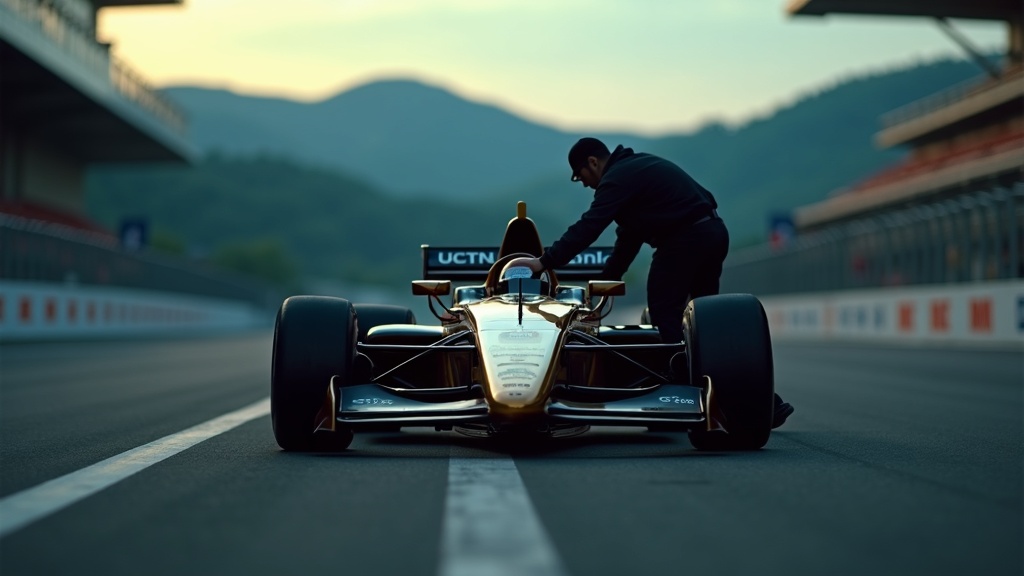
Is TRS still pulling the international field it needs to survive?
The NZ Angle
The Toyota Racing Series was built on a simple premise: run a competitive field of Formula Ford-graduated Kiwis alongside funded European and American juniors across five rounds in the New Zealand summer, give everyone 18 races on circuits like Hampton Downs and Ruapuna, and let the results speak for themselves. For a long time it worked. Drivers who came here in January went back to Europe in March with data, confidence, and lap times that meant something to team managers at the F3 and F2 level. Liam Lawson is the obvious endpoint of that pipeline, and Scott Dixon ran open-wheelers in New Zealand long before TRS formalised the pathway. The series matters to local motorsport because it keeps single-seater infrastructure alive in a country where the category would otherwise struggle to fund itself year-round. Hampton Downs in particular depends on events like this to justify its FIA-grade circuit investment. If international entries thin out, the grid shrinks, the racing gets processional, and the reason for international teams to bother sending a driver here disappears. That is a self-reinforcing problem, and the series organisers know it.
With Liam Lawson in Formula 1 and the global junior single-seater ladder reshuffling, the Toyota Racing Series faces real questions about whether it still draws the overseas depth that justified its reputation.
Twelve drivers on a grid is not a crisis, but it is a signal worth reading carefully. The Toyota Racing Series has operated at varying field sizes since it launched in 2005, and the stronger vintages, the ones that produced results European teams noticed, tended to run 20 or more cars. The 2023 and 2024 seasons came in below that. Not dramatically, but consistently enough that the trend is worth examining on its own terms.
The series was always an arbitrage play for international junior programmes. New Zealand in January offers sealed, FIA-grade circuits, consistent late-summer conditions, and 18 races compressed into five weekends. For a driver transitioning from karting or Formula 4 into a proper aero car, that mileage is hard to replicate anywhere else in the southern hemisphere off-season. The Tasman Motor Racing Festival used to serve a similar function before TRS formalised the model. What made TRS specifically valuable was the quality of the opposition: funded European F3 prospects running against each other away from their home championship pressure, which meant genuine data on relative pace rather than a glorified test session.
What has actually changed
The junior single-seater ladder in Europe has been restructured repeatedly since TRS found its feet. The FIA F3 championship now runs a longer calendar, F4 series have multiplied across Germany, Italy, Spain, and the UK, and the pathway from karting to Formula 2 is more formalised than it was a decade ago. The consequence is that January in New Zealand competes directly with pre-season testing schedules in Europe, simulator programmes at junior academies, and fitness camps that team managers increasingly treat as mandatory. A Red Bull or Ferrari junior driver in 2024 has more calls on their January than they did in 2012.
That does not make TRS redundant, but it does make recruitment harder. The series has leaned more heavily on domestic entries and Australian drivers to fill grids, which changes the competitive reference point. A New Zealand driver winning a thinly-attended TRS round is not the same calling card it was when they were beating a field of properly funded Europeans. Team managers in Europe understand grid composition, and they look at it.
Lawson is the clearest illustration of what TRS can produce at its best. He ran the series in 2019, took the title, and used that result as a platform for the European campaign that eventually put him at Red Bull. But Lawson was also exceptional in ways that make him a poor baseline for what TRS can reliably deliver. The question for the series is less about whether it can produce another Lawson, and more about whether it can remain the venue where the next Lawson gets found.
The economics underneath it
Running a car in TRS costs roughly $150,000 to $200,000 NZD for a full season depending on the team and the support package. For a European junior programme, that is comparable to a mid-tier F4 campaign in a secondary series. The difference is the New Zealand dollar exchange rate, the travel costs for a northern hemisphere driver and their family, and the logistical overhead of shipping equipment or relying on local suppliers. When the New Zealand dollar is weak against the euro, TRS becomes better value. When the cost-of-travel component rises, as it has since 2022, the arithmetic shifts.
Local teams at Hampton Downs and on the South Island rounds can absorb some of that through existing infrastructure, but the series cannot fully offset the access costs for an international family paying their own way. Scholarships help at the margins. What the series actually needs is factory-level junior programme commitments from manufacturers or academies prepared to treat TRS as a genuine part of their development calendar rather than an optional warm-weather bonus.
Toyota New Zealand's continued backing of the series is the reason it still exists in its current form. Pull that and the economics collapse almost immediately. The series is not in a position to survive on entry fees alone at current grid sizes.
Whether the model still holds
The argument for TRS has always been the race count. Eighteen races in five weeks produces more racecraft data than most junior drivers accumulate in a full European F4 season. Overtaking, tyre management across different compounds, qualifying pressure, reverse-grid starts: the format was designed to accelerate development in ways that a test-session-heavy northern hemisphere pre-season cannot replicate.
That argument is structurally sound. It does not require a massive grid to be true. But it does require a grid with enough genuine pace variation that the racing teaches something. If the fastest five cars are lapping several seconds clear of the rest, the front runners stop learning and the back markers lose confidence. The competitive window needs to be tight enough that position changes in the last five laps reflect real racecraft rather than attrition.
The series has delivered that in recent seasons at its best rounds. Hampton Downs in particular tends to produce close racing because the circuit rewards mechanical grip over raw power, which compresses the field. Ruapuna is less forgiving and tends to sort the grid more harshly.
Whether TRS can rebuild international field depth without a structural change to how it recruits and prices entry is the real question facing the series heading into the next planning cycle. The product on track is defensible. The pipeline feeding it needs work.
By Paul Gray. See our editorial standards or email sales@premiumwholesalecars.co.nz with corrections.
More motorsport
Lawson at Red Bull: what the 2026 standings actually say
Liam Lawson is six months into his Red Bull Racing seat. The numbers are in, the pressure is real, and the question of whether he belongs there has a clearer answer now.
Lawson at mid-season: is the Racing Bulls seat delivering?
After the Austrian Grand Prix, Liam Lawson's 2026 campaign sits at a crossroads. We assess the numbers, the car, and whether the step up to a full-time seat is going to plan.
Van Gisbergen leads the way as Stanaway fights for points
Shane van Gisbergen sits near the top of the 2026 Supercars standings after the latest round, while Richie Stanaway continues to find his feet back in the series.