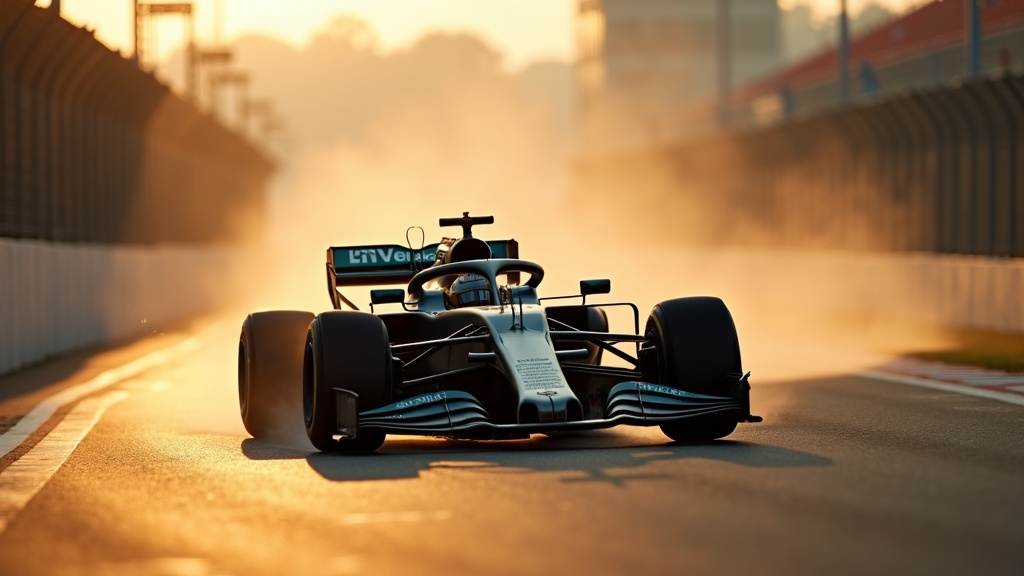
Lawson at mid-season: is the Racing Bulls seat delivering?
The NZ Angle
When Liam Lawson finally secured a full-time F1 drive for 2026, the reaction in New Zealand was measured optimism rather than celebration. Anyone who had followed his career through the Hitech GP years, the DTM cameos, and those sharp substitute appearances at AlphaTauri and Racing Bulls knew the talent was there. The question was always whether the machinery would give him a fair surface to work on. Scott McLaughlin took years to find his right series in IndyCar before the results reflected his ability. Lawson's situation is structurally similar: a car that is neither backmarker nor genuine contender, a teammate relationship that carries its own political weight, and a points structure that punishes midfield inconsistency more than it rewards midfield excellence. For Kiwi fans tracking the season through early-morning Sky Sport replays, the Austrian weekend offered something useful: enough data to start separating what is Lawson's problem from what belongs to the package. The RB team has historically operated in the shadow of the Red Bull senior programme, which affects development priority and sometimes driver psychology. Understanding that context is how you read the timing sheets honestly, rather than through either frustration or blind loyalty.
After the Austrian Grand Prix, Liam Lawson's 2026 campaign sits at a crossroads. We assess the numbers, the car, and whether the step up to a full-time seat is going to plan.
Lap 34 of the Austrian Grand Prix told you most of what you needed to know about where Lawson's season sits right now. Running in the points, the RB car began losing time through the Zeltweg sweepers at a rate that put him around four tenths per lap off the pace of the cars immediately ahead. That is not a driver error delta. That is a mechanical grip story, and it had been building since the sprint weekend opened on Friday.
Through the first half of 2026, Lawson has scored points in five of eleven rounds. On raw numbers, that puts him roughly in the position the team expected to be competitive for: somewhere between eighth and twelfth in the constructors' table, depending on which way Honda's power unit development lands in the second half of the year. The problem is that five points finishes, taken in isolation, flatter a campaign that has had two genuinely strong weekends and three that were salvage jobs.
What the timing sheets actually show
In qualifying, Lawson has been within two tenths of his teammate's time on six occasions. That is the band you want to be in when you are still learning a car's setup language. The circuits where he has gone more than three tenths down are the ones with long, high-speed radius corners: Bahrain, Imola, and now Austria. The pattern points to an aero balance issue the team has not fully resolved for his driving style, specifically a tendency toward understeer on corner entry that costs him the ability to rotate the car and get to throttle early.
The fix for that is not driver technique. It is front wing angle, suspension geometry, and weight distribution. When Lawson has said publicly that the car "needs a bit more from the front", that is a precise technical statement, not a complaint. The question is how quickly RB can act on it, and whether they are prioritising his feedback or running a compromise setup that suits the car across two drivers.
His race pace on the other side of the data is genuinely good. Tyre management over a long stint, particularly on the medium compound, has been one of the cleaner parts of his game. At Suzuka he ran an extended middle stint four laps longer than strategy called for without significant degradation, which allowed the undercut timing to work in his favour. That is a driver who understands the thermal window of a tyre and is disciplined enough to operate within it under pressure.
The teammate equation
The internal benchmark matters here. His teammate is not a benchmark to dismiss, and Lawson has not been dismissing him. On the circuits where the aero balance suits both drivers, the gap has been narrow enough that strategy and traffic have often decided who comes out ahead rather than raw pace. That is not a comfortable situation for either driver, but it is an honest one.
What is harder to quantify is the development bandwidth that gets allocated between them. The senior Red Bull programme influences how RB's engineering resources move through the season. When Max Verstappen's car needs a floor update, the supply chain reflects that. Lawson and his engineers are working within a system that was not designed around their needs, and that shapes what is achievable on any given weekend.
This is not a new dynamic for teams in the Red Bull structure. It was the same for Daniil Kvyat, for Pierre Gasly in his first stint, and for Yuki Tsunoda across multiple seasons. Some of those drivers broke through it and some did not. The difference with Lawson is that he has less room to manage a slow start than any of them did, because the 2026 regulation cycle is already set and the next driver market movement is closer than it looks.
Austria as a reference point
The Austrian weekend did not resolve the question of whether Lawson can be a consistent points scorer in this car. It sharpened the question. He qualified twelfth, which is where the car was on the day. He finished ninth, which required clean execution and one decent strategy call. That is a points haul from a weekend where the car was not fast enough to earn points on outright pace alone.
On balance, that is what you want to see from a driver in his first full season at this level: maximising a difficult weekend rather than wasting it. The concern is that if the aero balance issue persists through the summer circuits, the difficult weekends will start to outnumber the strong ones.
The next two rounds will be informative. Silverstone's mid and high-speed sections will stress the same corners that hurt him in Austria. If the team arrives with setup changes that address the front-end behaviour, and if Lawson can show a qualifying lap that puts him inside the top ten, the season looks different. If not, the second half of 2026 becomes a conversation about next year rather than this one.
By Paul Gray. See our editorial standards or email sales@premiumwholesalecars.co.nz with corrections.
More motorsport
Lawson at Red Bull: what the 2026 standings actually say
Liam Lawson is six months into his Red Bull Racing seat. The numbers are in, the pressure is real, and the question of whether he belongs there has a clearer answer now.
Van Gisbergen leads the way as Stanaway fights for points
Shane van Gisbergen sits near the top of the 2026 Supercars standings after the latest round, while Richie Stanaway continues to find his feet back in the series.
Van Gisbergen leads the Kiwi charge as Supercars hits Taupo
Shane van Gisbergen delivered a strong result at the most recent Supercars round, keeping his title hopes alive while the wider New Zealand contingent had mixed fortunes.