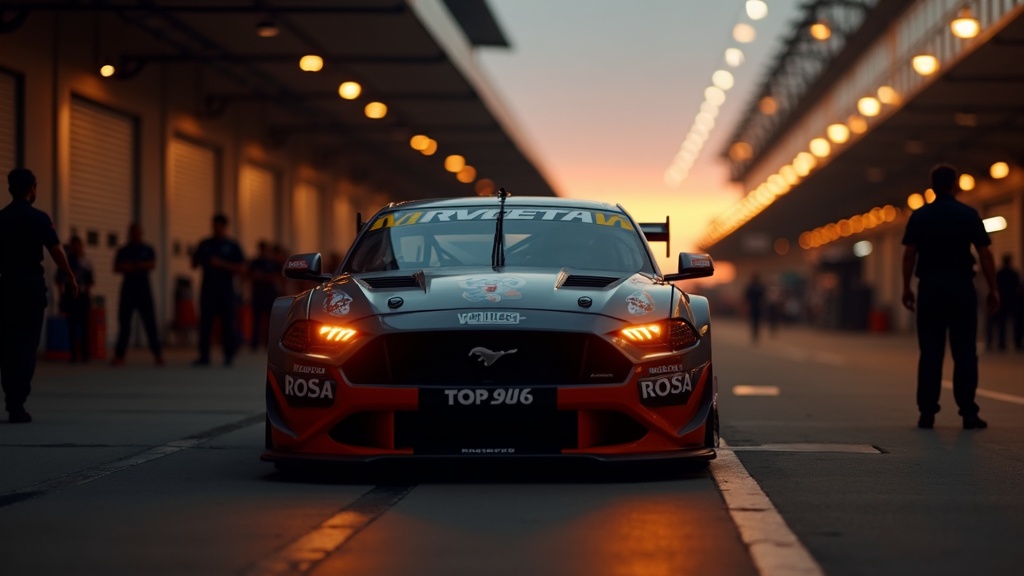
SvG's wildcard plan puts Supercars' rulebook under the microscope
The NZ Angle
For Kiwi fans, SvG has always been ours even when he's been racing on the other side of the Tasman. The Pukekohe years built his reputation, and the Hampton Downs rounds of the Repco Supercars Championship still drew serious local interest every time the calendar swung through. Now he's deep into NASCAR Cup with Trackhouse Racing, and the occasional wildcard Supercars appearance is how he keeps a foot in both worlds. That's fine in principle. The problem is that Supercars is a championship series with prize money, manufacturer backing, and careers on the line, and its wildcard provisions were never written with a scenario like this in mind. A driver who has won three Supercars titles, who knows every circuit better than most full-timers, and who currently has the best tin-top credentials on the planet is not the same proposition as a promising local driver getting a one-off shot at Bathurst. The rules don't distinguish between those two things, and that gap matters. For any young Kiwi driver eyeing a Supercars seat, say a Liam Lawson generation-type coming back to domestic tin-tops, the precedent SvG sets about how wildcards can be used will shape what that path actually looks like.
Shane van Gisbergen's expanded wildcard appearances in 2026 are forcing a genuine conversation about whether Supercars' entry rules were built for a driver of his calibre.
Shane van Gisbergen is going to line up in selected Supercars rounds in 2026. Not just Bathurst, where wildcards have a long and mostly accepted tradition, but a handful of championship rounds across the season. And the paddock is starting to ask a question that probably should have been asked earlier: what are the wildcard rules actually for?
Supercars has always had a wildcard provision. The intent was straightforward enough. Give manufacturers a way to run a development driver. Let a proven talent make a one-off appearance to generate interest. Put a crowd favourite in a car for the big event. None of those scenarios require much scrutiny because none of them fundamentally threaten the championship order.
SvG is a different matter entirely.
The problem isn't that he's good. The problem is how good.
Three Supercars titles. A Bathurst 1000 record that still stands up against anyone who's turned a lap at Mount Panorama. And right now, active and competitive in NASCAR Cup, which is the hardest oval series in the world and not a bad indicator that the reflexes haven't gone soft. When he steps into a Camaro for a wildcard round, he is not a guest. He is one of the fastest drivers in the field, full stop.
That creates a real tension. The full-time championship contenders, the Will Davisons and Cam Waters and whoever is leading the points by mid-season, are grinding through every round, managing tyres, managing damage, managing the politics of a long campaign. SvG turns up fresh, with none of that accumulated baggage, in a well-resourced car from Triple Eight, and starts scoring points directly against them.
Wildcard points have always counted in Supercars. That was a deliberate choice and it has its logic. If you're fast enough to be on the grid, you're fast enough to affect the championship. But the assumption built into that logic was that wildcard entries would be rare, limited in number, and fielded by drivers who were not quite at the front of the field anyway. None of that applies here.
You can feel the problem when you think about what it means on track. SvG turns in hard, the front end bites, the car settles the way he needs it to, and he's running at a pace that puts him in the mix with the series leaders inside the first stint. He doesn't need the rounds to go well for his own championship. He has nothing to lose. That changes how he can race, and it's a genuine disadvantage for anyone fighting him for points that actually matter to their season.
What the rules were built for
Supercars' wildcard regulations were written for a paddock that doesn't exist anymore. The category has tightened its field, consolidated its manufacturer support, and become a cleaner championship than it was a decade ago. The old days of five or six wildcard entries at Bathurst from semi-professional teams with varying ambitions are gone. What's left is a pretty tight grid of serious professional outfits.
Into that, you're now inserting a driver who competes at the absolute peak of international tin-top racing. The rulebook has no mechanism to account for that. There's no restriction on how many rounds a wildcard can enter. There's no points cap or exclusion for drivers who are full-time competitors in another major series. There's no weighting that treats a three-time champion differently from a debutant.
That's not SvG's fault. He's entitled to use the rules as they exist. Triple Eight is entitled to run him. But Supercars as a category should probably be honest with itself about whether those rules reflect what it actually wants the wildcard provision to do.
The most obvious fix is also the most politically difficult: cap wildcard points eligibility at a certain number of rounds, or exclude drivers who are full-season competitors in a Tier 1 international series. Either approach solves the competitive distortion without banning wildcards outright. But it requires Supercars to acknowledge that not all wildcards are equal, which is a harder position to hold when the driver in question is popular, commercially valuable, and genuinely brings eyeballs to the broadcast.
The championship integrity question
If the 2026 title comes down to a narrow margin and SvG has taken points off the second-placed driver at two or three rounds, the conversation is going to be uncomfortable. Not because he didn't deserve those points on merit, but because the championship contender was racing a full season and SvG was not. The effort required to win a Supercars title is cumulative. Wildcards, by definition, skip most of that.
Supercars has worked hard to rebuild its credibility as a genuine championship series. The Bathurst 1000 wildcard tradition is worth keeping. A few selected rounds from the best driver in the world is a different thing, and the category's rules should probably be able to tell the difference between them.
By Paul Gray. See our editorial standards or email sales@premiumwholesalecars.co.nz with corrections.
More motorsport
Lawson at Red Bull: what the 2026 standings actually say
Liam Lawson is six months into his Red Bull Racing seat. The numbers are in, the pressure is real, and the question of whether he belongs there has a clearer answer now.
Lawson at mid-season: is the Racing Bulls seat delivering?
After the Austrian Grand Prix, Liam Lawson's 2026 campaign sits at a crossroads. We assess the numbers, the car, and whether the step up to a full-time seat is going to plan.
Van Gisbergen leads the way as Stanaway fights for points
Shane van Gisbergen sits near the top of the 2026 Supercars standings after the latest round, while Richie Stanaway continues to find his feet back in the series.