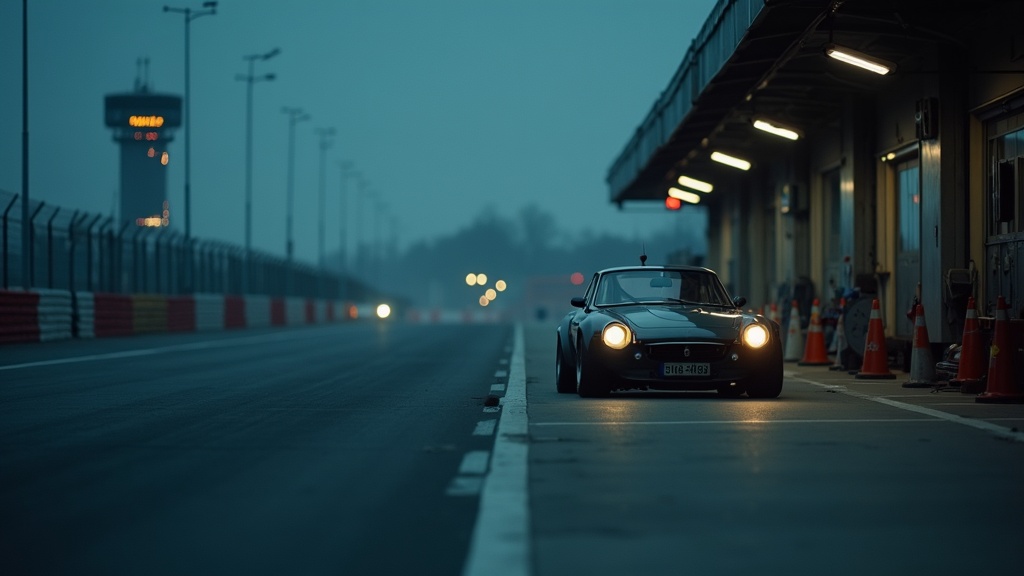
Teretonga's 2026 calendar is set, but the costs are biting
The NZ Angle
Teretonga Park sits on the southern edge of Invercargill, and for decades it has been the entry point for South Island drivers who go on to make noise at a national level. The track has produced competitors who've worked their way through the Toyota Racing Series, the NZ Rally Championship and beyond. None of that happens without a functioning club calendar underneath it, and that calendar runs almost entirely on volunteer labour and entry fees that have to stay within reach of someone driving a half-prepared hatchback on a weekend budget. The Southland Car Club puts in the hours to make it work, but the numbers they're working with in 2026 are tighter than they've been for several years. Fuel costs for generators, safety vehicles and officials' transport don't move in isolation from pump prices. Tyre suppliers have repriced across the board. Public liability and event insurance has gone up sharply since Covid reshuffled the underwriting market. The people most exposed to all of this aren't the club itself — it's the entry-level competitors who absorb every cost increase through their own pocket before they ever get to the start line.
Volunteer-run club racing at Teretonga faces a harder financial reality heading into 2026, with fuel, tyres and insurance all pulling in the same direction.
There are probably 40 people who make a Teretonga race day happen, and most of them aren't getting paid. Scrutineers, marshals, timekeepers, the people who set up the pit lane barriers at 7am and pull them down again at 5pm. That's the foundation the South Island grassroots calendar sits on, and heading into 2026, that foundation is being asked to hold more weight than usual.
The Southland Car Club confirmed their 2026 calendar earlier this year. Four club days, two championship rounds, the usual mix of saloons, sports sedans and the Formula First cars that tend to draw the youngest drivers on the grid. On paper it looks like a normal season. The reality underneath it is that every line item in the event budget has moved upward over the past two years, and entry fees can only follow so far before you start losing the competitors the whole thing is built around.
What's actually gone up
Fuel is the obvious one, but it's not just the fuel people put in their race cars. Running a safety car and a medical vehicle for a full race day, keeping generators going for timing and PA systems, transporting equipment — that's a meaningful operating cost for a volunteer club with no commercial revenue stream. When pump prices climb, the event costs climb before a single competitor has paid their entry.
Tyres are the harder conversation. The entry-level classes at Teretonga — the classes that matter most for driver development — run on control or near-control tyre specs precisely to keep costs manageable. But tyre prices at retail have moved significantly since 2022, and the suppliers haven't absorbed that. A set of Toyos or Dunlops that was $X two seasons ago is meaningfully more expensive now, and for a driver doing two or three events a season on a limited budget, that's the difference between racing and not racing.
Insurance is the one that gets talked about least and hurts the most. Public liability cover for motorsport events was already expensive. After the underwriting market tightened post-Covid, clubs across New Zealand found themselves paying considerably more for the same cover, or in some cases being asked to demonstrate additional safety infrastructure just to get a quote. Teretonga is a permanent circuit with a reasonable safety record, which helps. But the premium still goes up, and someone has to carry it.
What it means for the drivers coming through
The South Island has a history of producing drivers who punch well above the region's population. Some of that comes down to the culture — farming families comfortable with mechanical things, a general lack of fuss about getting your hands dirty. A lot of it comes down to venues like Teretonga giving drivers a place to start where the cost of entry is low enough that raw talent can still get to the grid.
If entry fees at club level track upward too aggressively, the filter changes. You start selecting for families with money rather than drivers with ability. That's not a new problem in motorsport — it's as old as the sport itself — but there's a tipping point where the grassroots scene stops being a genuine development pathway and becomes something closer to a weekend hobby for people who can already afford it.
The drivers who eventually find their way into the Toyota Racing Series or the NZ Rally Championship mostly don't arrive there from nowhere. They've done the club days, they've learned the car control on circuits like Teretonga and Ruapuna, they've made the cheap mistakes at low speed before anyone important was watching. That pipeline depends on the entry level staying accessible.
The Southland Car Club is doing what volunteer organisations do — absorbing what they can, trimming where possible, leaning on the goodwill of people who show up regardless. But goodwill doesn't offset insurance invoices indefinitely.
Where this goes
The 2026 calendar is holding. That matters, because there were genuine questions after a couple of difficult post-Covid seasons about whether some of the smaller South Island clubs could sustain a full calendar at all. Teretonga getting four rounds confirmed is not nothing.
But the cost trajectory is real and it isn't reversing. The conversation the broader motorsport community in New Zealand needs to have — Motorsport NZ included — is about what structural support looks like for volunteer-run venues doing the developmental work that the whole pyramid depends on. Sponsorship models that work at the national level don't translate down to club racing. The economics are just different.
For now, the marshals will still show up at 7am, the scrutineers will still check the roll cages, and the Formula First cars will still go sideways through the hairpin in front of a crowd of about 200 people who drove down from Invercargill on a Saturday morning because they love it. That's worth protecting.
By Paul Gray. See our editorial standards or email sales@premiumwholesalecars.co.nz with corrections.
More motorsport
Lawson at Red Bull: what the 2026 standings actually say
Liam Lawson is six months into his Red Bull Racing seat. The numbers are in, the pressure is real, and the question of whether he belongs there has a clearer answer now.
Lawson at mid-season: is the Racing Bulls seat delivering?
After the Austrian Grand Prix, Liam Lawson's 2026 campaign sits at a crossroads. We assess the numbers, the car, and whether the step up to a full-time seat is going to plan.
Van Gisbergen leads the way as Stanaway fights for points
Shane van Gisbergen sits near the top of the 2026 Supercars standings after the latest round, while Richie Stanaway continues to find his feet back in the series.