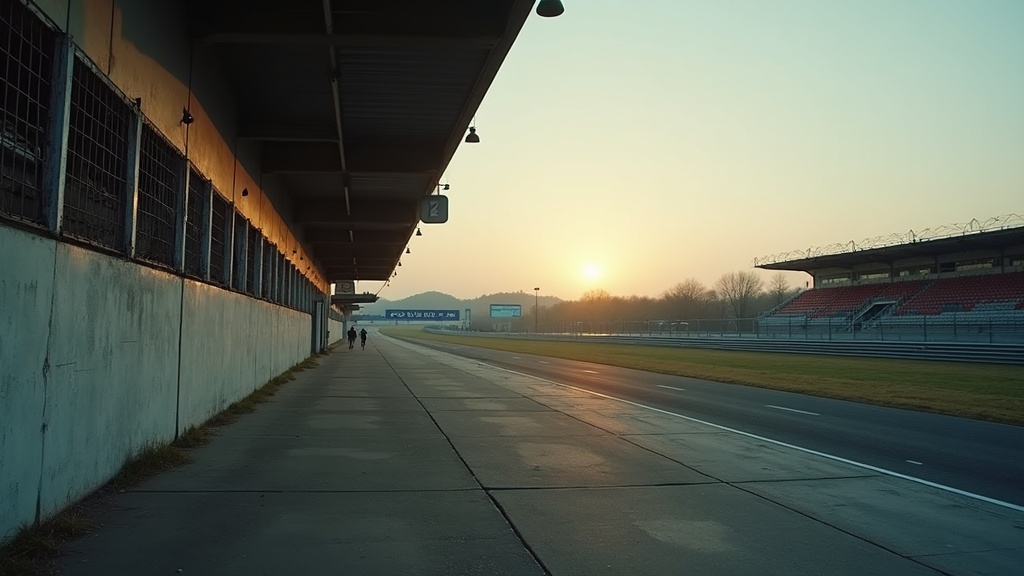
Teretonga's future in doubt, and grassroots racing would feel it most
The NZ Angle
Teretonga Park in Invercargill has operated under Motorsport New Zealand's circuit licensing framework since the 1950s, and the renewal process for older facilities carries real cost. Upgrading barriers, runoff areas, and timing infrastructure to meet current MNZ standards is not cheap, and for a club-run circuit in a region with a modest population base, the funding arithmetic has never been straightforward. The Southland Car Club, which manages the venue, has historically relied on a mix of club membership fees, event income, and occasional council support, none of which has kept pace with the cost of maintaining a circuit that MNZ will periodically scrutinise for compliance. For the Toyota Racing Series, Teretonga has provided a southern anchor in the calendar that gives South Island drivers, teams, and fans a round within driving distance. Removing that round would push the series further north, concentrating it around Hampton Downs and Highlands at a time when the TRS is already working hard to justify its relevance to international single-seater pathways. For club-level competitors running everything from Formula Ford to production saloons, Teretonga is often the nearest sealed permanent circuit. That matters enormously when you are trying to develop a young driver on a limited budget.
Southland's Teretonga Park faces funding pressure and an ageing circuit licence. Losing New Zealand's southernmost permanent circuit would cost more than a venue.
At the 1954 New Zealand Grand Prix, held at Teretonga Park, Reg Parnell drove a Thin Wall Special Ferrari around a tight little circuit in Invercargill that most of the international paddock had never heard of. The circuit survived that era, survived the shift away from Formula Libre, survived the lean years when circuit racing in provincial New Zealand seemed permanently on the back foot. What it faces now is quieter and harder to dramatise than a cancelled grand prix, but no less serious.
Teretonga's circuit licence is ageing, and the funding required to renew it to current Motorsport New Zealand standards sits well beyond what the Southland Car Club can readily raise. This is not a new problem, but it has become acute enough that the circuit's long-term future is a genuine question rather than a theoretical one.
What a circuit licence actually demands
MNZ's licensing framework requires facilities to meet graded safety standards covering barrier types, runoff distances, marshal post placement, and medical access. For a circuit built in the 1950s and incrementally modified since, full compliance is not a matter of ticking boxes. It means capital work. Armco replacement, tyre wall upgrades, potentially reprofiling sections where modern runoff expectations exceed what the land allows. The cost is real and it falls almost entirely on the operating club, because there is no national fund distributing money to regional circuits the way some European motorsport federations manage infrastructure grants.
Smaller circuits have faced this before. Pukekohe Park Raceway, for all its history, was eventually let go by the Auckland Car Club under the weight of venue costs and lease complications, though the circumstances there involved a landowner as much as compliance costs. The parallel is imperfect, but the underlying pressure is familiar: the economics of running a permanent circuit in New Zealand do not work unless you have consistent high-value events or substantial external subsidy.
Teretonga does not have the event density of Hampton Downs, which benefits from proximity to Auckland and a commercial operator willing to invest in the facility. It does not have the tourism draw of Highlands in Cromwell, which is backed by private money and a clear hospitality business model. What Teretonga has is geography, and geography turns out to be the one thing you cannot replicate.
The grassroots question
The South Island driver development pipeline runs through Teretonga more than is often acknowledged. A teenager running a Formula First car in Southland does not have Highlands as a realistic alternative for every club day. Highlands is a private facility with hire rates that reflect its commercial model. Hampton Downs is a four-hour drive from Invercargill across the Cook Strait. Ruapuna in Christchurch is closer, but still requires an overnight trip for most Southland competitors.
When Liam Lawson was coming through New Zealand Formula Ford in the late 2010s, circuits like Teretonga and Ruapuna provided volume. Laps. The thing that actually develops a racing driver is not one big event a year, it is repetition on a circuit you know, with competitors you see every month. Remove Teretonga and you remove the practical home circuit for an entire region's club-level drivers.
That effect compounds over time. Fewer southern drivers reach the Toyota Racing Series. The TRS itself, which has worked hard to maintain a South Island presence and has used Teretonga as a round in various recent calendars, loses the argument for a southern swing. The series concentrates in the North Island. South Island sponsorship interest, already harder to attract than Auckland-based backing, has even less reason to engage.
The TRS calendar and what it signals
The Toyota Racing Series has been through its own structural pressures over the past decade, moving between formats and struggling at times to attract the volume of international entries that once filled the grid. A Teretonga round historically gave the series something the North Island rounds could not: a genuine regional identity, a different circuit character, and a crowd that came because motorsport in Invercargill has deep roots rather than because a marketing campaign told them to.
Losing that round would not kill the TRS. The series would survive. But it would mean another step toward a national championship that exists primarily for the Auckland and Waikato market, which is a narrower version of what New Zealand motor racing is supposed to be.
The Southland Car Club has kept Teretonga going through periods when giving up would have been the easier call. Whether it can do so through another compliance cycle without external funding support from either MNZ, local council, or a commercial partner is the question sitting over the circuit right now. It is not a complicated problem in concept. It is a complicated problem in execution, because the money has to come from somewhere, and in provincial New Zealand, somewhere is a short list.
By Paul Gray. See our editorial standards or email sales@premiumwholesalecars.co.nz with corrections.
More motorsport
Lawson at Red Bull: what the 2026 standings actually say
Liam Lawson is six months into his Red Bull Racing seat. The numbers are in, the pressure is real, and the question of whether he belongs there has a clearer answer now.

Lawson at mid-season: is the Racing Bulls seat delivering?
After the Austrian Grand Prix, Liam Lawson's 2026 campaign sits at a crossroads. We assess the numbers, the car, and whether the step up to a full-time seat is going to plan.
Van Gisbergen leads the way as Stanaway fights for points
Shane van Gisbergen sits near the top of the 2026 Supercars standings after the latest round, while Richie Stanaway continues to find his feet back in the series.