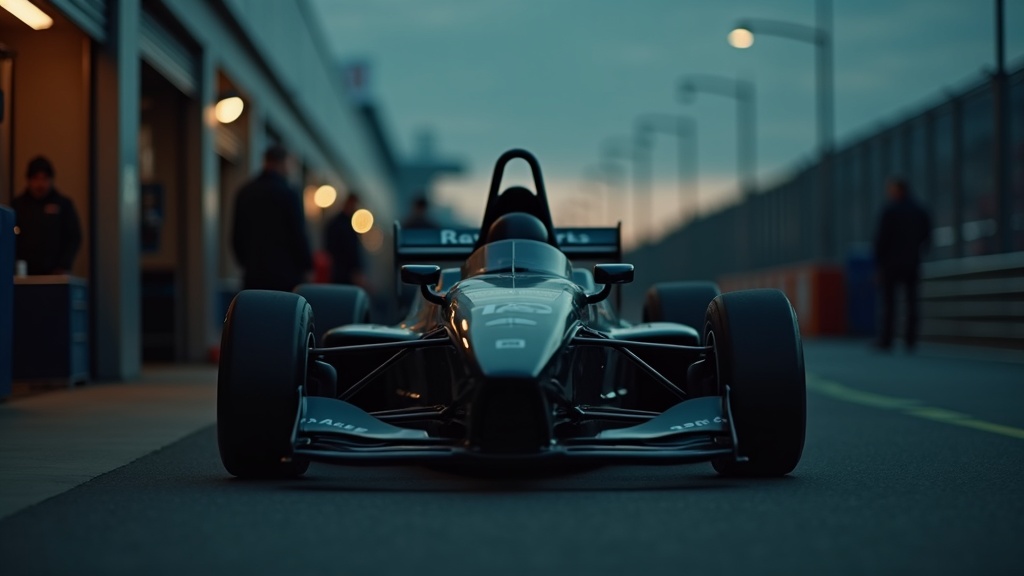
TRS 2026 graduates: who landed a drive and who's still chasing one
The NZ Angle
The Toyota Racing Series has spent years selling itself as a southern-hemisphere Formula 2 equivalent — a January showcase designed to put unknown faces in front of European team managers who want seat time data on cold-weather circuits in the off-season. For New Zealand, it has been a point of genuine pride. Liam Lawson came through here. So did a string of others who made it to F2, F3, and the edges of the F1 paddock. The series runs at Hampton Downs and Highlands primarily, and the quality of the circuits and the standardised FT60 chassis means the lap-time data is actually comparable year on year. That matters to teams doing due diligence. What the series cannot control is what happens after the prize-giving dinner — whether a driver's management has the connections, whether the budget follows the talent, or whether a strong TRS result just becomes a line on a CV that nobody in Maranello ever reads. The 2026 intake was well-credentialled on paper. How it has actually converted is a more complicated story, and it says something about what TRS can and cannot do for a young driver trying to climb out of the southern hemisphere.
The 2026 Toyota Racing Series season is done. A look at which graduates converted the exposure into real contracts and what the split reveals about the series as a pathway.
Six weeks on from the final round, the 2026 Toyota Racing Series field has scattered. Some have contracts. Some have announcements pending, which in junior motorsport usually means the money has not arrived yet. A few are already being quietly talked about as TRS returnees for 2027, which is the polite way of saying the overseas path has not opened.
The series winner, Brazilian Matheus Costa, had a Red Bull junior tag coming in and leaves with an F2 seat already confirmed. That one was never really about TRS doing the work. The infrastructure was already there. Costa used the series correctly — stayed clean, won convincingly, gave his backer nothing to worry about. The contract would have existed regardless, but a dominant TRS campaign tidied up the paperwork.
Behind Costa is where the picture gets murkier.
The ones who converted
Finnish driver Aleksi Ruotsalainen ran second in the championship and has since been linked to a Prema F3 seat for the European season. That one looks real. Ruotsalainen was the standout of the non-Red Bull drivers — fast on the softs, consistent in changeable conditions at Highlands, and composed when Costa put him under pressure at Hampton Downs. European teams watch the intra-field battles more than the outright results. A driver who can manage pressure, manage tyres, and manage a relationship with an experienced teammate is more useful to a team than someone who wins a spec series by three seconds from pole every weekend.
The other confirmed graduate is Argentinian Valentina Reyes, who parlayed a third-place championship finish and a strong relationship with the series' official data partner into a test role with a Spanish F3 outfit. A test role is not a race seat, but it is a foot in the door with a structured team and access to a European season programme. Whether it converts is on her. The infrastructure is there now in a way it was not before January.
Three confirmed outcomes from a twelve-driver field. That is the number that matters.
The ones still waiting
Of the remaining nine, four have public statements from management about ongoing negotiations. Two of those have been making the same statement since February, and the F3 calendar is filling up. The window is not closed, but it is narrowing. Junior categories in Europe do not hold seats open indefinitely for drivers who cannot confirm budget. The teams are not being difficult. They have their own cashflow to manage.
The New Zealand entry in this year's field, Christchurch-based Jed Harrington, finished seventh in the championship. Seventh is not nothing in TRS. The series is genuinely competitive at the front, and finishing in the top half against a field of funded Europeans and South Americans takes ability. But seventh did not produce a phone call from a European team, and his management has acknowledged that the focus is now on a domestic programme for 2026 while international options are explored for next year. That is the realistic path for a driver without a pre-existing European relationship.
Harrington's situation is not unique to TRS. It is the situation of every driver at the fifth-to-tenth level of a respected junior series: good enough to be taken seriously, not far enough ahead of the pack to be self-evidently worth the investment. The series gave him visibility. What it cannot manufacture is a management network that knows which team principals are looking, which teams have a budget gap at the right moment, and how to get a data package onto the right desk.
What the pattern actually says
Three graduates with confirmed programmes from twelve starters is roughly in line with what TRS has historically produced. Some years it is four, some years it is two. The series is not declining, but it is also not the automatic escalator it was sometimes marketed as in the early Lawson era, when the pathway felt cleaner and the F3 ecosystem was simpler.
The honest read is that TRS works best as a confirmation tool, not a discovery tool. Drivers who arrive with management connections, budget lines, and a pre-existing relationship with a European programme use the series correctly and leave with what they came for. Drivers who arrive hoping TRS exposure alone will generate overseas interest are frequently disappointed. The series puts you in the window. It does not guarantee anyone is looking.
For the New Zealand motorsport community, that distinction matters. Sending a talented domestic driver to TRS on a tight budget, hoping the results speak for themselves, is a gamble that the 2026 field illustrated clearly. The results have to be outstanding, the connections have to exist, and the timing has to be right. When all three align, TRS delivers. When they do not, a driver goes home with good lap times and no contract.
By Paul Gray. See our editorial standards or email sales@premiumwholesalecars.co.nz with corrections.
More motorsport
Lawson at Red Bull: what the 2026 standings actually say
Liam Lawson is six months into his Red Bull Racing seat. The numbers are in, the pressure is real, and the question of whether he belongs there has a clearer answer now.
Lawson at mid-season: is the Racing Bulls seat delivering?
After the Austrian Grand Prix, Liam Lawson's 2026 campaign sits at a crossroads. We assess the numbers, the car, and whether the step up to a full-time seat is going to plan.
Van Gisbergen leads the way as Stanaway fights for points
Shane van Gisbergen sits near the top of the 2026 Supercars standings after the latest round, while Richie Stanaway continues to find his feet back in the series.