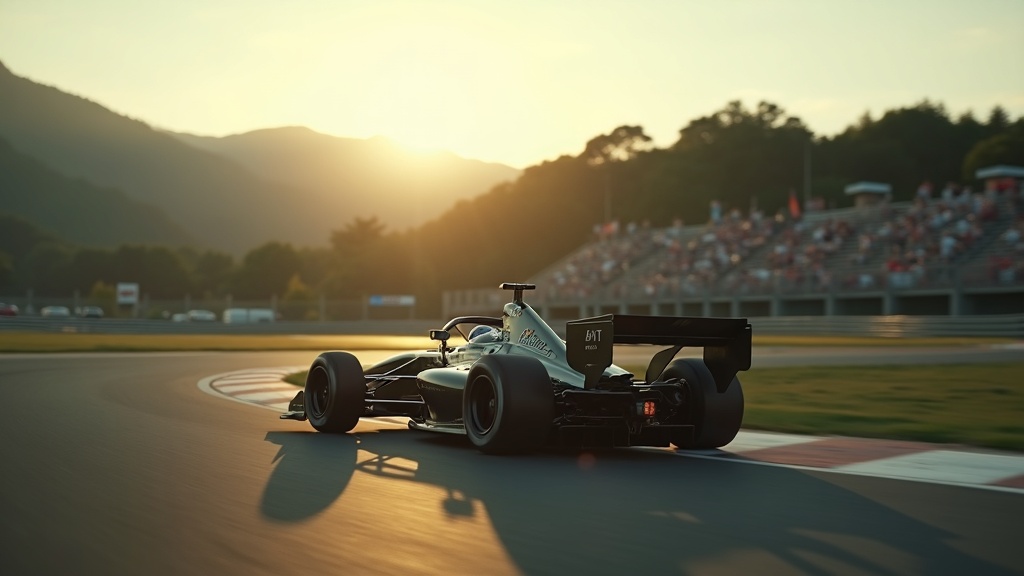
TRS 2026: proving ground or prestige brand on borrowed time?
The NZ Angle
New Zealand has a specific and somewhat fragile claim on the global single-seater ladder. The Toyota Racing Series was, for the better part of a decade, one of the few reasons why European team managers would open emails from southern hemisphere managers in January. Liam Lawson's 2019 title did more for the series' reputation than any press release could. That one result told the paddock that TRS competition was real, that the lap times meant something, and that a driver who dominated it deserved a proper look. The 2026 season ran across Hampton Downs, Manfeild, Taupo, and Highlands, the usual rotation, and the field had genuine depth in the top six. Entry costs have climbed to a level that filters out some talent, which is the tension the series has never quite resolved: you want the best young drivers, but the best young drivers don't always have the budgets that fund a New Zealand January. The restructure that MSNZ and TRS management pushed through in the off-season tightened the technical regulations and adjusted the points structure to reward consistency over single-race pace. Whether that produces a more representative champion or just a tidier spreadsheet is the kind of question that only gets answered when that champion tries to convert a TRS title into a European contract.
The 2026 Toyota Racing Series produced several drivers now holding overseas contracts. Whether the series' off-season restructure helped or hurt its standing as a genuine F2 feeder is another question.
The Toyota Racing Series has always operated on a particular promise: come to New Zealand in January, race hard on circuits that punish mistakes, and leave with a result that carries weight in European offices. That promise was most visibly fulfilled when Liam Lawson won the 2019 title and stepped onto a path that eventually led to Formula 1. The 2026 season was the first full campaign under the restructured format, and the early evidence on whether that promise still holds is mixed.
The field that contested the 2026 season had genuine quality in the lead group. Brazilian driver Caio Collet had already shown pace in European F3, but his consistency across the five TRS rounds at Hampton Downs, Manfeild, Taupo, and Highlands gave his management something concrete to present to potential backers. Finnish driver Niklas Valkonen, relatively unknown outside Scandinavian Formula 4, used the series to announce himself at a level that got attention. These are the names worth following, because they illustrate what TRS still does well: it compresses a lot of racing into a short window and forces drivers to adapt quickly.
What the restructure actually changed
The off-season changes were sold internally as a tightening of competition. The technical regulations were adjusted to reduce the performance gap between fresh and older-spec components, which in practice means teams with deeper pockets can no longer quietly buy an advantage through fresher parts. The points structure now rewards a driver who finishes second four times over one who wins twice and retires twice. The intention is sound. A champion who built the title on consistency is an easier sell to a European team than one who looked spectacular on two Saturdays.
The counterargument is that TRS has always attracted a particular kind of driver: the ones chasing a result, not a learning curve. Making the series less volatile might make it less interesting to the gamblers, the drivers who arrive with something to prove and genuine pace but without the organisational backing to sustain a clean campaign. Those are sometimes the most exciting drivers in the field, and they are not always well-served by a format that punishes a retirement from a racing incident the way the new structure does.
It is also worth being honest about the entry numbers. Sixteen drivers contested the full 2026 season. That is a functional grid for a regional series, but it is not the depth that existed in the peak years. The series has worked hard to bring in European and South American drivers on scholarship packages, and several of the 2026 grid were here on exactly that basis. Without those programmes, the grid would be thin.
Who has actually moved on
The more useful measure of TRS as a launchpad is what happens after January. Three drivers from the 2026 field had confirmed European programmes by mid-year. Collet secured a Formula 2 seat, which was not solely a result of his TRS campaign but was certainly reinforced by it. Valkonen landed a Formula 3 drive with a mid-tier European outfit, and his management have been direct about citing his TRS campaign in negotiations. A third driver, Australian Jake Cosco, converted a strong TRS result into a full Formula Regional European Championship entry.
Three drivers out of sixteen is not a transformation, but it is not nothing. The Lawson comparison is unfair in one specific way: Lawson arrived in TRS already on the Red Bull junior ladder, so his success was always going to produce a visible outcome. The more honest measure of the series' value is what it does for drivers who arrive without that infrastructure, and on that front the 2026 season shows it still works when the driver is good enough.
What TRS cannot do is manufacture international interest that does not exist. The series' reputation was built when European teams were actively looking at southern hemisphere results as a cheap scouting tool during their off-season. That interest is still there but it is narrower. The series needs a graduate to make noise in Formula 2 or Formula 3 within the next two seasons, or the conversation about whether TRS is still a Lawson-style launchpad will drift toward the past tense.
The circuit rotation still earns its keep
One thing the restructure left alone is the venue mix, and that was the right call. Hampton Downs rewards mechanical sympathy and smooth inputs through the high-speed sequences. Highlands is unusual enough in its layout to expose drivers who are quick only on conventional tracks. Manfeild is unforgiving in the wind. None of these are easy circuits to master in a short campaign, and that difficulty is exactly what gives a strong TRS result its credibility.
The series' best asset going into 2027 is its own history. The results are real. The question is whether the structure around those results keeps producing graduates who go somewhere, or whether TRS becomes a well-run regional championship that European managers stop putting on their January reading list.
By Paul Gray. See our editorial standards or email sales@premiumwholesalecars.co.nz with corrections.
More motorsport
Lawson at Red Bull: what the 2026 standings actually say
Liam Lawson is six months into his Red Bull Racing seat. The numbers are in, the pressure is real, and the question of whether he belongs there has a clearer answer now.
Lawson at mid-season: is the Racing Bulls seat delivering?
After the Austrian Grand Prix, Liam Lawson's 2026 campaign sits at a crossroads. We assess the numbers, the car, and whether the step up to a full-time seat is going to plan.
Van Gisbergen leads the way as Stanaway fights for points
Shane van Gisbergen sits near the top of the 2026 Supercars standings after the latest round, while Richie Stanaway continues to find his feet back in the series.