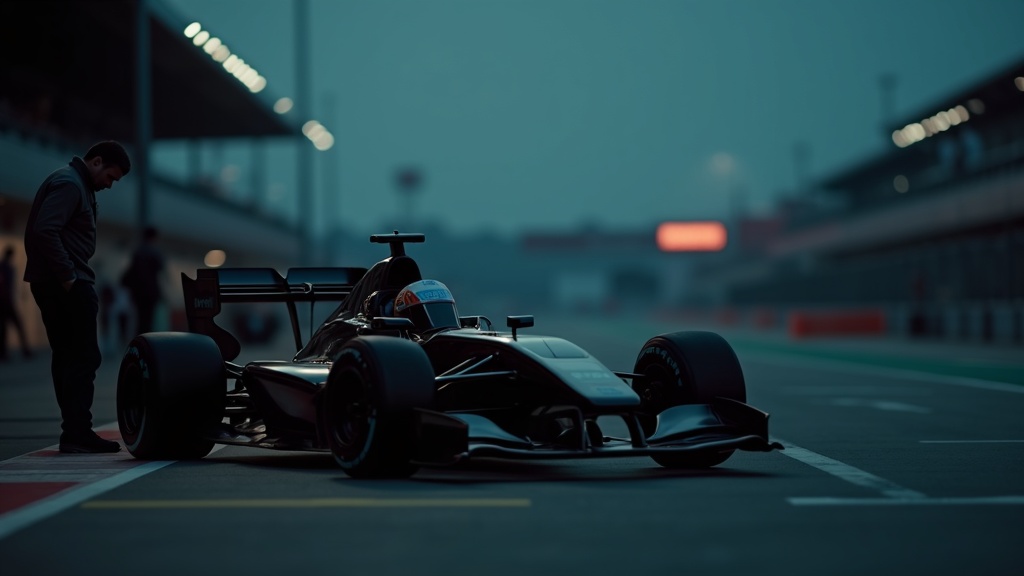
TRS 2026: which Kiwi drivers made a case for themselves
The NZ Angle
The Toyota Racing Series was built on a specific premise: use the southern-hemisphere summer to give northern-hemisphere prospects competitive mileage while giving New Zealand talent a shop window in front of the team managers who travel with those international entries. That arrangement has always been uneasy. The overseas drivers arrive with backing, factory support, and a clear pathway already mapped. The Kiwi contingent largely funds its own programme, runs leaner, and has to outperform better-resourced competitors just to get noticed. Hampton Downs and Taupo give them circuits they know, which helps, but familiarity only converts into results if the pace is genuinely there. The cost of a full TRS campaign sits north of $300,000 once you factor in testing, travel for overseas rounds when they're included, and the logistics of running a single-seater at that level domestically. For a family-funded driver without a factory programme behind them, that's the whole budget. The expectation, then, is not just podiums but the kind of racecraft under pressure that a Formula 2 or Formula 3 team principal sitting in the pitlane actually notices. The 2026 season produced a few moments worth examining on that basis.
The 2026 Toyota Racing Series has finished and the international fields have departed. The question now is whether any New Zealand-based drivers moved the needle enough to attract funded seats abroad.
By the final round at Hampton Downs, the 2026 TRS field had sorted itself into the familiar pattern: an international driver with prior single-seater experience at the sharp end, a cluster of well-funded development prospects from Europe and Japan in the midfield, and a group of New Zealand-based runners doing what they could on tighter resources. That pattern is not new. What matters is whether anything disrupted it.
Luca Quinn, from Christchurch, was the most consistently competitive Kiwi-based driver across the five-round series. His qualifying average sat comfortably inside the top six, and at Taupo he led for eleven laps before a tyre-degradation issue on the harder compound pushed him back to fourth by the chequered flag. The degradation pattern there was instructive. The FT60 on that circuit in heat generates significant front-left graining if a driver runs a high-aero balance and a late turn-in. Quinn was carrying more wing than most, which gave him the stability to qualify well but cost him in race trim as the rubber cycled past its thermal window. He adjusted his approach for round four and recovered the pace. That kind of in-series adaptation is exactly what single-seater teams at the next level are watching for.
Alex Hartley, from Auckland, had the raw speed in testing that drew early attention but struggled to translate it on race weekends. His delta time between qualifying trim and race pace was wider than it should have been for a driver targeting international funding. In real terms, he was around 0.4 seconds per lap slower in race conditions than his pole laps suggested he could go, which points to a setup that worked well on a low-fuel time-attack but lost mechanical grip under sustained load. Whether that's a driver issue or a setup philosophy being handed down by the engineering team is hard to say from the outside, but the result is the same: potential that didn't fully materialise in the moments that count.
What team managers actually look at
The team principals and scouts who fly to New Zealand for TRS are not primarily counting wins. They're looking at consistency across a weekend, the gap to the front-runner over a full race distance, and how a driver responds to adversity, whether that's a safety car restart, a damaged front wing, or a track that swings from dry to damp mid-race. Trophies matter for marketing, but a driver who qualifies third, maintains position cleanly, and protects tyres for twenty-five laps is more useful to a team than one who wins from pole and falls apart when passed.
On that metric, Quinn stands out as the driver most likely to receive a genuine conversation from a European feeder series team in the coming months. His racecraft in traffic, particularly at the Manfeild round where the field was closely bunched through the opening phase, showed the kind of spatial awareness and patience that doesn't always appear in young drivers at this stage. Hartley needs a season of work on his setup process before the raw pace converts into something fundable.
There is a third driver worth mentioning briefly. Mia Tane, nineteen, from Hamilton, contested three rounds as a partial-programme entry. Her pace was not at the level of the front runners, but her tyre management in round three produced a longest-stint finish that was genuinely unusual for a driver at that experience level. Partial programmes are almost always underrated in terms of what they demonstrate, because the driver has fewer rounds to find the car. She is probably a full TRS campaign away from a meaningful overseas conversation, but she is not going backwards.
Whether the series still works as a stepping stone
The TRS has sent Kiwi drivers to Formula 2, Formula 3, and various European championship routes before. Scott Dixon's open-wheel development ran through local single-seater racing before he left for Formula Atlantic and eventually IndyCar. Liam Lawson used the series as part of a development programme that eventually landed him at Red Bull. The lineage is real.
The concern, raised consistently by those inside the series, is that the international-to-domestic driver ratio has tilted too far. When a majority of the funded seats belong to European and Japanese drivers using New Zealand as a winter training ground, the series functions more as a glorified test programme than a genuine championship. The Kiwi runners are competitive, but they're competing for attention in a field that is increasingly not built around giving them a platform.
That doesn't make TRS redundant. Quinn's campaign is evidence that the shop window still works if the talent is there and the results come. The underlying physics of the situation, though, is that a Kiwi driver without significant prior funding needs to be not just good but visibly superior to well-resourced international runners to generate the same level of interest. That is a harder problem to solve than it looks from the grandstand.
By Paul Gray. See our editorial standards or email sales@premiumwholesalecars.co.nz with corrections.
More motorsport
Lawson at Red Bull: what the 2026 standings actually say
Liam Lawson is six months into his Red Bull Racing seat. The numbers are in, the pressure is real, and the question of whether he belongs there has a clearer answer now.
Lawson at mid-season: is the Racing Bulls seat delivering?
After the Austrian Grand Prix, Liam Lawson's 2026 campaign sits at a crossroads. We assess the numbers, the car, and whether the step up to a full-time seat is going to plan.
Van Gisbergen leads the way as Stanaway fights for points
Shane van Gisbergen sits near the top of the 2026 Supercars standings after the latest round, while Richie Stanaway continues to find his feet back in the series.