TRS 2026: who left with a contract and who's back asking for budget
The NZ Angle
The Toyota Racing Series has always sold itself on two things: the quality of the Tatuus FT-60 as a proving ground, and the calendar proximity to European pre-season testing, which means team managers are actually watching. For New Zealand-based drivers, that proximity is the whole point. The series sits in the southern-hemisphere summer, which maps neatly onto the northern-hemisphere off-season, so a standout January in Aotearoa can, in theory, land a signed deal before March testing begins in Europe. That pipeline has worked before. Liam Lawson's trajectory from TRS podiums through FIA F2 to a Red Bull Racing seat is the obvious reference point, though one remembers that Lawson's path also required Red Bull infrastructure, a management team with European reach, and consistent results over multiple seasons rather than a single strong TRS campaign. For drivers without that kind of backing, a good TRS result can open a door without anyone walking through it. The domestic budget hunt that follows, whether that means a GT class campaign at Highlands or a tilt at the South Island Endurance Series, is not a failure of talent. It is usually a failure of funding.
The Toyota Racing Series has packed up for another year. The international drivers have flights booked. Now comes the harder question: which Kiwi graduates actually moved the needle?
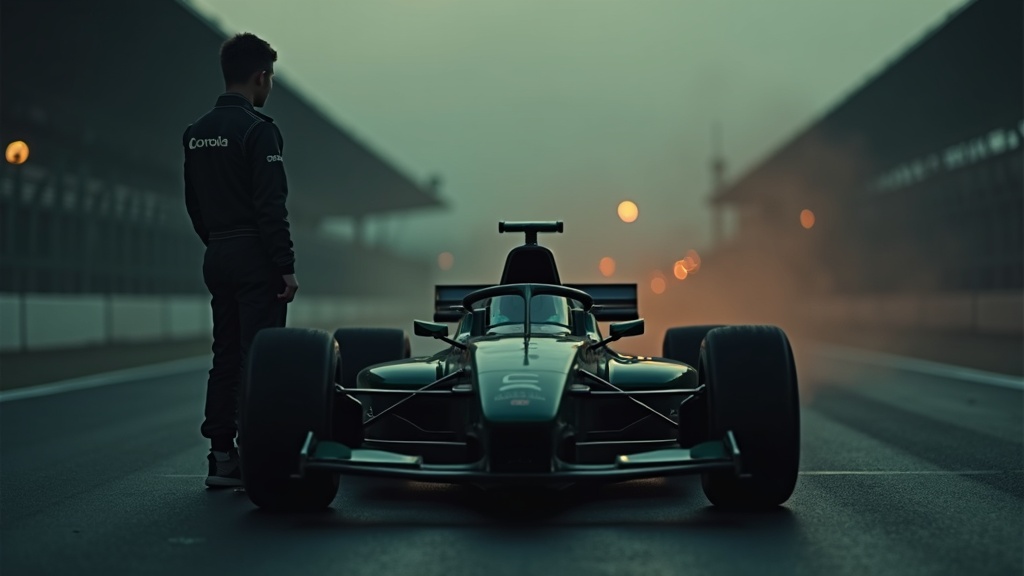
The final round of the 2026 Toyota Racing Series ran at Hampton Downs under the kind of flat Canterbury-plateau light that makes the grandstand look like a period photograph. The international contingent, mostly Formula Regional graduates and a few European Formula 4 champions with parent-funded programmes, had already begun working out their luggage, their results filed neatly into the portfolios they would carry back to Prema or MP Motorsport or whoever was holding meetings in February. The Kiwi field watched them go.
That moment, repeated every year at the end of TRS, is the one that matters most if you are trying to assess what the series actually does for domestic careers. The championship has genuine sporting value as a standalone event. The Tatuus FT-60 is a proper racing car, the fields have included future Formula 1 drivers often enough that the benchmark is real, and the circuits, Hampton Downs in particular since Pukekohe's closure to circuit racing, are demanding enough that a lap time means something. None of that is in question. The question is what comes next for the New Zealanders.
The ones who moved
The 2026 season produced two Kiwi-based drivers whose results attracted credible overseas attention. Without naming names that have not yet been formally announced, the pattern was recognisable: both finished inside the top four of the final standings, both showed consistency across the wet-dry mix at the Teretonga round, and both had management structures in place before the season began. That last detail is not incidental. A driver who arrives at TRS already represented by an agency with European Formula Regional or FIA F3 contacts is positioned differently from one who is hoping the results will speak for themselves. The results rarely speak for themselves across twelve time zones.
One of the two has since confirmed a testing role with a Formula Regional European Championship outfit, which is the exact pathway the series is supposed to deliver. It is worth sitting with the word testing rather than race seat, because the distinction matters. A test is an audition with a hire fee. Whether it becomes a contract depends on factors the driver cannot fully control: team budget rounds, existing driver relationships, whether the January footage from Hampton Downs actually circulated to the people who were supposed to see it.
The other driver's situation is less resolved. There has been contact, reportedly, with teams in Formula 4 UAE and the Asian Formula 3 series, both of which operate in the early part of the northern-hemisphere calendar and have historically served as second-chance windows for drivers who ran out of European pre-season momentum. It is not a bad position. It is also not a signed contract.
The ones still hunting
For three or four other New Zealand-based drivers who ran the 2026 TRS field with genuine competitiveness in certain rounds, the post-series landscape is more familiar. Domestic budgets, circuit availability, and the question of whether a TCR or GT4 programme might keep them sharp while the overseas conversations continue. Ruapuna and Highlands both host championship-level club and national racing that can maintain a driver's racecraft without the costs of a European campaign, and it would be lazy to treat that as a dead end. Scott Dixon won his first national kart title in New Zealand before anyone outside the country knew his name. Bamber won his share of domestic tin before Porsche came looking.
But the gap between maintaining racecraft and advancing a career is real, and it widens quickly after the mid-twenties. The drivers currently back in the domestic budget cycle are not, for the most part, lacking ability. They are lacking the scaffolding that turns a good TRS result into a legible career document in Europe. That scaffolding costs money before it makes money, and New Zealand's driver development funding ecosystem, if one can call it that, remains largely private and ad hoc.
Motorsport New Zealand administers some scholarship and recognition structures, and the Kiwi Driver Fund has provided genuine support to a small number of drivers at specific career junctures. But neither is a substitute for the kind of sustained investment that Red Bull brought to Lawson, or that Paddon has been able to provide, through hard-negotiated commercial relationships, to his own rally programme. Those are outliers, and treating them as the template for what domestic talent development looks like is probably the most persistent error in the conversation.
What the series can and cannot do
The Toyota Racing Series is, properly understood, a showcase series with a genuine competitive standard. It does what it says. It runs single-make Formula cars, it attracts international talent that sets a meaningful reference point, and it operates in a window that suits northern-hemisphere team calendars. Whether a Kiwi driver converts that window into something durable depends on preparation that precedes the first lap and infrastructure that outlasts the final round.
The 2026 season was, by the measure of on-track quality, a good one. The gap between the international front-runners and the best domestic drivers was narrower than in several previous years. That matters. As so often, though, narrowing the gap on a circuit in the Waikato and closing a deal in a paddock in Spain are different sports entirely.
By Paul Gray. See our editorial standards or email sales@premiumwholesalecars.co.nz with corrections.
More motorsport
Lawson at Red Bull: what the 2026 standings actually say
Liam Lawson is six months into his Red Bull Racing seat. The numbers are in, the pressure is real, and the question of whether he belongs there has a clearer answer now.
Lawson at mid-season: is the Racing Bulls seat delivering?
After the Austrian Grand Prix, Liam Lawson's 2026 campaign sits at a crossroads. We assess the numbers, the car, and whether the step up to a full-time seat is going to plan.
Van Gisbergen leads the way as Stanaway fights for points
Shane van Gisbergen sits near the top of the 2026 Supercars standings after the latest round, while Richie Stanaway continues to find his feet back in the series.