TRS calendar shift raises questions about feeder path credentials
The NZ Angle
Ruapuna has been part of the TRS rotation since the series began positioning itself as a genuine southern-hemisphere proving ground for single-seater talent. The circuit south of Christchurch is not glamorous by any measure, but its combination of medium-speed corners, variable grip levels across a Canterbury winter surface, and the thermal cycling that comes with South Island conditions has made it genuinely useful for developing car balance and tyre management under pressure. Liam Lawson ran there as part of his progression through the series before his Red Bull pathway solidified. That matters when you are making a case to European teams that your calendar produces drivers who can handle diverse conditions rather than just pristine northern-hemisphere billiard tables. For South Island-based junior drivers, losing a Ruapuna round also removes a cost-effective entry point. Travel to Hampton Downs or a condensed North Island swing adds budget pressure on families already stretching to fund a season in a Formula Toyota or FT60. The commercial argument for pulling rounds from Ruapuna is not wrong, but the development argument for keeping them is real, and the TRS organisers will need to show they have weighed both honestly.
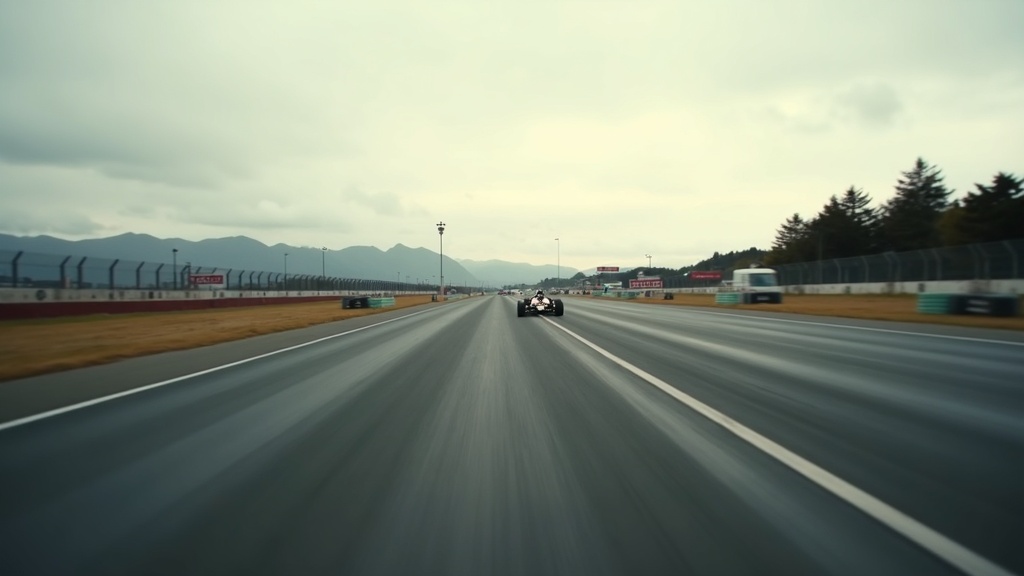
The proposed 2026-27 Toyota Racing Series calendar restructure moves rounds away from Ruapuna, prompting debate about whether the series can still credibly prepare drivers for Formula 1.
Lap 7 of the 2023 Ruapuna TRS round, and the gap between the top two drivers through the back section was 0.4 seconds. On a circuit where the lap time is under 65 seconds, that delta is doing a lot of work. It tells you about rear mechanical grip, brake bias calibration on a surface that does not have the consistent rubber laid down that you get at Hampton Downs, and the discipline to manage a car that is not giving you clean feedback lap after lap. That is the kind of information that matters to an F1 programme evaluating a junior.
The proposed 2026-27 calendar restructure that reduces or eliminates the Ruapuna round is being framed publicly as a commercial decision. Running a single-seater series in the South Island is expensive. Freight, logistics, the smaller gate, the shorter broadcast windows. All of that is true, and none of it is trivial for a series that does not have the budget of a European formula championship behind it.
But commercial reality and development value are not the same calculation, and the TRS has always traded on both simultaneously.
What the Ruapuna rounds actually provide
The FT60 is a mechanically simple car by design. That simplicity means driver inputs are exposed more clearly than in a car with more electronic intervention. Ruapuna's surface amplifies that exposure. The circuit has lower grip than Highlands or Hampton Downs, corner entries are more sensitive to brake bias errors, and the crosswind across the back straight affects aero balance in a way that drivers have to manage actively rather than just absorbing passively.
In real terms, what this means for an F1 scout watching from the pitwall is that Ruapuna produces more information per lap about a driver's mechanical feel and adaptability than a smoother, higher-grip venue. A driver who is fast only on premium surfaces is a different proposition from one who can adjust their reference points, recalibrate their braking zones, and still find the limit on a surface that is not co-operating.
The TRS has produced drivers who reached F1 or its immediate threshold partly because European teams came to trust that the series exposed genuine weaknesses. Lawson, Brendon Hartley at various stages of his career, the pipeline through Red Bull's New Zealand connection. That trust is built over multiple seasons of watching drivers across diverse conditions. Reducing the variance in those conditions narrows the signal.
The commercial case is not fabricated
None of the above means the organisers are wrong to look hard at the Ruapuna rounds. The cost of a TRS season has risen steadily, and if South Island logistics are pricing out the smaller teams and privateer entries that fill the midfield, the series loses competitive depth. A championship won against six cars tells you less than one won against twelve. That is also a feeder-path argument, not just a financial one.
Attendance at Ruapuna TRS rounds has rarely been the series' strongest box office. Canterbury motor sport fans turn out well for Supercars events and for the national saloon categories, but international single-seater racing has a smaller natural audience base in Christchurch than it does in Auckland. That is a structural reality, not a criticism of the venue or the region.
The broadcast and streaming angle matters more now than it did a decade ago. A condensed North Island calendar is easier to package for international audiences, and international visibility is directly connected to whether European F2 and F3 teams bother sending drivers to New Zealand. If the restructure produces a cleaner, more watchable product that attracts higher-quality international entries, the development value per round goes up even as the total round count shifts.
What the series needs to demonstrate
The risk is not that the TRS abandons Ruapuna specifically. The risk is that the restructured calendar becomes a sequence of rounds on similar surfaces with similar grip levels and similar conditions, producing a narrower data set about each driver. If a scout can only watch a driver perform well on smooth, well-rubbered circuits, the qualification they can make to their management is correspondingly limited.
The TRS has some time to work this out before 2026-27. What it should not do is restructure the calendar primarily on attendance and logistics grounds while claiming the feeder-path credentials remain unchanged. They will need to change the argument, not just the schedule.
The circuits that remain in the rotation, and the conditions those circuits are likely to produce across a January-February window, will determine whether the series stays genuinely useful to the F1 pipeline or whether it becomes a well-run regional championship with good marketing. Both can be sustainable businesses. Only one of them keeps pulling Red Bull Academy managers onto long-haul flights to Christchurch.
By Paul Gray. See our editorial standards or email sales@premiumwholesalecars.co.nz with corrections.
More motorsport
Lawson at Red Bull: what the 2026 standings actually say
Liam Lawson is six months into his Red Bull Racing seat. The numbers are in, the pressure is real, and the question of whether he belongs there has a clearer answer now.
Lawson at mid-season: is the Racing Bulls seat delivering?
After the Austrian Grand Prix, Liam Lawson's 2026 campaign sits at a crossroads. We assess the numbers, the car, and whether the step up to a full-time seat is going to plan.
Van Gisbergen leads the way as Stanaway fights for points
Shane van Gisbergen sits near the top of the 2026 Supercars standings after the latest round, while Richie Stanaway continues to find his feet back in the series.