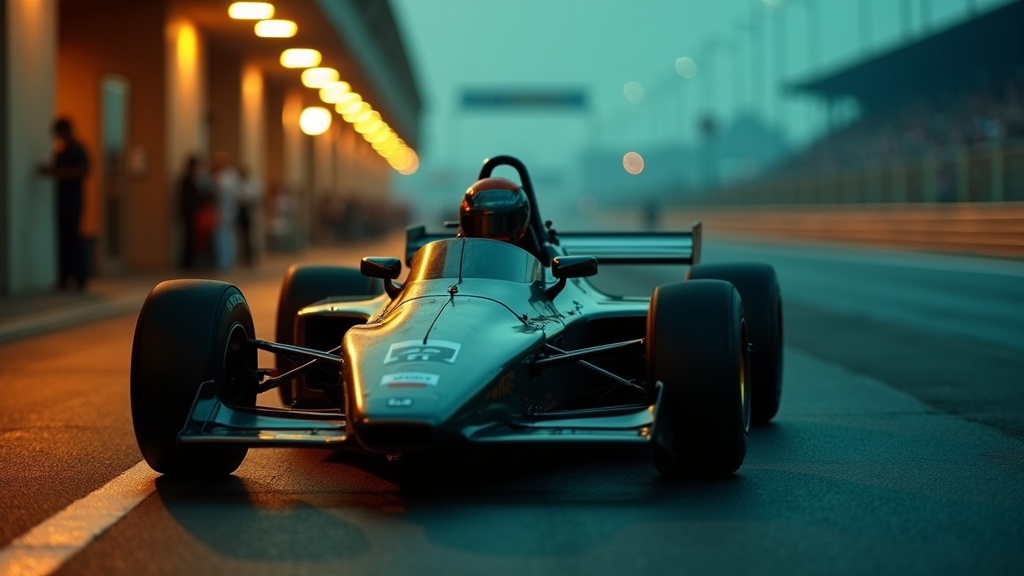
TRS class of 2025-26: who got deals, who got flights home
The NZ Angle
The Toyota Racing Series runs five rounds across Pukekohe, Hampton Downs, Highlands, Ruapuna, and Teretonga every January and February, which means the drivers who come here are doing so during European and American off-seasons, often on limited budgets, chasing FIA superlicence points and the attention of junior programme managers sitting in the grandstands. That context matters when you read the graduate list. New Zealand is not a racing backwater in January — it is, for those five weeks, one of the most watched junior single-seater series on the planet. Scouts from Red Bull, McLaren, and Mercedes-affiliated programmes have all attended in recent seasons. Lawson's path — TRS podiums, Red Bull junior deal, Formula 2, then a Formula 1 seat at RB — is the template every driver arriving at Auckland Airport with a helmet bag is holding in their head. The question for 2025-26 is whether that template is replicable or whether Lawson was an outlier whose talent would have found its way through any series. For Kiwi fans, the answer shapes whether they should care about TRS beyond local pride. For the series itself, the answer is existential.
The Toyota Racing Series has produced Liam Lawson and a handful of serious prospects. But the 2025-26 graduate list raises real questions about what the series delivers beyond the top step.
Liam Lawson made the Toyota Racing Series relevant to people who had never heard of Pukekohe. His path from TRS race wins to a Red Bull junior contract to a race seat at Racing Bulls is clean enough that you can draw a straight line through it, and Formula 1 junior programme managers clearly noticed. The series has spent the last two years trading on that line. The 2025-26 season is the moment to check whether the line is still straight or whether TRS has quietly become a finishing school for drivers who were already going nowhere fast.
The headline number from the 2025-26 season is that three drivers left New Zealand with documented development agreements of some kind. That sounds solid until you look at what those agreements actually are.
The deals that mean something
The driver who leaves with the most substance behind him is Arvid Lindblad. The British-Indian driver, already a Red Bull junior before he arrived in New Zealand, used TRS the way you are supposed to use it — high mileage, consistent front-running, FIA points banked. He did not need TRS to make him visible. He needed it to keep his superlicence points tally moving while European winter sat idle. That is a legitimate use of the series, but it is not quite the same as TRS identifying him. Red Bull already had.
The second driver with a real agreement leaving the summer is Martinius Stenshorne, the Norwegian who has been working through the Prema ladder. He ran well at Hampton Downs and at Highlands, showed the kind of composed front-end management on the slower circuits that scouts actually care about, and heads back to Europe with his F3 campaign confirmed. Again, TRS gave him mileage and superlicence points. Whether it gave him his deal is harder to say.
The third agreement is murkier. A scholarship attachment, performance-conditional, with the kind of language that sounds like commitment and reads like an option the team can quietly decline to exercise. That driver would rather not be named here in that context, and that is fair enough.
Who went home with nothing
This is the harder section to write, because some of these drivers are young and the gaps are fixable. But the 2025-26 field had at least four drivers who arrived with junior programme interest and left without having converted it into anything documented. One finished on the podium twice and still could not pull a firm commitment from the programme that had been watching him. Another had the pace in qualifying and lost it in races, which is the specific thing that kills junior careers — race engineers and team managers can see that disconnect a mile away, and they move on.
The series winner left New Zealand with strong coverage and a genuine lap time record at one circuit, but no announcement followed in the weeks after the final round. That silence is its own data point.
Whether TRS is still doing its job
The honest answer is: partly, and with caveats.
What TRS does well is provide a genuine competitive environment in January when almost nothing else in single-seaters is running. The circuits vary enough — Highlands is a proper driver's circuit with the kind of slow-corner exit work that rewards feel over bravery, Ruapuna rewards mechanical sympathy, Hampton Downs separates the drivers who can manage tyre life from those who cannot — that five rounds here do expose real strengths and weaknesses. That is not nothing.
What TRS cannot control is the structure of junior motorsport above it. Formula 3 and Formula 2 grids are not growing. The number of seats available to drivers without factory backing is contracting. A driver can win TRS outright and still find no door open in Europe if he does not already have a programme behind him, because the programmes are not fishing in TRS the way they once were. They are mostly confirming what they already know about drivers already on their books.
Lawson worked because Lawson was exceptional, and because Red Bull had the infrastructure to move quickly when they saw it. The danger of the Lawson template is that TRS uses it as proof the pathway exists when the more accurate reading is that the pathway exists for drivers who were already going to find it one way or another.
None of this means TRS is broken. The racing is legitimate, the circuits are genuine, and five weeks in a competitive field is worth something for any driver's development. But the series marketing that leans hard on the Lawson precedent without acknowledging how specific his circumstances were does the drivers who come here a mild disservice. They deserve to know what TRS can actually give them, not just what it gave the best driver to come through in a decade.
By Paul Gray. See our editorial standards or email sales@premiumwholesalecars.co.nz with corrections.
More motorsport
Lawson at Red Bull: what the 2026 standings actually say
Liam Lawson is six months into his Red Bull Racing seat. The numbers are in, the pressure is real, and the question of whether he belongs there has a clearer answer now.
Lawson at mid-season: is the Racing Bulls seat delivering?
After the Austrian Grand Prix, Liam Lawson's 2026 campaign sits at a crossroads. We assess the numbers, the car, and whether the step up to a full-time seat is going to plan.
Van Gisbergen leads the way as Stanaway fights for points
Shane van Gisbergen sits near the top of the 2026 Supercars standings after the latest round, while Richie Stanaway continues to find his feet back in the series.