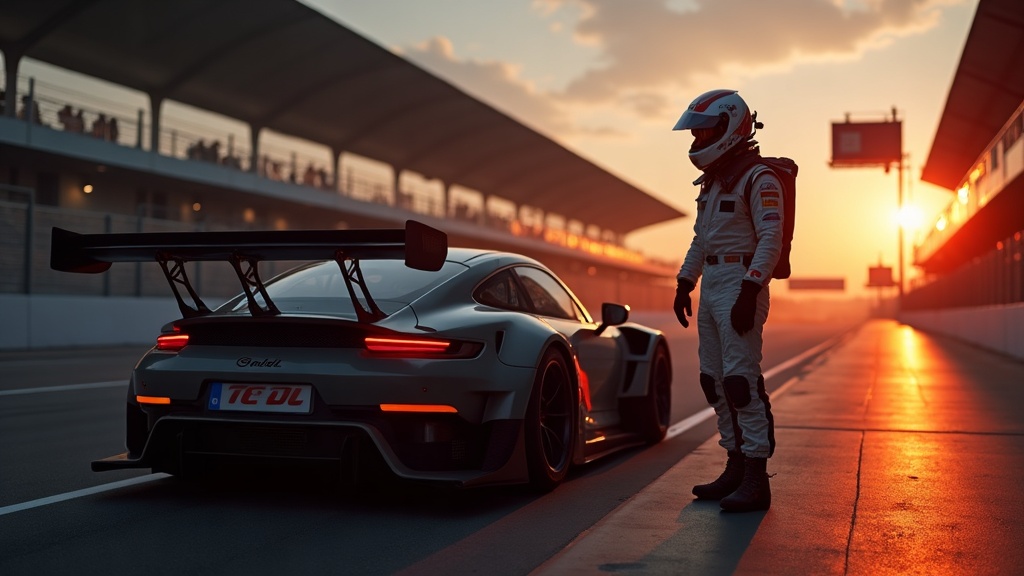
Van Gisbergen at mid-season: the return is real, the gap is closing
The NZ Angle
There is a particular kind of attention New Zealand motorsport fans pay to Shane van Gisbergen. It is not purely tribal, though some of it is that. It is the attention you pay to someone who left on the highest possible terms — three Supercars titles, a Bathurst 1000 on debut in a wildcard, a Chicago street race win in his first proper NASCAR start — and whose every subsequent result gets measured against that departure. For Kiwi fans, the 2026 Supercars season carries a specific weight. The TRS has historically fed talent toward Australian tin-top racing, and drivers like Liam Lawson taking the long road through European single-seaters have made local fans comfortable with the idea of Kiwis operating at the sharp end of international competition. Van Gisbergen's return to Supercars is different in character. He is not a young driver building. He is a proven champion, mid-thirties, re-entering a series that has continued developing without him. Whether he recaptures championship form matters to anyone who watched him dominate at Pukekohe in those final years before the venue lost its calendar slot, or who followed his early career through the South Island circuits that shaped him.
Shane van Gisbergen is back in Supercars for 2026 after his NASCAR stint. At the halfway point, we look at where he stands, what he's lost, and what he still has.
The Sandown round in March told you something useful. Van Gisbergen qualified third, ran second for most of the race, and finished fourth after a tyre strategy call that didn't come off. The lap times were there. The racecraft was there. What wasn't quite there was the accumulated knowledge of exactly how far you can push a Gen3 Camaro in the closing stages on a particular compound at a particular circuit, at a particular ambient temperature, with a particular fuel load. That knowledge is not something you bring back from NASCAR. You rebuild it, lap by lap.
He has been rebuilding it. By the time the series reached Winton and then the Reid Park Street Circuit in Townsville, the process looked more advanced than many had predicted at the start of the year. Van Gisbergen sits fifth in the championship at the mid-season break, which is a honest reflection of where he is — competitive but not yet consistently at the front end of the results sheet.
What NASCAR took and what it left
Two full seasons in the Cup Series does things to a driver's reference points. The cars are heavier, the ovals demand a completely different sense of rhythm, and the superspeedway racing in particular is less about outright pace than about managing position through traffic for 400 kilometres and being in the right spot when it matters. Van Gisbergen was, by most accounts, a competent Cup driver who never quite found the package to match his ability. The Trackhouse Chevrolet gave him a reasonable platform, but reasonable in NASCAR terms means something different from the front-running machinery he had with Triple Eight.
What the American stint did not appear to take is the fundamental aggression that made him a three-time champion. The move he put on at Bathurst 2024 — still a wildcard that year — showed the instinct remains. The question for 2026 has always been whether instinct is enough without the accumulated data layer that separates a fast driver from a championship-winning one in a series this closely matched.
The Gen3 regulations, introduced while he was away, have compressed the field in ways that reward consistency as much as outright speed. Points are closer together. Mechanical attrition is lower. The races where van Gisbergen might once have won by thirty seconds from a dominant Triple Eight simply do not happen anymore. You have to be precise, and precision in a new-to-you specification requires time.
The championship picture from here
Fifth in the standings, with the Bathurst 1000 still to come, is not a write-off position. Bathurst has its own logic and van Gisbergen's record on the Mountain across his career is the kind that makes bookmakers cautious regardless of where he sits in the points. With the right co-driver pairing and the right strategy call, the Great Race can compress a championship in a single afternoon.
The rounds between now and October, though, will tell the real story. Darwin, the Gold Coast, Bathurst, and the Sydney finale represent enough ground that a driver currently fifth could realistically reach second. Winning the championship from here would require a collapse from the leaders as much as a sustained charge from van Gisbergen, and that seems less likely than it might once have.
Triple Eight, for their part, have given him the machinery. The Red Bull Ampol Camaro has been a front-running car in 2026. The gap is not the equipment.
What a realistic second half looks like
The honest assessment is this: van Gisbergen will win races in the second half of the season. He may win two or three. He will be a genuine factor at Bathurst, as he almost always is. The championship, barring unusual circumstances, is likely beyond him this year, and he would probably acknowledge that himself.
What the remainder of 2026 can establish is whether he is a title contender in 2027. One remembers that Garth Tander returned from various periods of reduced machinery to competitive drives without losing the core of what he had. The comparison is imperfect — van Gisbergen's NASCAR stint was a different kind of departure — but the principle holds. The reference points come back. The data layer rebuilds.
For all that the NASCAR experiment generated column inches about whether the move was wise, the mid-season picture in 2026 suggests the more interesting question is not whether he can adapt back, but how quickly. Fifth at the break, with the Mountain still ahead, is not the story of a champion who has lost the thread.
By Paul Gray. See our editorial standards or email sales@premiumwholesalecars.co.nz with corrections.
More motorsport
Lawson at Red Bull: what his 2026 form actually tells us
Liam Lawson is holding his own at Red Bull Racing through mid-2026, but the championship gap to his team-mate raises questions about how long patience lasts at Milton Keynes.
Lawson's mid-season check: is the Red Bull seat still his?
After nine rounds of 2026, Liam Lawson sits mid-pack in the drivers' standings. The British Grand Prix weekend raised more questions than it answered about his long-term future at Red Bull.
Lawson's Silverstone form puts his Red Bull seat in question
After a difficult British Grand Prix weekend, Liam Lawson's position at Red Bull Racing is drawing scrutiny. The second half of 2026 will likely decide his future in the top seat.