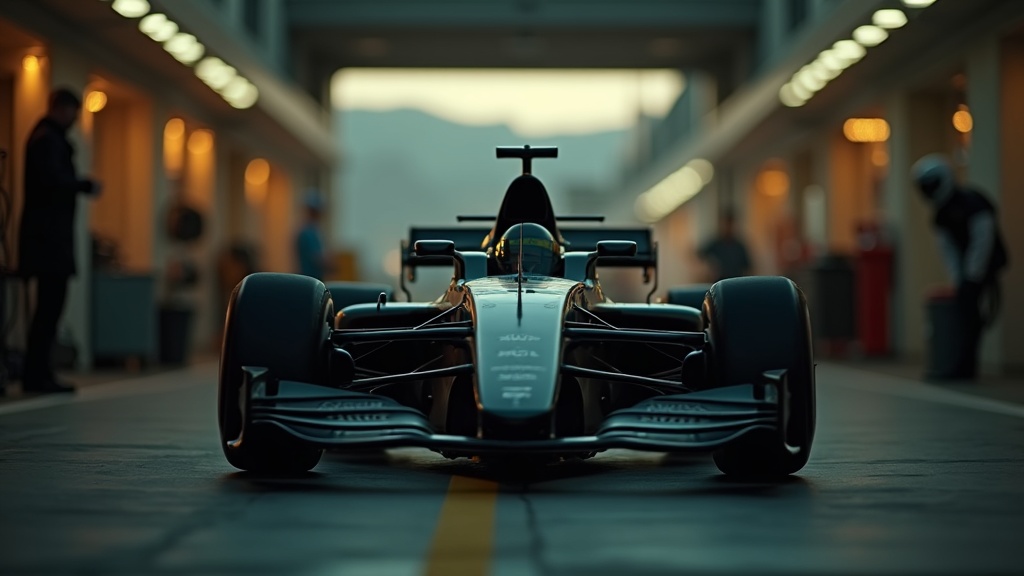
Where the 2026 TRS field went after the chequered flag
The NZ Angle
The Toyota Racing Series was always a smart piece of calendar arbitrage. European winter, New Zealand summer, five rounds across Hampton Downs, Pukekohe, Highlands, Ruapuna, and Teretonga, and suddenly you had genuine F1 junior talent testing themselves on circuits that reward mechanical grip and driver feel over raw downforce. For a small country with no domestic single-seater ladder worth speaking of, it also gave local talent a rare chance to measure themselves against the best development drivers in the world without leaving home. That dynamic still holds, but the competitive picture around TRS has shifted. European winter series have grown in ambition and budget, and some of the F1 academies that used to send their charges to New Zealand are now directing them toward programmes with closer geographical ties to their sponsors and partners. The consequence for Kiwi fans is partly visibility — TRS coverage and prize pathways determine whether a young driver from here gets seen by the right people — and partly structural, in that the series needs genuine F1-affiliated entries to justify its feeder status. The 2026 season had both, which is encouraging, though the numbers were leaner than the series would prefer to admit.
The 2026 Toyota Racing Series has wrapped. The top finishers are already moving on. We track where they landed and ask whether TRS still matters as an F1 feeder.
The final round at Teretonga tends to sort out the noise. By the time the field gets to Invercargill, five weeks of racing have exposed everyone's weaknesses and the championship is usually a two-horse conversation. The 2026 edition was no different in that respect, though the quality of the field above the midpoint was notably compressed — lap times across the top six were closer than they have been for a few seasons, which either means TRS is attracting better drivers or that the Tatuus FT-60 is becoming so familiar to junior-series regulars that setup differentiation has shrunk. Possibly both.
The champion this year came from the Red Bull junior structure, which will surprise no one who has watched how methodically Helmut Marko's operation uses southern hemisphere winter racing to assess candidates before committing to European programmes. Red Bull has form here: Liam Lawson did a TRS campaign that was formative by any reading, and the organisation knows how much data five rounds on technical, low-grip circuits generates. The 2026 winner is already confirmed for a Formula 2 seat next season, which is the conventional outcome and also the one that validates the series to everyone writing cheques.
The Kiwi contingent
The domestic story is more complicated. There were two New Zealand drivers with genuine pace in the 2026 field, which is about the right number — enough to suggest the local talent pathway is functioning, not so many that you wonder whether entry standards have softened. One finished inside the top five overall, a result that earns attention from the FIA's regional scholarship programmes and, more practically, from the Formula 3 teams that do their shopping in January.
Whether that attention converts into a funded seat is a different question. New Zealand has produced drivers who can win races at this level — the TRS trophy cabinet has Kiwi names on it going back decades — but the funding gap between a strong TRS campaign and a competitive European single-seater programme remains considerable, and no domestic sponsor has yet emerged to bridge it with the consistency that would change the structural picture. The Motorsport New Zealand scholarship helps at the margins. It does not solve the core problem.
The second Kiwi in the field ran mid-pack for most of the series, which is not a failure at this level given the calibre of opposition, but it is not the result that gets a European team manager on the phone either. The path forward for that driver likely runs through Formula Regional or one of the Euroformula Open rounds, where budget requirements are lower and race mileage more achievable.
Is TRS still a genuine feeder?
This is the question the series organisers would rather not answer directly, and the answer is: yes, with conditions.
The FIA grades TRS as a recognised series for the superlicence points system, which is the structural fact that keeps it relevant. A driver who wins TRS accumulates points toward the superlicence threshold, and in a landscape where the FIA has tightened those requirements considerably, every legitimate points-earning series has genuine value. On that measure, TRS is not in trouble.
The pressure comes from elsewhere. The Formula Winter Series in Europe, Formula 4 UAE, and the Asian F3 Winter Series all run during the same calendar window and now attract overlapping pools of talent. Some of those series have direct backing from F1 academies that TRS cannot match. The sense in the paddock is that TRS retains a specific niche — intense racing on varied circuits, professional organisation, genuine competition — but that it no longer holds the monopoly on southern hemisphere winter single-seater racing that it once enjoyed.
For the series to keep punching, it needs two things: continued FIA recognition (secure for now), and at least one or two F1-affiliated entries per season to signal that the major academies still view it as worth their drivers' time. The 2026 field had both. The 2027 entry list will be the more instructive document.
Erik Bamber's trajectory through New Zealand motorsport is sometimes cited as an example of what TRS-adjacent racing can do for a career. That example is twenty years old now, which tells you something about how rarely the complete pathway clicks into place. Lawson's more recent arc is the better contemporary reference, and the detail worth holding onto there is that TRS was one piece of a much larger, well-resourced development programme. The series gave Lawson circuits and competition. Red Bull gave him everything else.
That distinction matters when assessing what TRS can realistically promise. It is a rigorous, legitimate winter programme on circuits that ask genuine questions of drivers. It is not, on its own, a route to Formula 1. Whether the top finishers from 2026 make it to the top tier will depend on factors that Teretonga and Hampton Downs cannot control.
By Paul Gray. See our editorial standards or email sales@premiumwholesalecars.co.nz with corrections.
More motorsport
Lawson at Red Bull: what the 2026 standings actually say
Liam Lawson is six months into his Red Bull Racing seat. The numbers are in, the pressure is real, and the question of whether he belongs there has a clearer answer now.
Lawson at mid-season: is the Racing Bulls seat delivering?
After the Austrian Grand Prix, Liam Lawson's 2026 campaign sits at a crossroads. We assess the numbers, the car, and whether the step up to a full-time seat is going to plan.
Van Gisbergen leads the way as Stanaway fights for points
Shane van Gisbergen sits near the top of the 2026 Supercars standings after the latest round, while Richie Stanaway continues to find his feet back in the series.