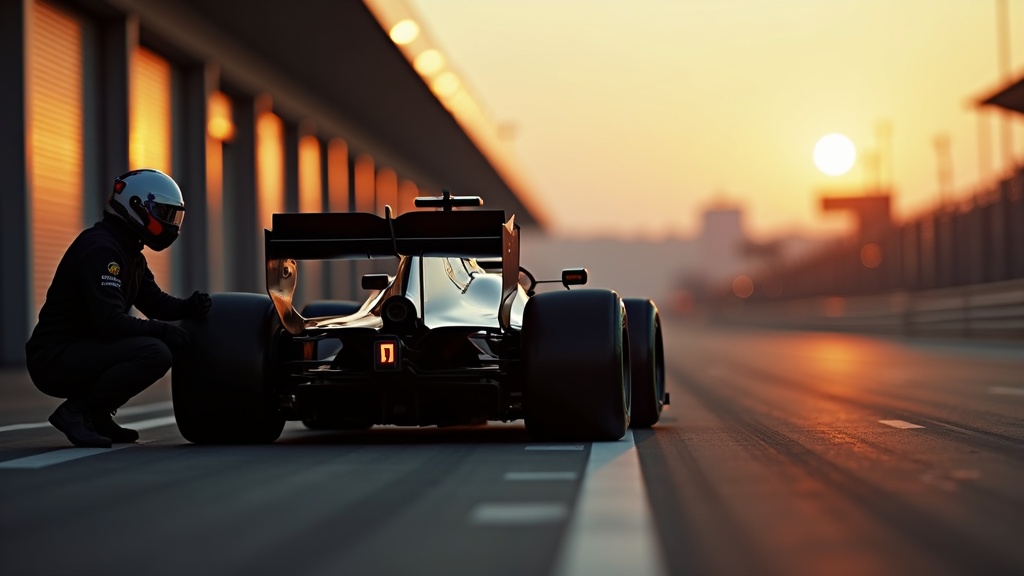
Who follows van Gisbergen and McLaughlin into Supercars?
The NZ Angle
The Toyota Racing Series has always carried a dual function for New Zealand motorsport: it develops young international talent across a southern-hemisphere summer, and it gives local administrators something to point at when the question of pathway racing comes up. For the past decade, that second function has been easy to fulfil because the answer was already standing in the paddock. McLaughlin won TRS in 2011 and was in Supercars within two years. The lineage felt continuous. Now McLaughlin is a permanent IndyCar fixture and van Gisbergen, having taken his Supercars title and left, is racing NASCAR full-time in 2025 with a Supercars wildcard appearance the only thread connecting him to the series at all. The local pipeline question therefore has genuine weight again. TRS fields typically include a handful of New Zealanders alongside the international scholarship drivers, and the series still runs at Hampton Downs and Highlands among other venues, giving domestic fans a chance to assess who might be worth following. The issue is that watching a Formula Ford-descended open-wheeler series and projecting from it to Supercars requires a fair amount of interpretive charity. The cars are nothing alike. The skill sets overlap, but only partially.
With NZ's two biggest Supercars names now committed elsewhere, the Toyota Racing Series remains the most credible local pipeline. But is anyone in it ready?
Liam Lawson spent three winters in TRS, the last of which he won in 2021. He is now a Red Bull Formula 1 driver. That trajectory is real, and it matters to this conversation, but only to a point. Lawson's destination was always single-seaters. The question for New Zealand right now is narrower: is there someone in the current TRS generation who is pointed at Supercars, has the profile to compete at the front of that series, and is close enough to ready that the conversation is worth having?
The honest answer, surveying the 2024 and 2025 fields, is not obviously yes.
That is less a criticism of the drivers involved than a recognition of where Supercars sits as a competition. The series has contracted in grid size over the past five years, the Gen3 regulations have reset some of the technical assumptions teams had built their operations around, and the cost of fielding a competitive car remains high enough that teams are not taking risks on rookies without a compelling reason. A New Zealand passport is not, by itself, a compelling reason.
What the TRS field actually shows
The 2025 TRS season included several New Zealanders in the mix, as it generally does. The international scholarship programme remains the commercial engine of the series, which means the local drivers are often competing against well-funded European and Asian prospects who may or may not continue in New Zealand after January. Assessing a domestic driver's ceiling in that context requires some care.
What TRS genuinely tests is racecraft under pressure, tyre management across a sprint format, and the ability to process feedback and develop a car over a short campaign. These are transferable qualities. But Supercars, at its core, is a touring car series built around heavy, powerful, rear-wheel-drive machinery with a contact culture that open-wheeler experience does not prepare you for. The drivers who have made that jump successfully, van Gisbergen among them, typically served time in tin-tops before arriving at the main game. The pathway, properly understood, runs through TRS and then through something like the Dunlop Super2 Series or an equivalent V8-adjacent competition, not directly from a Formula 4-specification single-seater to a Camaro or Mustang.
The absence of a well-supported New Zealand presence in Super2 is the more revealing gap. That is where the real audition happens, and it is expensive enough that only drivers with serious commercial backing tend to persist.
The van Gisbergen effect and what comes after
Van Gisbergen's departure from Triple Eight and his move to full-time NASCAR in 2025 closed a chapter that had been open for fifteen years. His wildcard appearances at selected Supercars rounds keep his name in the conversation, but he is no longer the series' primary New Zealand story. McLaughlin, three IndyCar seasons deep and showing no sign of returning south, has not been that story for longer.
What this creates is something that looked briefly like a vacuum. Supercars has had a New Zealand driver at or near the front of the field for so long that the expectation became structural. Robbie Francevic, Craig Baird, McLaughlin, van Gisbergen: the thread is long and it has not gone unnoticed by New Zealand motorsport's commercial sponsors, who have generally found it easier to back a driver already winning than to invest in development.
There is a version of this story where someone emerges from the 2025 or 2026 TRS field, does a season or two in Super2 with backing from a domestic sponsor, and arrives in the main series by 2028 with enough runs on the board to be competitive. That version is not impossible. But it requires the kind of patient investment in a single driver that New Zealand motorsport has not been especially good at sustaining, outside of the rally world where Haydon Paddon's career demonstrated both the heights that commitment can reach and the difficulty of maintaining it.
The more likely near-term answer is that the next credible New Zealand Supercars contender is someone already in the Australian system, possibly holding dual citizenship or having moved across the Tasman young enough to come through a V8-adjacent pathway without needing TRS as the first rung. That is not a failure of the TRS model. It is just the geography of how careers actually develop.
For the moment, the pipeline exists. The talent is probably there, somewhere in the current junior fields. What is less certain is whether the structure around those drivers, the funding, the team relationships, the willingness to absorb a Super2 apprenticeship, is in place to carry anyone through.
By Paul Gray. See our editorial standards or email sales@premiumwholesalecars.co.nz with corrections.
More motorsport
Lawson at Red Bull: what the 2026 standings actually say
Liam Lawson is six months into his Red Bull Racing seat. The numbers are in, the pressure is real, and the question of whether he belongs there has a clearer answer now.
Lawson at mid-season: is the Racing Bulls seat delivering?
After the Austrian Grand Prix, Liam Lawson's 2026 campaign sits at a crossroads. We assess the numbers, the car, and whether the step up to a full-time seat is going to plan.
Van Gisbergen leads the way as Stanaway fights for points
Shane van Gisbergen sits near the top of the 2026 Supercars standings after the latest round, while Richie Stanaway continues to find his feet back in the series.