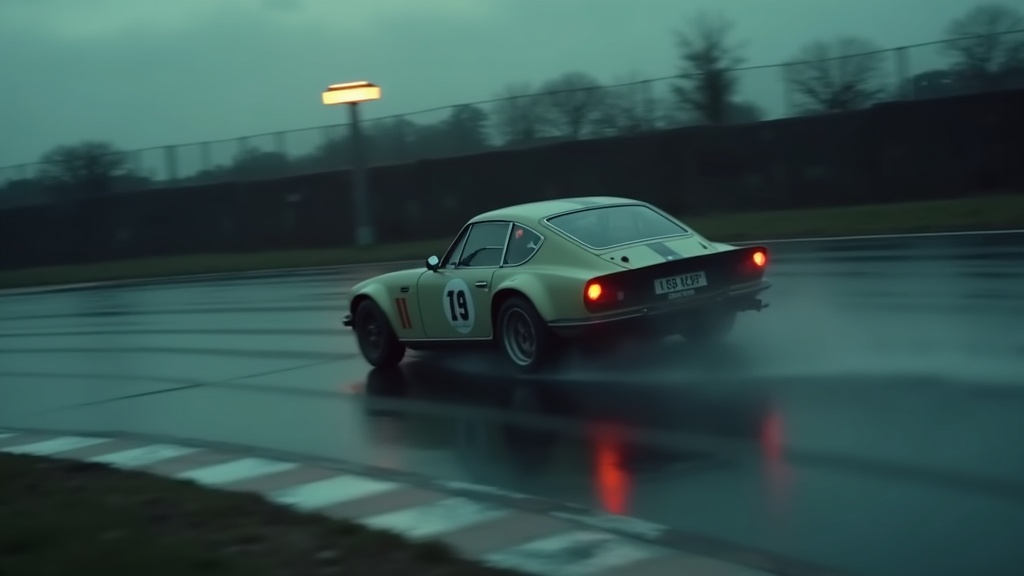
Who's carrying the Kiwi flag in Supercars now SvG and McLaughlin are gone?
The NZ Angle
For a generation of New Zealand motorsport fans, the Supercars championship was a reliable source of national pride. Van Gisbergen won three titles and made the category his own across more than a decade. McLaughlin left after three consecutive championships. Between them they defined an era. That era is over. What's left is a thinner Kiwi presence in a grid that has itself shifted, with Gen3 machinery reshaping the technical balance between teams and, to some degree, between manufacturers. The relevance to New Zealand fans is partly emotional and partly practical: Supercars remains the most-watched circuit racing series in this part of the world, it tours to circuits that feel familiar even when they're across the Tasman, and drivers who come through the NZ Racing series or the Toyota Racing Series have historically used it as a career endpoint. If no Kiwi is realistically in contention for a Supercars title in 2026, that's a meaningful shift in how the series connects to this country. It also raises a question about the pipeline: TRS and the NZ Rally Championship are still producing talent, but where does that talent go when the most visible regional series no longer has a Kiwi fighting at the front?
With Shane van Gisbergen in NASCAR and Scott McLaughlin locked into IndyCar, New Zealand's Supercars presence has thinned. We look at who remains and whether any of them can genuinely contest a championship.
The 2025 Supercars season ended with Brodie Kostecki taking the title, and the 2026 grid will line up without the two drivers who between them won six championships from 2018 to 2023. Scott McLaughlin is into his fourth full IndyCar season and shows no sign of looking back. Shane van Gisbergen, having made the jump to NASCAR full-time, is still learning ovals and plate racing, and he is clearly committed to the American project regardless of where his results sit. So the question of who actually represents New Zealand in the 2026 Supercars field is worth answering plainly, because the answer is more complicated than it might look.
The current Kiwi presence
André Heimgartner is the most straightforward answer. He has been racing in Supercars since 2016, has shown genuine pace at times, and in 2026 will be at Brad Jones Racing in a Chevrolet Camaro. The machinery is the honest part of the conversation. BJR is a professional, well-run team, but it is not a title-contending outfit on current form. Heimgartner ran inside the top ten consistently enough through 2024 and 2025, but consistent top-ten finishes and delta times that close the gap to the front runners are two different things. To threaten a championship you need a car that can run sub-two-second gaps to pole across a full qualifying session. BJR hasn't been in that window for a while.
Chaz Mostert holds dual citizenship and has raced under the New Zealand flag at international events, though most Australian fans would place him in their column. That ambiguity aside, Mostert at Walkinshaw Andretti United is in a stronger technical position than Heimgartner. WAU has invested heavily in Gen3 development, and Mostert's aero balance feedback has clearly been integrated into the car's setup direction. He was a genuine championship contender in 2024. The question for 2026 is whether WAU closes the gap to Triple Eight and the Ford squads, or whether the Gen3 parity window opens or closes based on which team extracts more from the current homologation rules. On balance, Mostert is the most credible Kiwi-affiliated threat to the championship, even if New Zealand's claim to him is partial.
Beyond those two, the field thins quickly. There are no other confirmed New Zealand passport holders racing full-time on the 2026 grid at the time of writing.
What Gen3 has changed
The technical context matters here. Gen3 machinery was introduced to reduce the cost gap between teams and to tighten the performance envelope. In real terms, it has partially delivered on the first goal and struggled with the second. What it has done is shift the performance differentiator away from pure aero development and toward mechanical grip management, specifically tyre warm-up, degradation rate, and the setup decisions that govern those two things across a race stint.
This actually suits a driver like Mostert, whose feedback is precise enough to inform setup direction over a race weekend. Van Gisbergen's departure removed from the grid a driver who was arguably the best in the field at reading mechanical grip in real time and adjusting his line accordingly. The drivers who benefited from his absence in 2025 were those already good at that specific skill. Whether Heimgartner is in that category is harder to say. He has shown car control under pressure but the dataset from competitive machinery is limited.
The aero balance question is less relevant under Gen3 than it was under previous regulations, but team resource still determines how quickly setup problems are diagnosed and corrected across a race weekend. That's where Triple Eight's depth still shows, and it's where smaller operations like BJR are working with less.
The pipeline question
Van Gisbergen came through New Zealand club racing and the early versions of what became the TRS pathway. McLaughlin came through the same general route. The fact that neither is in Supercars anymore doesn't mean the pathway has closed, but it does mean the series has lost the most visible proof of where that pathway can lead.
Liam Lawson is the obvious name to raise, but his trajectory is Formula 1 and the Red Bull programme, not a Tasman crossing to V8s. He is not a Supercars story. The drivers who might follow a McLaughlin or van Gisbergen route are currently racing in categories that don't generate the same visibility, and without a Kiwi at the front of the Supercars grid, the gravitational pull of the series on New Zealand talent may reduce over time.
For 2026, the honest position is this: Mostert can contend if WAU's package is strong enough, Heimgartner will be a points finisher in good equipment relative to his team's ceiling, and no other New Zealand driver is on the full-time grid. That's a lean presence for a country that spent six years treating Supercars as practically a home series.
By Paul Gray. See our editorial standards or email sales@premiumwholesalecars.co.nz with corrections.
More motorsport
Lawson at Red Bull: what the 2026 standings actually say
Liam Lawson is six months into his Red Bull Racing seat. The numbers are in, the pressure is real, and the question of whether he belongs there has a clearer answer now.
Lawson at mid-season: is the Racing Bulls seat delivering?
After the Austrian Grand Prix, Liam Lawson's 2026 campaign sits at a crossroads. We assess the numbers, the car, and whether the step up to a full-time seat is going to plan.
Van Gisbergen leads the way as Stanaway fights for points
Shane van Gisbergen sits near the top of the 2026 Supercars standings after the latest round, while Richie Stanaway continues to find his feet back in the series.