
EV road user charges are here: what it actually costs Leaf and Ioniq 5 owners
The NZ Angle
New Zealand's road user charge exemption for light electric vehicles ran for years as a deliberate nudge toward EV uptake. That nudge is gone. From 1 April 2024, light EVs pay RUCs at $76 per 1,000 kilometres, the same structure that diesel vehicles have always operated under, with the rate reviewed and confirmed into the current period. For a Nissan Leaf owner averaging 15,000 km a year, that's $1,140 annually in RUC alone. An Ioniq 5 owner doing the same distance pays the same figure, though the Ioniq's larger battery means fewer public charging stops and a different total running cost picture. Canterbury owners face a specific wrinkle: winter temperatures in and around Christchurch knock real-world range out of older Leaf packs, particularly the 24 kWh and 30 kWh variants. That range degradation doesn't change your RUC obligation, which is odometer-based. You pay for the kilometres regardless of how far the battery actually gets you. For buyers currently looking at used EVs, the removal of RUC exemption changes the savings calculation meaningfully. It doesn't kill the case for EVs, but it does require an honest look at the numbers rather than the assumptions that held two years ago.
NZTA's light EV RUC rates are now active. We work through the real per-kilometre cost change for Nissan Leaf and Hyundai Ioniq 5 owners, and what it means if you're weighing a used EV right now.
The free ride is over, and that's not a complaint. Road user charges for light EVs were always a temporary arrangement. NZTA confirmed it, the government confirmed it, and anyone who built a long-term ownership plan on perpetual RUC exemption was working from wishful thinking rather than policy.
The rate that now applies to light EVs is $76 per 1,000 km. Buy a $1,000 RUC block and it covers you for just over 13,157 km. That's the arithmetic. The question is what it means in practice for people driving the two EVs that dominate Canterbury's used car market: the Nissan Leaf and the Hyundai Ioniq 5.
The Leaf: where the numbers land
A mid-spec Leaf, the 40 kWh e+ generation selling used between $20,000 and $28,000 depending on age and odometer, is the benchmark. It replaced petrol for a lot of Canterbury families doing school runs and commutes, and the running cost argument was central to that decision.
At 15,000 km annually, RUC adds $1,140 to the yearly cost. That's real money. Offset it against petrol at $2.70 per litre and a comparable petrol hatchback returning 7.0 L/100 km, and that vehicle costs roughly $2,835 in fuel alone over the same distance. The Leaf's home charging cost, at around 30 cents per kWh on a standard Christchurch residential rate and real-world consumption of about 18 kWh/100 km, adds up to approximately $810 a year. Add $1,140 RUC and you're at $1,950 total energy plus road charges against the petrol car's $2,835. The gap narrows. It doesn't disappear.
What complicates it for older Leafs is battery degradation. A 2015 or 2016 Leaf with a 24 kWh pack and significant bar loss isn't delivering claimed range in a Canterbury winter. You're paying RUC on every kilometre regardless of range. The odometer doesn't care about your battery health. This makes the condition of the battery more financially consequential than it already was, which was already significant.
The Ioniq 5: a different profile
The used Ioniq 5 market in New Zealand sits mostly in the $45,000 to $60,000 range for 2021 and 2022 models. These are capable, fast-charging vehicles with real-world range around 350 to 400 km from the long-range variants. They attract a different buyer: someone who was probably already doing the maths, already comfortable with a higher entry price, and already accounting for ongoing costs.
At $76 per 1,000 km, a 20,000 km annual user pays $1,520 in RUC. Charging costs at that distance, assuming a mix of home and public fast charging, might run $1,200 to $1,600 depending on how often you're hitting a rapid charger at 55 to 70 cents per kWh. Total energy and road charge cost: somewhere around $2,700 to $3,100. A petrol SUV doing the same distance at 10.0 L/100 km and $2.70 a litre burns through $5,400 in fuel. The case for the Ioniq 5 over a comparable petrol SUV remains clear, even with RUC factored in.
The Ioniq 5 also doesn't have the battery degradation anxiety that follows older Leafs around. The chemistry is more stable, the thermal management is proper, and the real-world capacity of a well-kept 2022 model holds close to its original figure. You feel that confidence behind the wheel too. There's no sense that the car is managing itself nervously the way an ageing Leaf sometimes does in cold weather, rationing range before you've asked it to.
What it means if you're buying now
The honest answer is that RUC changes the calculation at the entry level more than the top end. A $14,000 2015 Leaf with degraded capacity and $1,140 in annual RUC is now a more complicated ownership proposition than it looked during the exemption period. The savings over a comparable cheap petrol car are thinner, and you're carrying all the risk of an ageing battery.
A $25,000 40 kWh Leaf from 2019 or 2020 is a different story. The pack is healthier, the range is usable, and the running cost advantage over petrol holds up. Get a battery health report before you buy. Not an optional step now.
For the Ioniq 5, RUC is a line item, not a deal-breaker. The vehicle's total cost of ownership over five years still reads well against the petrol alternatives it competes with. The buyers in this bracket tend to understand that, and the RUC news won't shift them.
The Clean Car Discount is gone. The RUC exemption is gone. What remains is the actual ownership experience and the actual running costs. For the right vehicle at the right price, those numbers still work. You just have to run them honestly now.
By Paul Gray. See our editorial standards or email sales@premiumwholesalecars.co.nz with corrections.
More automotive

Leaf vs petrol hatch: what the numbers actually say for Canterbury commuters
RUC charges for light EVs are now a real line item. We run the actual annual costs for a used Nissan Leaf against a comparable petrol hatchback on Canterbury roads.
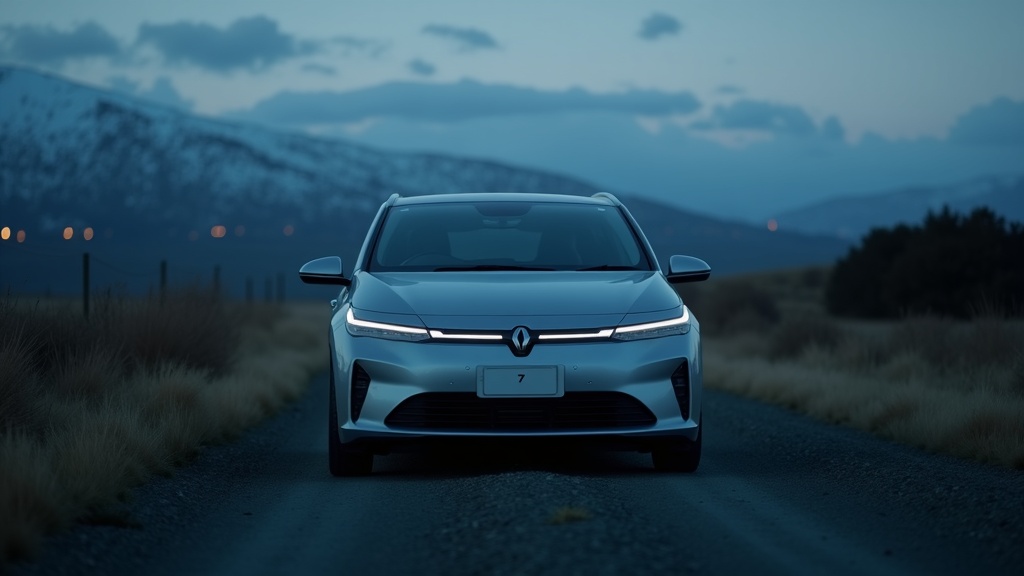
EV running costs after the RUC change: does a used Leaf still beat a petrol Aqua?
NZTA's light EV RUC rates took effect 1 July 2026. We run the real per-kilometre numbers for Leaf and Ioniq 6 owners against a petrol Aqua and hybrid Corolla at current second-hand prices.
What EV owners actually pay per kilometre under the new RUC rates
NZTA's updated light EV RUC rates are now in effect. Here is what Leaf and Ioniq 5 owners will pay per kilometre in 2026, stacked against a comparable petrol car on real Canterbury distances.