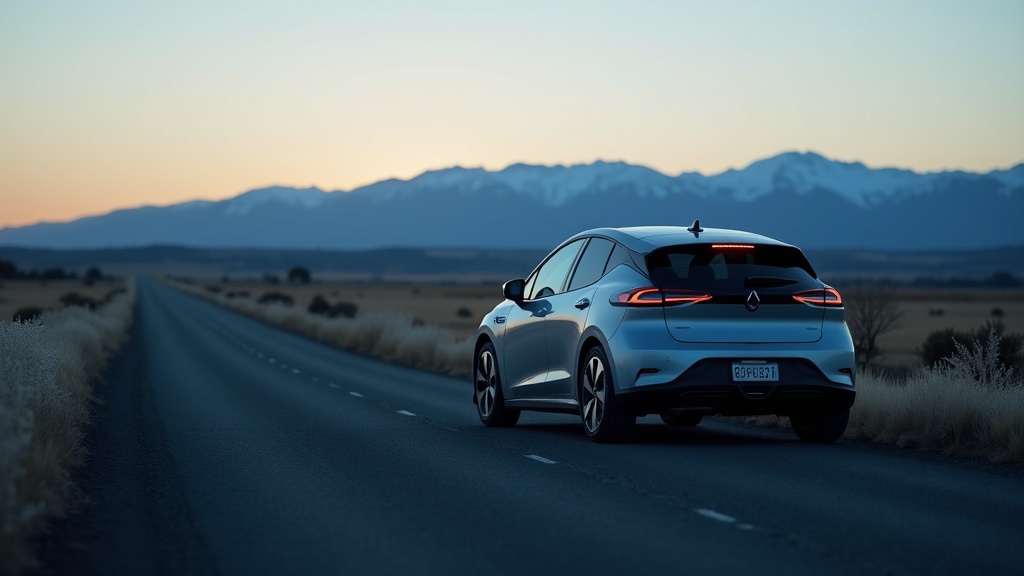
EV road user charges are live: what Canterbury drivers actually owe
The NZ Angle
New Zealand's road user charge exemption for light electric vehicles wound down progressively and expired fully at the end of March 2024. From that point, EVs weighing under 3.5 tonnes pay RUCs at the same rate as diesel vehicles in their weight class. For most passenger EVs, that is $76 per 1,000 kilometres as of mid-2025. The charge applies regardless of whether you charge at home, at a public station, or through a workplace charger. NZTA administers the system, and the obligation sits with the registered owner. You buy licences in advance through the NZTA website or at an AA centre, selecting a distance block (typically 1,000 km increments), and a licence label is issued for your windscreen. Running out of RUC distance is an infringement offence, the same as it is for a diesel ute. For Canterbury drivers doing high annual kilometres across the plains or commuting from Rolleston or Rangiora into Christchurch, the annual RUC bill is now a real number worth calculating before assuming an EV still beats a petrol or hybrid on running costs.
The RUC exemption for light electric vehicles ended in 2024. Here is what Canterbury EV owners now pay per kilometre, how to buy licences, and whether the numbers still make sense.
The free ride is over. From 1 April 2024, every light EV on New Zealand roads has been accumulating a road user charge liability, and if you have not been keeping your RUC licences current, you are already in breach.
The rate for light EVs under 3.5 tonnes is $76 per 1,000 kilometres. That figure is set by NZTA and reviewed periodically. It sits in the same tier as light diesel vehicles, which makes sense administratively but stings a little for owners who bought into EVs partly on the promise of lower running costs.
At 15,000 km per year, a typical Canterbury commuter is looking at $1,140 in annual RUCs. At 20,000 km, that is $1,520. These are not trivial sums.
How to buy RUC licences
You buy licences through the NZTA website at www.nzta.govt.nz, through the RUC system portal, or in person at an AA Driver Licensing Agent. You will need your vehicle's registration plate number and the current odometer reading.
Licences are purchased in distance blocks. Most EV owners buy in 1,000 km blocks, which keeps the upfront cost manageable, though you can buy larger blocks at once. NZTA issues a paper licence label that must be displayed on the windscreen alongside your WoF label. The licence shows the maximum odometer reading to which you are covered. When the odometer approaches that number, you buy another block before you reach it.
Do not let the odometer exceed the licensed distance. NZTA enforcement cameras can read odometers remotely on some newer vehicles, and spot checks do happen. The infringement fee for running over is $200 plus the unpaid RUC amount.
One practical point: if you buy a used EV, check what distance block is currently on the vehicle before you drive it off. Sellers sometimes let licences lapse before a sale. Confirm the licensed distance in the NZTA portal before you leave the yard.
Does the EV still stack up financially?
This is the question Canterbury buyers are now asking more carefully. Let us run the comparison against two realistic alternatives: a Toyota Aqua hybrid and a petrol-only small car.
A Nissan Leaf (40 kWh, the most common EV on NZ roads) costs roughly $16,000-$22,000 at a Christchurch dealer depending on year and condition. Charging at home on a standard residential rate of around 28-32 cents per kWh, real-world efficiency of 6-7 km/kWh means you are spending roughly 4-5 cents per kilometre on electricity. Add the new RUC of 7.6 cents per kilometre and the total energy-plus-road-tax cost sits around 11-13 cents per kilometre.
A Toyota Aqua hybrid of similar age and price returns around 4-4.5 L/100 km in real Canterbury driving. At $2.70 per litre, that is 10.8-12.2 cents per kilometre in fuel alone, with no RUC liability because petrol vehicles pay their road tax at the pump.
The gap has closed considerably. A year ago the Leaf was running at roughly half the per-kilometre cost of the Aqua on energy alone. Now they are within cents of each other across a broad range of driving conditions.
Where the Leaf still wins is depreciation profile and maintenance. No cambelt, no exhaust, brake pads last longer because of regenerative braking, and servicing intervals are simpler. Over three to five years of ownership those savings are real, just smaller than the marketing suggested when RUCs were waived.
The Aqua wins on range anxiety and the total absence of charging infrastructure worry. Canterbury winters, particularly on the drive over the Port Hills or down to Akaroa, do reduce EV range, and public fast charging in rural Canterbury is still patchy.
What this means if you are buying now
The Clean Car Discount ended in December 2023, and RUC exemptions are gone. The financial case for EVs now stands entirely on its own merits, without government padding underneath it.
For a Canterbury driver covering 12,000-15,000 km per year with reliable home charging, a second-hand Leaf or a BYD Atto 3 still makes reasonable financial sense over a five-year horizon, particularly if the alternative is a thirsty petrol SUV. But the margin is thin enough that it is worth doing the actual maths rather than assuming the EV wins.
For anyone covering high kilometres in a mix of urban and inter-regional driving, a hybrid like the Prius or Note e-Power is now genuinely competitive on total cost. You give up the satisfaction of running on electricity and gain the freedom of a three-minute refuel anywhere in the South Island.
The RUC change has not made EVs uneconomic. It has made the comparison honest.
By Paul Gray. See our editorial standards or email sales@premiumwholesalecars.co.nz with corrections.
More automotive
EV running costs in 2026: do the numbers still work?
The RUC exemption is gone and per-kilometre charges are now a real line item. We run the actual numbers for Leaf, Ioniq 5 and MG4 owners against petrol and hybrid alternatives.
Leaf vs petrol hatch: what the real running costs look like now
RUC charges for light EVs have been in place a year. We crunch the actual per-kilometre cost gap between a used Nissan Leaf and a comparable petrol hatch for Canterbury drivers doing average ks.
EV road-user charges kick in April 2026: what it actually costs Leaf and Aqua owners
The government's RUC freeze on light EVs ends 1 April 2026. Here's the real per-kilometre cost hit for Nissan Leaf and Toyota Aqua PHEV owners, and whether EVs still make financial sense.