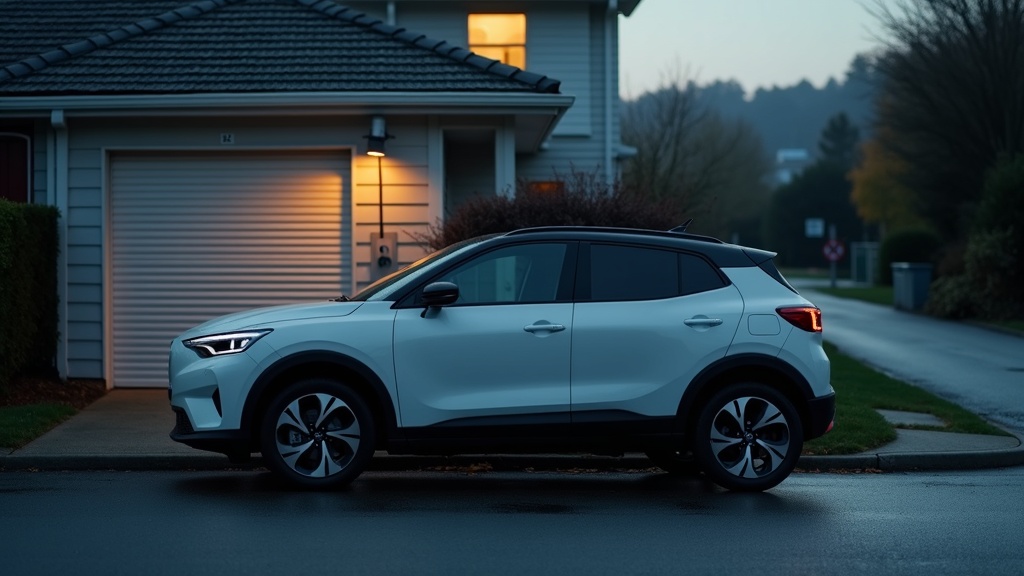
Leaf vs petrol hatch: what the real running costs look like now
The NZ Angle
From 1 April 2024, light electric vehicles lost their RUC exemption and now pay $76 per 1,000 kilometres, the same rate as petrol vehicles effectively pay through fuel excise duty. It closed the most obvious running-cost argument for EVs overnight, at least on paper. Canterbury buyers are in an interesting spot. Christchurch winters are cold enough that Leaf battery range drops noticeably, sometimes 20-25% on older 24 kWh packs, which changes the real-world efficiency numbers. Home charging is straightforward if you have a garage and a dedicated circuit, but plenty of buyers in higher-density suburbs are relying on public chargers, which cost more per kWh and erode the gap further. The used Leaf market here has softened since the Clean Car Discount ended in 2023, so purchase prices are lower than they were, which helps the EV case on total cost of ownership even as running costs have crept up. The comparison that matters is not headline electricity rates versus pump prices. It is total cost per kilometre driven, including WoF, servicing, tyres, depreciation, and now RUCs, against a real petrol alternative at current Canterbury pump prices.
RUC charges for light EVs have been in place a year. We crunch the actual per-kilometre cost gap between a used Nissan Leaf and a comparable petrol hatch for Canterbury drivers doing average ks.
The RUC exemption for light EVs is gone. Has been for a year. And the question that follows is simple enough: does the Nissan Leaf still make financial sense against a comparable petrol hatch for someone driving average New Zealand distances?
Average annual kilometres for a New Zealand private driver sits around 11,000-12,000 km. Use 12,000 as the working number. That is the scale everything else has to fit around.
What you're actually paying per kilometre
Start with the Leaf. A decent used example right now, say a 2018 40 kWh model in reasonable nick, is sitting somewhere between $18,000 and $23,000 depending on battery health and history. Call it $20,000 as a midpoint. Electricity to charge at home in Canterbury runs roughly $0.28-0.32 per kWh on a standard residential rate. The 40 kWh Leaf averages around 6.5-7 kWh per 100 km in real driving, Canterbury winters included. At $0.30/kWh that works out to about $0.20 per 100 km in electricity costs, or $0.002 per km. Then add RUCs: $76 per 1,000 km, which is $0.076 per km. Combined energy and RUC cost lands around $0.096 per km.
For the petrol side, a 2018 Toyota Corolla hatch or a Honda Fit of similar vintage is the natural comparison. Purchase price in the same condition runs $16,000-$20,000. Petrol in Christchurch is currently around $2.60-2.75 per litre for 91. A Corolla hatch averages roughly 7.5-8 litres per 100 km in mixed driving. At $2.70/L that is around $0.21 per km in fuel alone. No separate RUC to worry about as it is included in the pump price.
On energy costs only, the Leaf is still cheaper. About $0.096/km versus $0.21/km. That gap has narrowed since RUCs arrived, but it has not closed.
Over 12,000 km a year, the Leaf saves roughly $1,370 in running costs on energy alone compared to the Corolla. Before you factor in anything else.
Where the comparison gets complicated
Servicing is where the Leaf pulls further ahead. No oil changes, no timing belt, no exhaust work. A reasonable annual servicing budget for a used Leaf is $200-300 covering a WoF, tyre rotation, brake inspection, and whatever minor electrical work shows up. A petrol Corolla of the same age needs oil and filter changes, and the list grows as the kilometres mount. Budget $500-700 annually for a conscientious owner.
Tyres are the same cost for both. WoF is annual for any car over three years old.
The variable that genuinely complicates the Leaf's case is battery degradation. A 2018 40 kWh pack has held up better than the older 24 kWh generation, but you should still check the battery health report before buying. A pack showing 10 or fewer bars out of 12 on the dashboard indicator is a negotiating point, not a dealbreaker, but it will affect range and real-world efficiency. In Canterbury winter, a degraded pack and heater use can push consumption closer to 9 kWh per 100 km, which softens the energy advantage.
Public charging also matters if you do not have home charging sorted. Rapid charging at a commercial station runs $0.55-0.65 per kWh in most networks. Do the charging maths on that rate and the per-km electricity cost jumps to around $0.043-0.046 per km, which added to RUCs brings you to $0.12-0.13/km. Still cheaper than petrol, but the margin thins.
The total ownership picture
Depreciation is the largest single cost for most private buyers and it tends to get ignored in running-cost comparisons. Used Leaf prices have come off since the Clean Car Discount ended, which is actually good news for buyers entering now. The floor has largely been found on the 40 kWh generation. Petrol Corollas of similar vintage have held their value steadily because demand is consistent.
Over a three-year ownership period at 12,000 km per year, the Leaf's running cost advantage on energy and servicing adds up to somewhere between $4,000 and $5,500 against a comparable petrol hatch. Whether that offsets any remaining purchase price difference depends on what you negotiate on the day.
The honest answer is that the Leaf still wins on per-kilometre running costs for a Canterbury buyer who has home charging. The RUC change took a real bite but not a fatal one. The risks are around battery condition on older stock and the practicality of charging for your specific situation.
If you drive more than 15,000 km a year and charge at home, the maths get more compelling. If you're relying on public chargers for the majority of your charging, sharpen your pencil before assuming the EV is cheaper.
By Paul Gray. See our editorial standards or email sales@premiumwholesalecars.co.nz with corrections.
More automotive

EV road-user charges kick in April 2026: what it actually costs Leaf and Aqua owners
The government's RUC freeze on light EVs ends 1 April 2026. Here's the real per-kilometre cost hit for Nissan Leaf and Toyota Aqua PHEV owners, and whether EVs still make financial sense.
EV road user charges kick in July 2026: what Leaf, Ioniq 6 and Atto 3 owners will actually pay
The RUC exemption for light EVs ends 30 June 2026. Here is what three of NZ's most common electric cars will cost to run from 1 July, and how that stacks up against petrol.

EV road user charges kick in July 2026: what it actually costs
The RUC exemption for light electric vehicles ends 30 June 2026. Here is what Leaf, Ioniq 6 and BYD Atto 3 owners will pay per kilometre, and whether EVs still make sense against a petrol or diesel used import.