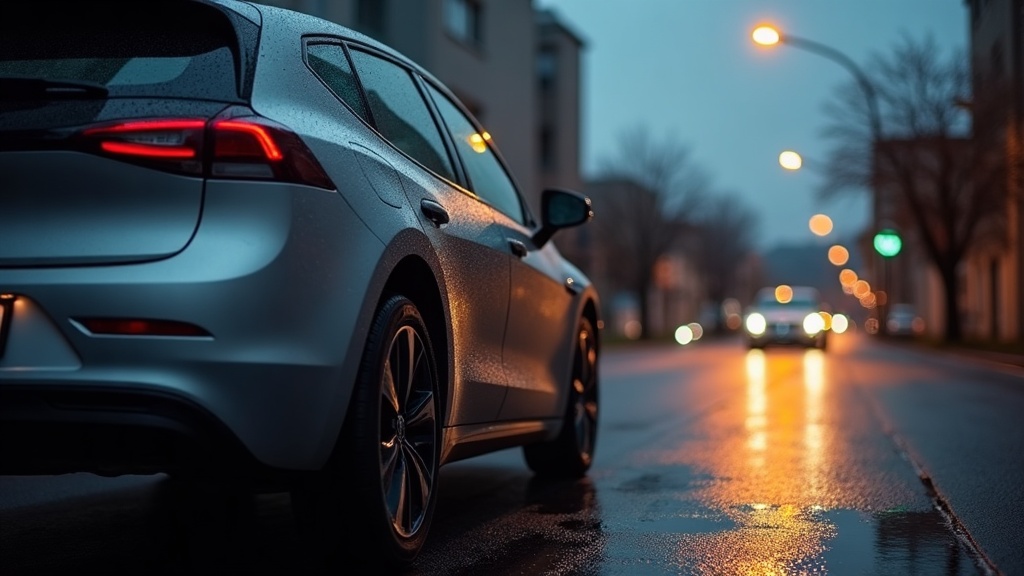
EV road user charges kick in July 2026: what it actually costs
The NZ Angle
New Zealand has run a road user charge exemption for light electric vehicles since 2021, effectively giving EV drivers a free pass on the per-kilometre levy that diesel and some petrol drivers pay. That exemption expires on 30 June 2026. From 1 July, light EVs will pay RUCs at the same rate as other vehicles, currently set at $76 per 1,000 km for light diesel vehicles, with the government signalling a comparable rate for EVs. For a driver doing 15,000 km a year, that is $1,140 in new annual costs appearing overnight. The Clean Car Discount closed at the end of 2023, so there is no purchase-side offset left either. The Nissan Leaf remains the most common EV on NZ roads, followed by a growing fleet of BYD Atto 3s and the newer Hyundai Ioniq 6. All three sit in the $25,000–$60,000 used market range depending on age and spec. The question for anyone buying or holding one of these cars right now is whether the running cost maths still works once RUCs are added to the equation, and how that compares to a 2019 Toyota RAV4 petrol or a Mazda CX-5 diesel sitting on a forecourt for similar money.
The RUC exemption for light electric vehicles ends 30 June 2026. Here is what Leaf, Ioniq 6 and BYD Atto 3 owners will pay per kilometre, and whether EVs still make sense against a petrol or diesel used import.
The RUC exemption was always a policy tool, not a permanent feature of EV ownership. The government was clear when it extended the exemption that it would wind down once EVs reached meaningful market share. That point has arrived. From 1 July 2026, every light EV on NZ roads pays road user charges.
The current RUC rate for light diesel vehicles is $76 per 1,000 km. The rate for EVs has not been confirmed at time of writing, but NZTA's consultation documents have pointed to a figure in the same range, likely $53–$76 per 1,000 km. This piece uses $76 as a working figure, which is the conservative case. If the government lands at $53, the numbers shift slightly in the EV's favour, but the structural point holds either way.
What it costs per kilometre to run each car
Take a 2020 Nissan Leaf 40 kWh, sitting at around $22,000–$26,000 on the used market. Average real-world consumption is around 18 kWh per 100 km. At the current residential electricity rate of roughly $0.30 per kWh, that is $5.40 per 100 km in energy costs. Add RUCs at $76 per 1,000 km and you are adding $7.60 per 100 km. Combined running cost: roughly $13 per 100 km before servicing and tyres.
A 2021 BYD Atto 3, currently $38,000–$45,000 used, is heavier and uses around 20–22 kWh per 100 km in mixed driving. Call it $6.60 in electricity plus $7.60 in RUCs: $14.20 per 100 km. The Hyundai Ioniq 6, one of the more efficient cars on the market at around 14–16 kWh per 100 km, comes out better: roughly $4.80 in electricity plus $7.60 RUCs, so $12.40 per 100 km.
Now compare. A 2019 Toyota RAV4 2.0 petrol, available used for $24,000–$30,000, uses around 8.5–9.5 L per 100 km in real driving. At $2.70 per litre, that is $23–$26 per 100 km in fuel alone. A 2019 Mazda CX-5 2.2 diesel, similar money, does around 6.5–7.5 L per 100 km, which at $2.00 per litre diesel costs roughly $13–$15 per 100 km in fuel, plus RUCs already baked in at $76 per 1,000 km, so add another $7.60. Total: $20–$22 per 100 km.
Even with RUCs added, the Leaf and Ioniq 6 run cheaper per kilometre than either petrol or diesel comparable. The BYD is closer to the CX-5 diesel, but still cheaper. The gap is narrower than it was, but it has not closed.
Where the case weakens
The per-kilometre comparison is not the whole story. EVs cost more to buy at equivalent age and mileage. A 2020 Leaf costs $22,000–$26,000. A 2019 RAV4 petrol in similar condition sits at $24,000–$28,000. The purchase price gap is smaller than most people assume, but the Leaf carries battery degradation risk that the RAV4 does not. A Leaf with 100,000 km on a 40 kWh battery might return 170–200 km of real range on a good day. For most Christchurch commuters that is fine. For anyone doing regular Christchurch to Timaru or Christchurch to Nelson runs, it is a problem.
Servicing costs on the Leaf are genuinely low. No cambelt, no transmission fluid, minimal brake wear from regen. A 2020 Leaf annual service through an independent is $150–$250. Compare that to a CX-5 diesel, which needs fuel filter, DPF attention, and timing chain checks around 150,000 km, and the bills start to look different.
BYD parts availability in New Zealand is still patchy. There are authorised service centres in the main centres, but if you are buying an Atto 3 in Invercargill or Gisborne, factor in shipping time and limited independent workshop familiarity. That is a real cost even if it does not show up on the per-kilometre calculation.
The Ioniq 6 is the most interesting case. It is the most efficient of the three, holds value well, and Hyundai has reasonable parts and service coverage in New Zealand. The 2022 and 2023 models are still expensive used, $48,000–$58,000, which means the running cost saving has a lot of ground to cover before it pays off against a $27,000 petrol SUV.
The actual question for buyers right now
If you already own a Leaf or an Ioniq 6, the RUC change hurts, but it does not flip the economics. You will pay more from July 2026, but you will still spend less per kilometre than someone in a petrol SUV.
If you are buying today with a $25,000–$35,000 budget, the 2019–2021 Leaf remains the clearest value play in the EV segment, provided range works for your driving. Run the numbers on your actual annual kilometres. At 12,000 km a year, the savings over petrol are real but modest. At 20,000 km or more, the gap is significant even with RUCs added.
What July 2026 does is remove the last artificial advantage EVs had in the running cost comparison. After that date, every cost is on the table. The case still holds for many buyers. It just has to be made honestly now rather than leaning on an exemption that was always temporary.
By Paul Gray. See our editorial standards or email sales@premiumwholesalecars.co.nz with corrections.
More automotive
EV road user charges kick in July 2026: what it costs per km
The RUC exemption for light electric vehicles ends 30 June 2026. Here's the real per-kilometre cost for Leaf, Ioniq 6 and BYD Seal owners, and how it stacks up against petrol.
Leaf and Aqua prices in Canterbury: has the market finally settled?
With RUCs locked in for light EVs and the Clean Car Discount gone three years now, Canterbury used-car prices for the Nissan Leaf and Toyota Aqua are telling a clearer story than they have in years.
EV running costs two years after RUC exemption ended
The RUC-free ride for light EVs ended 1 April 2024. Two years on, we run the numbers on what Leaf and Prius Plug-in owners in Canterbury are actually paying per kilometre.