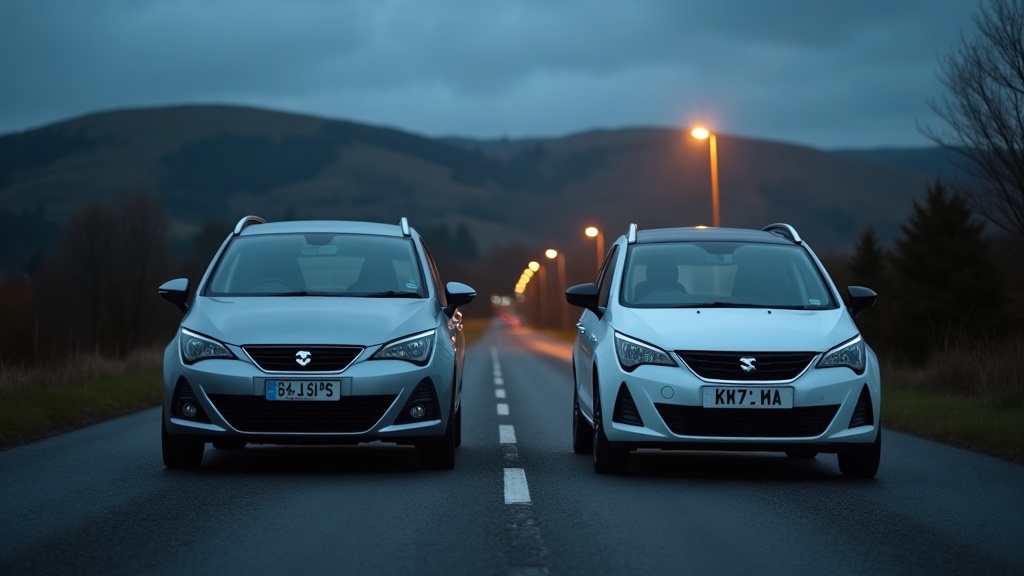
Leaf and Aqua prices in Canterbury: has the market finally settled?
The NZ Angle
The two policy shifts that reshaped the affordable used-car market here landed in quick succession. The Clean Car Discount was scrapped in late 2023, stripping thousands of dollars off the effective value of imported EVs and hybrids overnight. Then RUCs for light electric vehicles, phased in from 2024, added a running cost that buyers had never factored into EV ownership before. For a Nissan Leaf doing 15,000 km a year, that's roughly $720 in RUCs annually on top of power costs, at the current rate of 4.8 cents per kilometre. It's not crippling, but it changed the sums. Canterbury buyers have always had a specific relationship with this segment: cold winters reward all-wheel drive and good range, and Christchurch's relatively compact geography made the Leaf's real-world range less of a problem than it would be in a more spread-out region. The Aqua, meanwhile, sits in a different lane entirely: no RUCs, no range anxiety, just a 1.5-litre hybrid doing honest fuel economy on Canterbury roads. Both cars built strong used-car followings here. The question now is what they're actually worth with the subsidy money gone and the true running costs visible.
With RUCs locked in for light EVs and the Clean Car Discount gone three years now, Canterbury used-car prices for the Nissan Leaf and Toyota Aqua are telling a clearer story than they have in years.
There was a period, roughly 2021 to 2023, when used EV and hybrid pricing in New Zealand made almost no rational sense. The Clean Car Discount inflated demand, compressed supply, and pushed prices for five-year-old Nissan Leafs to within touching distance of newer, better-equipped petrol alternatives. Dealers were moving them fast. Buyers were paying figures that would have seemed absurd a year earlier. That's over now.
The question that's taken longer to answer is where prices actually settle once the distortion clears. Mid-2026 is a reasonable point to take stock.
What Leafs are fetching now
A 2018 Leaf in honest condition, 40 kWh battery, State of Health above 85%, is sitting at around $16,000 to $19,000 at dealers across Canterbury at the moment. A year ago that range was running $1,500 to $2,000 higher. The market has nudged down, not collapsed. The 30 kWh cars, the earlier 2016 and 2017 models with their tighter real-world range, are under $14,000 now and sometimes well under, depending on battery condition. Those are the ones worth being careful with.
Battery degradation is the variable that makes Leaf pricing genuinely complicated. Two identical-looking 2018 Leafs can have meaningfully different State of Health figures depending on how they were charged and where they spent their lives. A car that spent years on rapid chargers in a warm Japanese city will not have the same battery as one that was lightly used and mostly slow-charged. Ask for the SOH report. If a dealer can't produce one, that tells you something.
The RUC addition has taken some heat out of buyer enthusiasm, particularly from private buyers who worked out the full cost of ownership for the first time. At 4.8 cents per kilometre for light EVs, someone doing 18,000 km a year is paying around $864 annually. Spread over the likely ownership period, it softens the appeal of a car that was already asking you to manage range. The buyers who remain are clearer-eyed about why they want one: low urban running costs, simplicity, and a driving experience that, once you've lived with it, is harder to give up than people expect.
The Leaf drives with a directness that catches people off guard the first time. Lift off the accelerator and the car starts slowing without drama; you feel it through the whole car, not just in your foot. Around town it's relaxed, settled, easy to place. It doesn't flatter you as a driver, but it doesn't need to. It's an appliance that happens to be pleasant to operate.
Where the Aqua sits
The Toyota Aqua has had a quieter ride through all of this, partly because it was never as directly tied to the incentive cycle. No RUCs. No range anxiety. Petrol around $2.60 a litre at Canterbury pumps, and an Aqua returning honest mid-20s kilometres per litre in mixed driving means the fuel bill stays manageable without any of the infrastructure thinking an EV requires.
Prices for a tidy 2021 Aqua, the second-generation car with the bipolar battery and the cleaner interior, are sitting somewhere between $21,000 and $25,000 depending on grade and kilometres. Earlier first-gen cars, 2015 to 2019 vintage, are from $12,000 up, and the supply has remained consistent enough that buyers aren't being squeezed. These are genuinely good used cars: reliable, economical, easy to service, and with enough of a used parts network now that running costs stay predictable.
The Aqua doesn't excite anyone behind the wheel. The steering is light and vague at speed, the chassis does what's asked of it without any conversation, and there's a mild disconnect between the hybrid system's transitions and what you expect the car to do. None of that matters for how most people use this car. It's bought for sense, not sensation, and on that basis it delivers.
Whether the floor has held
Looking at Canterbury trade pricing over the last eighteen months, the Leaf market has found something close to a base. The 40 kWh cars have been largely stable since the end of 2025, with minor softening but nothing dramatic. The 30 kWh cars will keep drifting as range concerns grow and newer alternatives become affordable. That's just physics working against older battery technology.
The Aqua has barely moved. It's in that reliable band of used-car pricing where demand is broad and supply keeps arriving from Japan at a rate that prevents any serious scarcity premium. If anything, the second-gen car is holding value better than expected given how many have landed here.
For a Canterbury buyer doing the numbers right now, both cars make sense at current prices for the right use case. The Leaf suits a household with home charging, predictable daily distances, and tolerance for planning longer trips. The Aqua suits everyone else who wants strong fuel economy without changing how they think about refuelling.
The incentive noise is gone. What's left is just the cars, the prices, and whether they fit your life.
By Paul Gray. See our editorial standards or email sales@premiumwholesalecars.co.nz with corrections.
More automotive
EV running costs two years after RUC exemption ended
The RUC-free ride for light EVs ended 1 April 2024. Two years on, we run the numbers on what Leaf and Prius Plug-in owners in Canterbury are actually paying per kilometre.
Do EVs still save you money per kilometre in mid-2026?
RUC charges are locked in, power prices have climbed, and petrol is hovering around $2.80. We run the real per-kilometre numbers on the Leaf, MG4, and BYD Atto 3 to see if the EV savings story still holds.
EV running costs in Canterbury: what Leaf and Aqua PHEV owners are actually paying
RUC charges for light EVs have been in place for over a year. We crunch what Leaf and plug-in Aqua owners in Canterbury are genuinely paying compared to petrol equivalents.