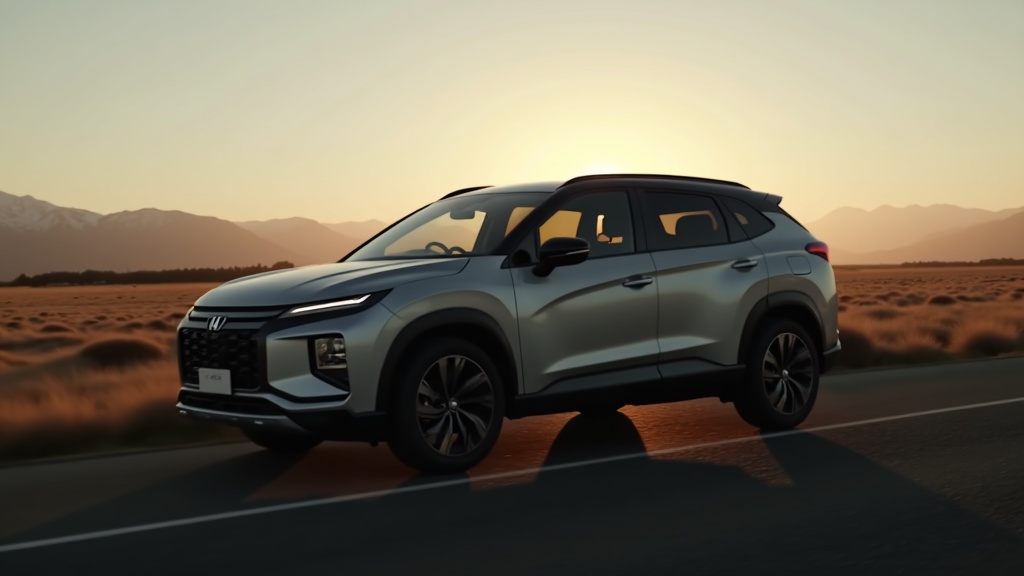
Hybrid SUV prices are closing in on petrol at Japanese auction
The NZ Angle
For Canterbury buyers, the RAV4 Hybrid has long been the sensible answer to a straightforward question: does the premium over a petrol RAV4 pay off? On Alpine Highway runs and Methven weekend trips, the hybrid's efficiency case was easy to make. The harder part was always the purchase price. Landed cost on a Japanese-import RAV4 Hybrid has sat meaningfully above its petrol equivalent for the past two years, driven partly by post-COVID demand and partly by a yen that made Japanese sellers very happy. That dynamic is shifting. As yen depreciation eases and auction clearance prices on hybrids soften relative to petrol grades, the gap that once justified a long conversation with your accountant is narrowing to something closer to a no-brainer. Compliance costs, WoF schedules, and RUC exemptions on full hybrids all stay the same regardless of what the yen does, but when the buy-in price drops by a meaningful margin, the total ownership maths changes fast. Dealers sourcing stock right now are seeing it in their buying. Buyers shopping Canterbury yards in the next 90 days may start to see it in the sticker prices too.
April 2026 auction data from Japan shows the yen's stabilisation is compressing the price gap between hybrid SUVs and their petrol equivalents, with direct consequences for Canterbury buyers.
The yen spent most of 2024 and early 2025 in freefall, bottoming out around 160 to the US dollar and dragging Japanese auction prices into territory that made hybrid SUVs genuinely expensive to land in New Zealand. Sellers in Japan knew their cars were cheap in yen terms and priced accordingly. Buyers in New Zealand kept paying because demand for fuel-efficient SUVs did not soften just because the yen did.
By April 2026, that equation has changed. The yen has recovered ground, sitting closer to 142-145 against the USD, and auction data coming out of USS, TAA, and JU Group rings is showing something dealers have been waiting for: hybrid premiums at the block are compressing.
The RAV4 Hybrid is the clearest example. Through most of 2024, a clean, mid-grade RAV4 Hybrid in auction grade 4 or 4.5 was clearing at a premium of roughly 250,000 to 350,000 yen over a comparable petrol RAV4. Converted, landed, compliance-costed, that gap translated to somewhere between $3,500 and $5,000 NZD on the forecourt. Enough to make buyers waver. Enough to send some of them home in a petrol Forester instead.
April 2026 data suggests that premium has narrowed to somewhere in the 120,000 to 180,000 yen range on comparable grades. Still a premium, yes. But the forecourt gap is closing toward $2,000 or under in some cases, depending on grade, mileage, and the individual dealer's margin appetite.
Why the gap is closing now
Two things are happening simultaneously. The yen recovery makes Japanese auction prices more expensive in NZD terms across the board, which sounds like bad news but actually compresses relative premiums when hybrid and petrol prices move at different rates. Hybrid auction prices, having run hard for two years, are finding resistance. Petrol SUV prices are being bid up by buyers priced out of hybrids. The spread narrows from both ends.
There is also a supply factor. Japanese domestic hybrid registrations have been strong, meaning more late-model hybrid SUVs are cycling through de-fleet and into the auction stream. Supply up, premium down. It is not complicated.
Frankly, the dealers who were nervous about committing to hybrid-heavy stock six months ago are now the ones watching from the sideline as smarter buyers lock in landed cost advantages before the retail market catches up.
What it means for a Canterbury buyer today
Here is what I think matters most. The ownership calculus on a hybrid SUV was never really about fuel savings alone, though those are real. Canterbury winters, the Christchurch to Queenstown run, regular trips on the open road: a RAV4 Hybrid will return 5.5 to 6.5L/100km in mixed use where a petrol equivalent is burning 8.5 to 9.5. At petrol prices sitting between $2.70 and $3.00 a litre, that is a meaningful difference over three years.
The historical objection was always the upfront cost. If the hybrid sticker is $4,500 more, you need to drive a lot of kilometres before the fuel saving pays it back. Compress that price gap to $1,500 or $2,000, and the payback period drops below 18 months for an average Canterbury driver doing 15,000 km a year. That changes the conversation from "is it worth it" to "why would you not".
The RAV4 Hybrid is not the only car where this applies. CX-5 buyers have mostly had a petrol-only decision to make, given how few diesel CX-5s are landing now. But in the broader hybrid SUV space, including the Outlander PHEV and the X-Trail e-Power, the compression effect is visible. The Outlander PHEV remains a different animal because of its import compliance pathway and the DC fast-charge question, but the general trend is consistent: hybrid premiums are eroding.
The timing question
Nobody times the car market perfectly, and anyone claiming they can call auction prices six months out is selling you something. What the April 2026 data does is confirm a direction of travel, not a floor. If the yen weakens again, hybrid premiums could bounce back. If New Zealand's appetite for fuel-efficient SUVs strengthens further, local dealers will hold margin regardless of what they paid at auction.
But right now, today, a buyer shopping a hybrid SUV in Canterbury is in a better position relative to petrol alternatives than they have been at any point in the past 18 months. That window may not be wide for long.
Dealers sourcing stock in April are buying into that narrowed gap. The cars land six to eight weeks later. If the trend holds, what hits Canterbury forecourts in June will be priced more competitively against petrol equivalents than anything buyers have seen since 2022. The real objection to a hybrid SUV, the price premium, is getting harder to sustain.
By Paul Gray. See our editorial standards or email sales@premiumwholesalecars.co.nz with corrections.
More automotive
Does a used Nissan Leaf still make sense for a Christchurch commuter?
With the Clean Car Discount gone and RUC charges now part of the deal, we run the real weekly numbers on a used Nissan Leaf for a typical Canterbury commuter in 2026.
What Kiwi EV owners are actually paying in RUCs now
The RUC-free ride for light EVs ended on 31 December 2025. Here is what owners are paying mid-2026 and whether an EV still makes financial sense against a petrol or hybrid alternative.
EV road user charges are live: what Canterbury drivers actually owe
The RUC exemption for light electric vehicles ended in 2024. Here is what Canterbury EV owners now pay per kilometre, how to buy licences, and whether the numbers still make sense.