RAV4 Hybrid vs CX-5 diesel: what it actually costs per km in Canterbury
The NZ Angle
Light diesel RUC rates have climbed again, sitting at $76 per 1,000 km as of the current NZTA schedule, and that figure has a habit of moving in one direction. For Canterbury buyers, this matters more than it might in a city where public transport takes some of the load: people here drive, often on open roads, and 15,000 km a year is a conservative estimate for anyone commuting out of Rangiora or Rolleston. Meanwhile, the supply of low-mileage Japanese hybrid imports has been tightening since early 2023. The yen has weakened, Japanese domestic prices have risen, and compliance costs have not got cheaper. A clean 2020 RAV4 Hybrid that might have been $38,000 two years ago is now sitting at $43,000-$47,000 on Trade Me, if you can find one with sensible kilometres. The 2020 Mazda CX-5 diesel, by contrast, is more plentiful, easier to inspect, and typically asking $32,000-$36,000 for a decent example. The question is whether the CX-5's lower purchase price survives contact with the fuel and RUC bill over three to five years of Canterbury driving.
RUC rises and tightening Japanese hybrid supply are reshaping the used-car sums. We run the real per-kilometre numbers for a Canterbury driver doing 15,000 km a year.
The Clean Car Discount is gone, petrol is hovering around $2.60-$2.80 a litre at Christchurch pumps depending on the week, and diesel RUCs have gone up again. Anyone sitting on the fence between a used hybrid SUV and a diesel SUV right now is staring at a genuinely complicated set of numbers. Let's work through them properly.
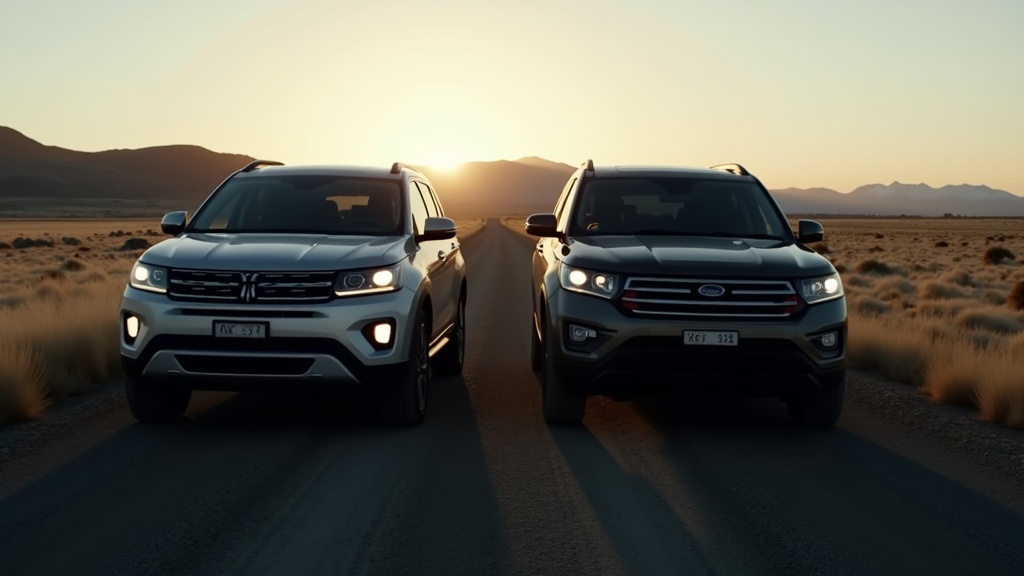
The two cars most relevant to this decision in the Canterbury used market are the 2020 Toyota RAV4 Hybrid and the 2020 Mazda CX-5 diesel. Both are practical five-seat SUVs, both are well-regarded, and both have enough supply on Trade Me to give you a real price reference rather than an outlier. The RAV4 Hybrid is asking $43,000-$47,000 for low-mileage examples. The CX-5 diesel in the same year and similar trim is $32,000-$36,000. Call the purchase price gap $10,000 in the diesel's favour.
Fuel and RUC: running the annual numbers
The RAV4 Hybrid returns around 5.5-6.0 L/100 km in mixed driving. Canterbury driving, with its mix of open plains roads and urban Christchurch, is about as close to the official cycle as you will get in New Zealand. Call it 5.8 L/100 km. At 15,000 km a year and $2.70 a litre, that's 870 litres times $2.70, which lands at roughly $2,350 a year in fuel.
The CX-5 diesel 2.2 Skyactiv-D is a genuinely efficient engine. Expect 6.2-6.8 L/100 km in the same conditions, say 6.5 L/100 km. Diesel at Christchurch pumps is running around $2.20-$2.40 a litre currently. Call it $2.30. At 15,000 km that's 975 litres times $2.30, which is $2,240 in fuel alone. Almost identical to the hybrid, at this point.
Here is where it gets interesting. The CX-5 diesel also owes RUCs. At $76 per 1,000 km, 15,000 km costs $1,140 a year on top of the fuel bill. Total annual running cost on energy and road tax: $3,380 for the CX-5 diesel versus $2,350 for the RAV4 Hybrid. The hybrid saves you roughly $1,030 a year in running costs.
That sounds like a clean win for the hybrid. Except you paid $10,000 more to buy it.
The payback period that nobody bothers to calculate
Divide the $10,000 purchase premium by the $1,030 annual saving and you get a payback period of just under ten years. That is a long time to hold a used car bought at $45,000. Most Canterbury buyers will sell or trade somewhere in the three-to-five year window. At five years, the hybrid has clawed back around $5,150 of its premium. You are still behind by close to five grand compared to the CX-5 buyer who invested the difference elsewhere, or simply kept it.
For my money, this is the number the hybrid advocates consistently skip over. The per-kilometre story sounds good in isolation. It only makes sense if the purchase price gap is small, or if you are driving significantly more than 15,000 km a year. At 25,000 km annually, the hybrid's running cost advantage blows out to around $1,700 a year and the payback period drops to six years, which starts to feel more defensible.
There is one more variable worth naming: RUC trajectory. The current $76 rate for light diesel has increased multiple times in recent years and there is no credible argument that it will decrease. If it reaches $90 per 1,000 km within three years, which is plausible given infrastructure funding pressures, the CX-5's annual running cost climbs by another $210 and the hybrid's payback period shortens accordingly. Buying a diesel in 2025 is, frankly, a bet on RUC rates staying manageable. That is not a bet I would take lightly.
What the supply situation actually means for buyers
The tightening Japanese hybrid supply changes the calculus in a way that is easy to understate. When the RAV4 Hybrid market was flooded with fresh imports in 2021 and 2022, depreciation on those cars was steep enough that buying one at $38,000 and selling at $30,000 three years later felt acceptable. At today's asking prices, you are buying closer to the top of a supply-constrained market. If supply normalises in the next two to three years as Japanese domestic pricing adjusts, the hybrid you paid $45,000 for today could face sharper depreciation than the CX-5 bought at $34,000.
The CX-5 diesel's residual values are not exciting. They are just predictable.
The unreasonable claim I will defend here: at current pricing, the 2020 CX-5 diesel is the more financially rational choice for most Canterbury buyers doing 15,000 km a year, despite everything the running cost headlines say about hybrids. The hybrid wins on emissions, on refinement, and on fuel-stop frequency. It wins on per-kilometre cost only at higher mileages. At 15,000 km on a $10,000 price gap, it does not win on money.
RUC rises may eventually flip that verdict. They are not there yet.
By Paul Gray. See our editorial standards or email sales@premiumwholesalecars.co.nz with corrections.
More automotive
EV road user charges are live: what Canterbury drivers actually owe
The RUC exemption for light electric vehicles ended in 2024. Here is what Canterbury EV owners now pay per kilometre, how to buy licences, and whether the numbers still make sense.
EV running costs in 2026: do the numbers still work?
The RUC exemption is gone and per-kilometre charges are now a real line item. We run the actual numbers for Leaf, Ioniq 5 and MG4 owners against petrol and hybrid alternatives.
Leaf vs petrol hatch: what the real running costs look like now
RUC charges for light EVs have been in place a year. We crunch the actual per-kilometre cost gap between a used Nissan Leaf and a comparable petrol hatch for Canterbury drivers doing average ks.