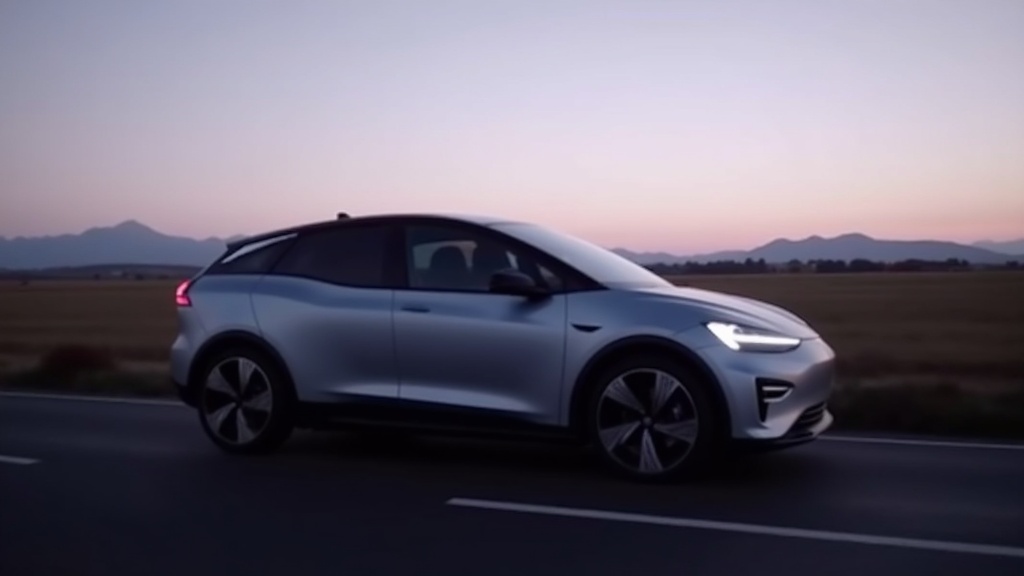
What EV owners actually pay in RUCs now the free ride is over
The NZ Angle
New Zealand charged light EVs zero road user charges from 2009 until the exemption was phased out, with full RUC liability reinstated from 1 April 2024 at the standard light diesel rate of $76 per 1,000 km. That puts an EV on the same footing as a diesel Hilux for road funding purposes, which is either fair or brutal depending on how you bought into the EV proposition. For Canterbury drivers the numbers matter more than most: commutes from Rolleston, Lincoln, or Rangiora into Christchurch can clock 30,000-plus kilometres a year, and the flat Canterbury plains are no help when it comes to range anxiety mitigation. The Nissan Leaf remains one of the most common EVs on NZ roads, arriving through the grey import stream from Japan, while the BYD Atto 3 has become the dominant new-car EV option under $60,000. Both now carry a real RUC obligation. Whether the fuel saving still outweighs that obligation depends on how far you drive, what petrol price you assume, and whether you bought at the right point on the depreciation curve.
The RUC exemption for light EVs ended in 2024. Here is what Canterbury EV owners are paying per year in road user charges versus what they save on petrol, and whether a Leaf or BYD Atto 3 still makes financial sense.
The RUC exemption for light EVs ended quietly on 31 March 2024, and the noise since has been surprisingly muted. Either EV owners have done the sums and decided it still works, or they haven't done the sums yet. This piece does the sums.
The current RUC rate for light EVs is $76 per 1,000 km. That is the same rate applied to light diesel vehicles under 3,500 kg. You purchase RUC licences in blocks of 1,000 km through NZTA's道路使用者 portal, and you are legally required to have sufficient licence purchased before you use the road. Enforcement is real: NZTA cross-references odometer readings at WoF time, and running unlicensed carries fines.
The annual RUC bill by distance
At 15,000 km per year, which is roughly the NZ average, your RUC bill is $1,140. At 20,000 km it is $1,520. A commuter clocking 25,000 km pays $1,900 annually, and a high-mileage driver at 30,000 km is up for $2,280. These are not trivial numbers.
Now put those against the petrol saving. A comparable petrol car to a Nissan Leaf, say a 2018-2020 Toyota Corolla hatch, averages around 7 litres per 100 km in real-world Canterbury driving. At $2.70 per litre, that is $189 per 1,000 km in fuel. At 15,000 km a year you are spending $2,835 on petrol in the Corolla. The Leaf's home-charging cost on a standard Orion residential tariff runs roughly $3.50-4.50 per 100 km depending on your rate and whether you charge off-peak. Call it $4.00 per 100 km, so $600 per year at 15,000 km.
The fuel saving at 15,000 km is therefore around $2,235. Subtract the $1,140 RUC bill and you are still net positive by roughly $1,095 per year. That is genuine money. The exemption ending did not kill the EV financial case; it trimmed it.
At 25,000 km the fuel saving versus the Corolla grows to around $4,725, the RUC bill is $1,900, and the net saving is around $2,825. Higher mileage still favours the EV more strongly, which is counterintuitive to people who heard "RUCs" and assumed the worst.
Where the BYD Atto 3 changes the equation
The BYD Atto 3 is a heavier, larger car with a bigger battery, and its real-world consumption reflects that. Owners are typically reporting 18-22 kWh per 100 km in mixed Canterbury driving, compared to 14-17 kWh for a 40 kWh Leaf. The Atto 3's charging cost sits closer to $7.00-9.00 per 100 km depending on how much public fast-charging you use, since DC fast charging at ChargeNet or BP Pulse costs significantly more than home charging overnight.
The RUC rate is identical: $76 per 1,000 km regardless of battery size. So the Atto 3 pays the same road tax as the Leaf but costs more to charge. Its comparable petrol vehicle is something like a Mazda CX-5 or Toyota RAV4, which drinks 8-9 litres per 100 km. The fuel saving is therefore larger in absolute terms, and the net position after RUCs is still comfortably positive. At 20,000 km, even accounting for higher charging costs, most Atto 3 owners are saving $1,500-2,000 net over an equivalent petrol SUV.
The real objection to the Atto 3 is not running costs. It is the purchase price, the depreciation uncertainty on a brand that is still establishing its resale floor in NZ, and the fact that servicing infrastructure is thinner outside main centres. For Canterbury buyers those are legitimate concerns. The numbers above assume you bought well.
What the Leaf import market looks like in 2026
A clean 40 kWh Leaf, 2018-2020 vintage, landed and complied in Canterbury, sits in the $17,000-22,000 range depending on kilometres and battery health. The 24 kWh and 30 kWh earlier cars are cheaper but the range anxiety is real and the battery degradation risk on a 10-year-old Japanese import deserves scrutiny. Always check the Leaf Spy battery state of health before buying; 80% or above is acceptable, below that you are buying a shorter-range car than the spec sheet implies.
Frontal impact certification is required for Japanese imports that lack it from the factory, and most Leafs require this on NZTA compliance. A compliant car will have this sorted, but confirm it before purchase rather than assuming.
Frankly, the 40 kWh Leaf at $18,000-20,000 remains one of the better-value used car purchases available in NZ right now. The RUC bill at average mileage is $1,140 per year. The fuel saving versus a comparable petrol hatch is $1,500-2,500 depending on your driving. The car still makes money for you from day one of ownership.
The Clean Car Discount is gone, and the RUC exemption is gone. The case for EVs in 2026 is a quieter, less subsidised, more honest case: cheaper to run per kilometre, real road charges factored in, and still ahead if you do the arithmetic. That is a more durable argument than anything the government incentive programme ever produced.
By Paul Gray. See our editorial standards or email sales@premiumwholesalecars.co.nz with corrections.
More automotive
EV road user charges: what Christchurch buyers are actually paying now
The light EV RUC exemption ended March 2026. Here's what Leaf and Aqua PHEV owners are paying in road user charges now, and whether electric still makes financial sense against petrol.
EV running costs after 2027: what the RUC exemption end actually means
The government's RUC exemption for light EVs expires 31 March 2027 with no confirmed extension. Here's what that does to the per-kilometre numbers for a used Leaf or Atto 3.
EV running costs after the RUC change: what Canterbury drivers are actually paying
NZTA's April 2026 RUC rates for light EVs have changed the maths on used Leafs and Aquas. We break down the real per-kilometre costs against petrol and diesel alternatives.