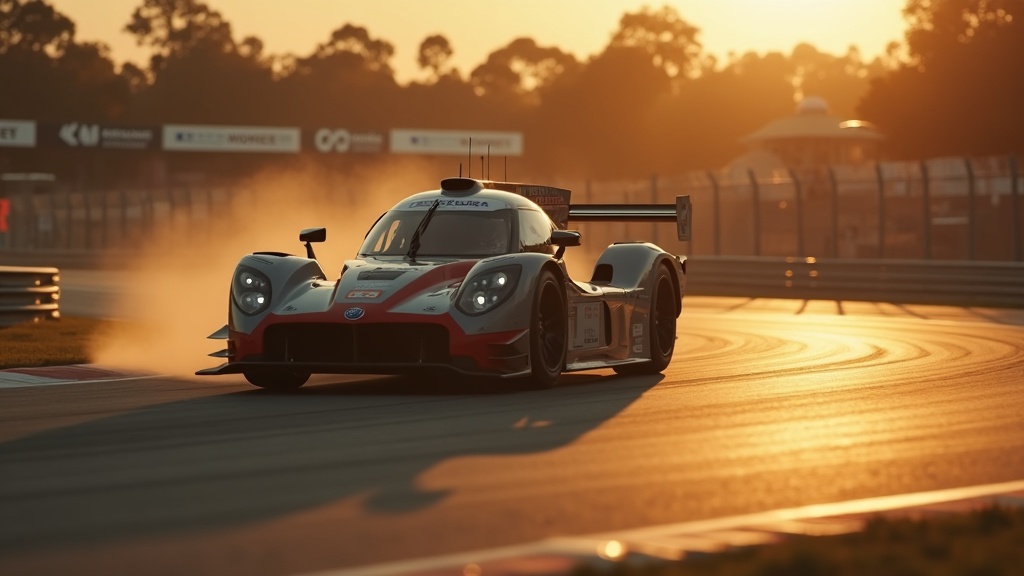
Supercars mid-season: where Kiwi drivers stand after the latest round
The NZ Angle
New Zealand has a longer history in Supercars than the series sometimes gets credit for. Van Gisbergen's three championships between 2016 and 2022 were not flukes of circumstance. They came from a driver who reads tyre degradation and brake bias adjustments mid-corner with unusual precision, and from a team at Triple Eight that understood how to build a car around those instincts. His move to NASCAR in 2023 opened a gap in Kiwi representation at the front of the Supercars grid that has not been fully filled. The question now, in 2026, is whether any New Zealand driver has positioned themselves to challenge for the title in the second half of the season, or whether the Kiwi footprint in Australia's premier tin-top series is shifting from 'championship contender' to 'solid mid-grid presence'. For fans following from Christchurch or Wellington, the series streams through Foxtel and Kayo, and the connection to local motorsport is real. Several Supercars regulars have come through the Toyota Racing Series at Hampton Downs and Taupo, so the pipeline matters even when no Kiwi is leading the points.
The most recent Supercars round has reshuffled the championship order. Here is what the results mean for Shane van Gisbergen and other New Zealand drivers heading into the second half of 2026.
What the latest round produced
The most recent Supercars round delivered a result that tightened the top of the championship standings without resolving anything. Points gaps that looked stable after the winter break have compressed, and the teams that managed tyre life across both races of the weekend came out ahead of those that went aggressive early and paid for it in the final ten laps.
The pattern has been consistent through the first half of 2026. The cars running the current-generation Gen3 platform have shifted the performance balance toward mechanical grip and away from the aerodynamic downforce that used to make the older-spec Mustangs and Camaros so track-specific. What this actually means in race trim is that tyre warm-up time has dropped, but peak degradation has arrived earlier. Teams who built their pit strategy around an older degradation curve got caught out more than once during the first half of the season.
At the front, the race wins have spread across three or four drivers rather than concentrating in one car. That is a different championship dynamic to what New Zealand fans became accustomed to watching van Gisbergen operate. His approach to race weekends was built around qualifying position, controlled degradation, and a single undercut that arrived exactly when the tyre delta made it optimal. The current championship leader is winning with a slightly different method: more aggressive in the opening stint, relying on clean air to manage the rear tyres before they grain in traffic.
The Kiwi picture heading into the second half
New Zealand's representation in Supercars in 2026 is thinner at the front than it was three or four years ago. Van Gisbergen has been competing full-time in NASCAR, where the geometry of the problem is entirely different: oval-focused setups, a driving style that rewards patience over aggression, and a tyre compound that behaves nothing like what he worked with at Bathurst or Pukekohe in its old Supercars configuration.
Among the Kiwis still on the Supercars grid, the mid-season performance picture is one of consistency rather than outright pace. Drivers who have come through the New Zealand grassroots path, including stints in the Toyota Racing Series and the national circuit championship, have tended to arrive in Supercars with strong mechanical sensitivity but occasionally struggle with the sheer volume of data and the speed of setup changes between practice sessions at a compressed Supercars event. That gap closes with experience, and some have closed it.
The championship arithmetic matters now because the second half of the 2026 calendar includes circuits where Kiwi drivers have historically performed well. Bathurst looms as the defining round, as it always does. The Mountain rewards drivers who can read tyre condition in real time and adjust brake bias on the move through the Esses and into the Dipper. Those are learnable skills, but they are also skills that come naturally to drivers who have spent time on technical circuits rather than high-speed flowing tracks.
What the second half of the season demands
From a pure championship maths standpoint, any Kiwi driver sitting outside the top five in points with eight or nine rounds remaining needs consistent podium results, not just the occasional win. The current points structure rewards finishing over heroics, and a driver who strings together five fourth-place finishes will outscore a driver who wins once and crashes out twice.
The teams know this. Strategy calls in the second half of the season tend to get more conservative, not less. You see fewer of the double-stack pit calls that can win or lose a race in one move. You see more crews protecting position rather than hunting the extra half-second. Within that window, driver input on setup and stint management becomes more important than raw single-lap pace.
For van Gisbergen, the 2026 Supercars season is not his primary focus, and reading across from NASCAR is genuinely difficult. The circuits are different, the cars are different, and the racing rhythm is different. If there is a path back to Supercars for him in the medium term, the form of the current Kiwi contingent in the second half of 2026 will be part of that calculation, either as a motivator or as evidence that the door back to the championship is narrower than it was.
The next two rounds will tell most of what needs to be known. Points gaps that exist now will either harden into something insurmountable or compress into a genuine fight. The circuits coming up suit certain setups more than others, and the teams that understand which way the Gen3 car wants to be trimmed on entry-speed corners are the ones who will be collecting points when the Bathurst entries close.
By Paul Gray. See our editorial standards or email sales@premiumwholesalecars.co.nz with corrections.
More motorsport
Lawson at Red Bull: what the 2026 standings actually say
Liam Lawson is six months into his Red Bull Racing seat. The numbers are in, the pressure is real, and the question of whether he belongs there has a clearer answer now.
Lawson at mid-season: is the Racing Bulls seat delivering?
After the Austrian Grand Prix, Liam Lawson's 2026 campaign sits at a crossroads. We assess the numbers, the car, and whether the step up to a full-time seat is going to plan.
Van Gisbergen leads the way as Stanaway fights for points
Shane van Gisbergen sits near the top of the 2026 Supercars standings after the latest round, while Richie Stanaway continues to find his feet back in the series.