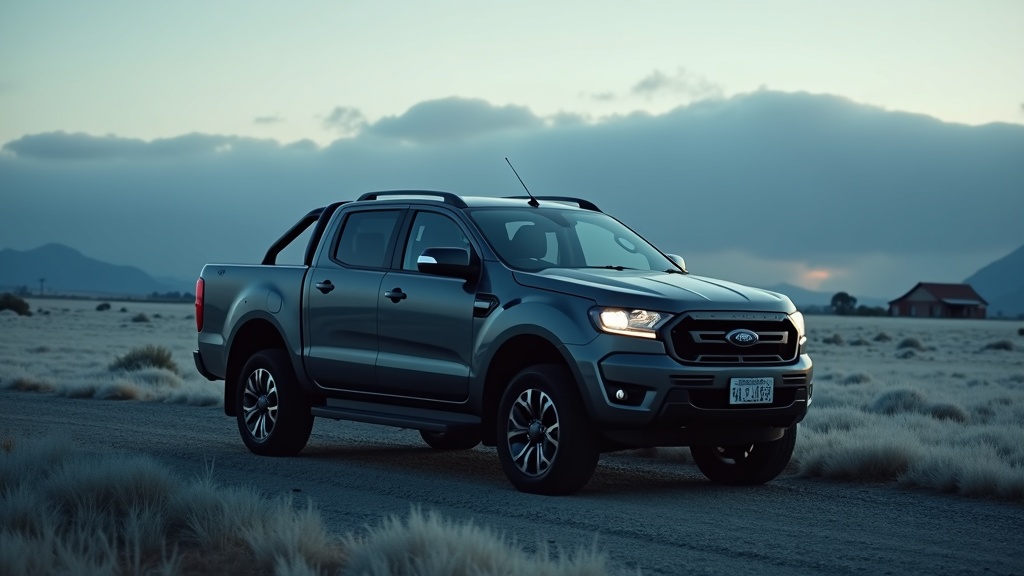
What a diesel ute actually costs to run in Canterbury right now
The NZ Angle
Road user charges on light diesel vehicles sat at $76 per 1,000 km for most of the past few years. NZTA's latest schedule has nudged that figure upward, and while the increment looks modest on paper, it compounds quickly across the 20,000-odd kilometres a working Canterbury ute typically covers in a year. A tradesperson running a D4-D Hilux from Rolleston to Christchurch daily is looking at RUCs alone pushing $1,600-plus annually before a drop of diesel hits the tank. Add pump prices currently sitting in the $2.50-$2.80 per litre range for diesel at most South Island forecourts, and fuel across that same 20,000 km at a realistic 10L/100km starts at another $5,000. WoF intervals drop to annual after three years, so compliance costs are at least predictable. The complication is that second-hand Hilux and Ranger stock has held its price stubbornly high relative to most of the used market, which means buyers are paying 2021-era money for vehicles they'll then run at 2025-era operating costs. That gap between purchase price and total cost of ownership is where the real decision lives.
RUC rates have crept up again. We run the real per-kilometre numbers on a used Hilux and Ranger — fuel, WoFs, and road user charges included — against what dealers are asking.
Canterbury tradies and farmers have been buying diesel utes on faith for two decades. The faith goes something like this: yes, they cost more upfront, yes the fuel is dearer than it looks once you factor in RUCs, but they work, they tow, they last, and you get the money back when you sell. That faith is being tested a bit harder this year.
NZTA's road user charge schedule for light diesel vehicles has moved again. The headline rate for vehicles under 3,500 kg GVM is now sitting above $80 per 1,000 km depending on axle configuration, up from the low-to-mid seventies that most buyers had mentally factored in when they purchased. It is not a dramatic jump. Over 20,000 km a year it adds somewhere between $100 and $150 to your annual running costs. But it arrives on top of diesel pump prices that have not come down as much as petrol, and on top of used-car purchase prices that are still stubbornly elevated for anything wearing a Hilux or Ranger badge.
The numbers, honestly worked out
Take a 2019 Toyota Hilux SR5 dual cab. Dealers around Canterbury are asking $48,000 to $55,000 for tidy examples with reasonable kilometres. Call it $50,000 drive-away for this exercise. It is a lot of money for a five-year-old ute with 80,000 km on it.
Running costs over a typical year at 20,000 km: RUCs at the current schedule come to roughly $1,620. Diesel at $2.65 per litre, with the Hilux returning about 10.5L/100km in mixed Canterbury use including some gravel, comes to $5,565. A set of tyres every two years amortises to maybe $600 per year. Annual WoF, assuming it is past the three-year threshold, is $60-$80 at most garages. Insurance on a $50,000 ute, comprehensive, runs $1,800 to $2,400 depending on driver history and insurer. Servicing on the 1GD engine at a Toyota dealer is around $400-$600 per service, call it two per year.
All in, you are at roughly $11,000 to $12,000 per year in operating costs before you account for depreciation or any unexpected repairs. On a vehicle you paid $50,000 for.
The Ford Ranger Wildtrak in comparable spec and vintage is sitting slightly cheaper, $45,000 to $50,000 at most yards, and the Bi-Turbo engine returns a shade less fuel in hard use. The operating cost gap between the two is not large enough to drive a purchase decision on its own.
Where the RUC change actually bites
The people for whom the RUC movement genuinely matters are high-mileage users. A Selwyn or Mackenzie Basin farmer covering 35,000 km a year on a mix of sealed and unsealed roads is now looking at $2,800 in RUCs alone. The unsealed road penalties under the RUC schedule add up if you are on gravel regularly, though most light vehicle owners overlook this because compliance is self-managed via the odometer system.
For the tradesperson doing 15,000 km a year in town, the RUC increase is a rounding error. For the contractor doing 40,000 km across Canterbury and the MacKenzie, it starts to look like a line item that deserves scrutiny against a petrol alternative.
This is where the comparison gets genuinely interesting. A petrol-powered Hilux or a V6 Ranger does not pay RUCs. It pays more at the pump, but pump prices for 91 octane are running $2.50-$2.65 in Christchurch at the moment. The fuel economy penalty of the petrol engines in real-world ute use is meaningful but not catastrophic. At under 15,000 km per year, the petrol variants are starting to close the gap on total running costs, and they are generally cheaper to buy second-hand.
What this means for buyers looking now
Frankly, the diesel ute's value case used to be unassailable past about 20,000 km annually. That remains broadly true. But the margin between diesel and petrol-powered ute ownership has thinned, and it has thinned on both ends simultaneously: purchase prices for used diesel utes have not corrected meaningfully from their 2021-2022 highs, and the operating cost floor has risen.
For my money, anyone buying a diesel Hilux or Ranger today for predominantly urban or suburban use, under 18,000 km a year, is paying a significant premium for a reputation and a towing capacity they will use twice. The $5,000 to $8,000 price premium over a comparable petrol ute will not be recovered in fuel savings at that mileage. The RUC trajectory, which has moved in one direction consistently for a decade, is not going to help that equation.
If you are pulling a horse float to Methven every other weekend or running a landscaping business out of Rangiora, the diesel still makes sense. The numbers still work, just not as comfortably as they did.
The ute market in Canterbury has been running on loyalty and habit as much as logic for a while now. The latest RUC nudge is small enough that nobody will buy differently because of it alone. But stacked against where purchase prices are sitting, it is one more reason to actually run the numbers before you sign.
By Paul Gray. See our editorial standards or email sales@premiumwholesalecars.co.nz with corrections.
More automotive
EV road user charges are live: what Canterbury drivers actually owe
The RUC exemption for light electric vehicles ended in 2024. Here is what Canterbury EV owners now pay per kilometre, how to buy licences, and whether the numbers still make sense.
EV running costs in 2026: do the numbers still work?
The RUC exemption is gone and per-kilometre charges are now a real line item. We run the actual numbers for Leaf, Ioniq 5 and MG4 owners against petrol and hybrid alternatives.
Leaf vs petrol hatch: what the real running costs look like now
RUC charges for light EVs have been in place a year. We crunch the actual per-kilometre cost gap between a used Nissan Leaf and a comparable petrol hatch for Canterbury drivers doing average ks.