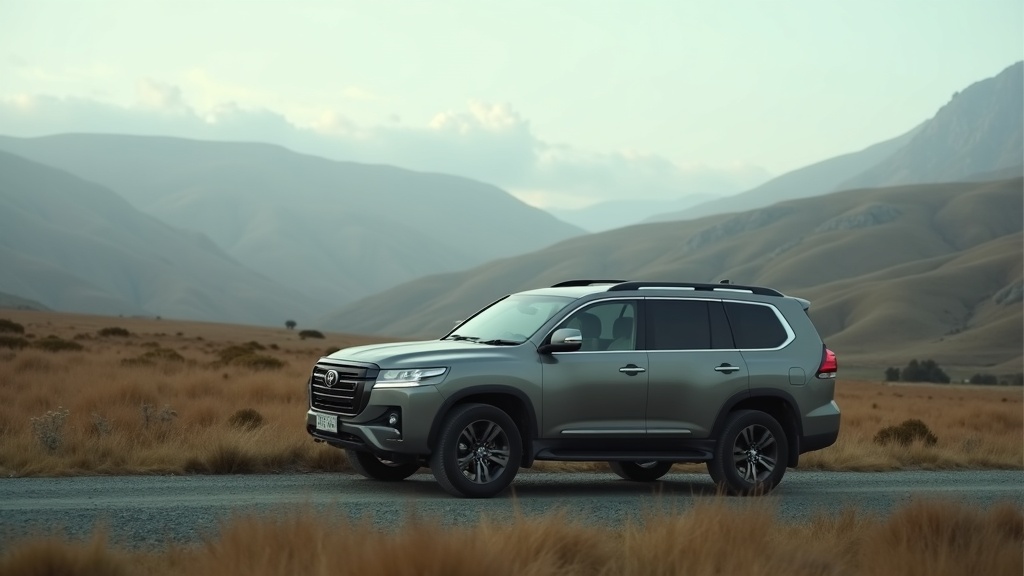
Diesel RUCs vs hybrid fuel: what Canterbury driving actually costs
The NZ Angle
Road User Charges for light diesel vehicles sit at $76 per 1,000km as of the current NZTA schedule, up from $53 just a few years ago. That increase alone shifts the maths enough to revisit assumptions many buyers formed when diesel felt like the obvious frugal choice. Add in the end of the Clean Car Discount in late 2023, which had been artificially propping up demand for hybrids and EVs, and the used-import hybrid market has softened noticeably. Dealers are moving Aquas and Prius wagons for $3,000-$5,000 less than they were asking eighteen months ago. For a Canterbury buyer running a mix of Christchurch suburban errands and regular runs out to Darfield, Rangiora, or the Mackenzie Basin, the calculus has shifted. Diesel still has genuine range advantages and performs well towing or on gravel roads. But with petrol sitting around $2.60-$2.80 per litre at the Ruapuna-area forecourts, and hybrid fuel economy now regularly verified in real-world Canterbury conditions, the per-kilometre gap between the two has narrowed to the point where the RUC loading on diesel tips the balance for many drivers.
RUC rates for light diesel vehicles have risen again. With hybrid used-import prices softening, a Canterbury buyer doing mixed driving needs real per-kilometre numbers before choosing.
The last time most Canterbury buyers did a proper cost comparison between diesel and hybrid, the Clean Car Discount was still running and hybrid prices were inflated enough that diesel looked like the sensible mid-ground. That discount is gone now. Hybrid prices have come off their peak. And NZTA has raised RUCs on light diesel again. So the numbers are worth running fresh.
This is based on a buyer doing roughly 18,000km per year, split between Christchurch urban driving and regular rural runs, using Ruapuna-area pump prices from this month: around $2.65 per litre for 91 petrol and $2.55 for diesel.
The diesel case
A 2018 Mitsubishi Outlander PHEV aside, the most common diesel option in this comparison is a 2017-2019 Mazda CX-5 2.2D or a Toyota RAV4 2.0D, both sitting in the $22,000-$28,000 range at current used-car prices. Real-world fuel economy for a CX-5 diesel in mixed Canterbury driving comes in around 6.5-7.5 litres per 100km. Call it 7.0L/100km as a working figure.
At $2.55 per litre and 18,000km per year, fuel costs land at about $1,632 per year. Then add RUCs: $76 per 1,000km, so $1,368 annually. Combined running cost for fuel plus RUCs: $3,000 per year, or 16.7 cents per kilometre.
That is before servicing. Diesel servicing on a CX-5 or RAV4 at a reputable independent workshop runs $250-$350 per service, typically every 10,000-15,000km. Diesel particulate filter cleans or replacements on higher-mileage units can cost $400-$1,200 depending on severity. If you are buying at 120,000km, you want to know the DPF history before you sign anything.
The hybrid case
The comparison vehicles here are a 2018-2020 Toyota RAV4 Hybrid (2.5L petrol-electric) or a 2017-2019 Toyota C-HR Hybrid, both available in the $22,000-$26,000 range following the post-discount price correction. The RAV4 Hybrid is the more direct match to the CX-5 diesel on space and capability.
Real-world hybrid fuel consumption in Canterbury mixed driving, including winter cold starts and some State Highway 1 running, sits at 5.5-6.5L/100km for the RAV4 Hybrid. Call it 6.0L/100km. At $2.65 per litre and 18,000km per year, that is $2,862 in petrol. No RUCs. Servicing is broadly similar cost to the diesel, though the hybrid drivetrain itself is low-maintenance at this mileage range. Battery anxiety on a 2018-2020 Japanese-market RAV4 Hybrid is largely unfounded: Toyota's NiMH packs on these models have a strong reliability record, and replacement units are available through Japanese import channels if you ever need one.
Per-kilometre fuel cost: 15.9 cents. Against the diesel at 16.7 cents, including RUCs.
What the gap actually means
Over 18,000km per year, the hybrid saves roughly $138 annually on per-kilometre running costs compared to the diesel. That is not a dramatic number. It is less than most people expect, and it is worth being straight about that.
What moves the needle further is how you drive. If your rural running involves regular highway speeds above 100km/h, the hybrid's efficiency advantage narrows because the electric motor contributes less at sustained speed. The diesel is also genuinely better towing, and if you are running a horse float or a trailer to a bach site, that matters. Canterbury winters with metal roads and shingle driveways favour all-wheel-drive, and both the CX-5 diesel and RAV4 Hybrid offer it in the relevant trim levels.
Where the hybrid pulls clearly ahead is in stop-start urban driving. If more than half your kilometres are Christchurch suburban, the hybrid's real-world consumption drops toward 5.0-5.5L/100km and the diesel's climbs. At that point the annual saving widens to $300-$400, and the RUC burden on the diesel starts to feel more pointed.
The other factor is purchase price. The market correction on hybrids has been real but uneven. A well-specified 2019 RAV4 Hybrid with low New Zealand kilometres commands a premium over a comparable CX-5 diesel. If the hybrid costs $3,000 more to buy, at $138-$300 annual savings it takes ten to twenty years to recover on running costs alone. That is too long for most buyers to hold a single vehicle.
The honest answer is that the running cost difference between a tidy diesel and a comparable hybrid has shrunk to the point where it should not be the primary decision driver. The RUC increase has shifted things modestly in the hybrid's favour for urban-heavy users, but it has not made diesel uncompetitive for mixed driving. Buy the car that fits your actual use case, in the best mechanical condition you can afford at the price. The per-kilometre difference at current rates is real, but it is measured in coffees per week, not mortgage repayments.
By Paul Gray. See our editorial standards or email sales@premiumwholesalecars.co.nz with corrections.
More automotive
EV road user charges are live: what Canterbury drivers actually owe
The RUC exemption for light electric vehicles ended in 2024. Here is what Canterbury EV owners now pay per kilometre, how to buy licences, and whether the numbers still make sense.
EV running costs in 2026: do the numbers still work?
The RUC exemption is gone and per-kilometre charges are now a real line item. We run the actual numbers for Leaf, Ioniq 5 and MG4 owners against petrol and hybrid alternatives.
Leaf vs petrol hatch: what the real running costs look like now
RUC charges for light EVs have been in place a year. We crunch the actual per-kilometre cost gap between a used Nissan Leaf and a comparable petrol hatch for Canterbury drivers doing average ks.