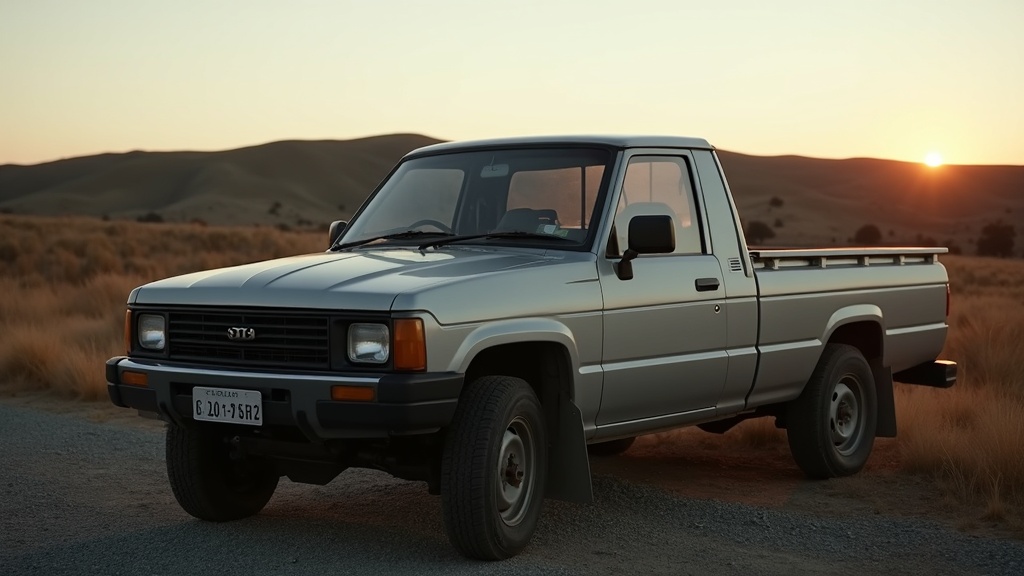
Diesel HiLux vs petrol Ranger: what a Canterbury tradie actually pays
The NZ Angle
Road user charges on diesel vehicles are set by NZTA and adjusted periodically, and the latest revision has pushed the cost of running a diesel ute meaningfully higher. As of mid-2025, diesel light vehicles under 3,500 kg pay $76 per 1,000 km in RUCs. That sounds abstract until you multiply it across a working year. At 25,000 km annually, a Canterbury builder or plumber is paying $1,900 in RUCs alone before they've bought a litre of diesel. Petrol vehicles pay nothing extra beyond the fuel excise duty already baked into pump prices, which currently sit in the $2.50-$3.00 per litre range depending on the week and the forecourt. The RUC gap used to be softened by diesel's lower pump price and better fuel economy. That arithmetic still holds, but it's tighter than it was. Canterbury is also worth naming specifically here: tradespeople in this region are often running long runs between job sites, whether that's out to Selwyn, through to Kaikōura, or up into the hill country. The terrain and the distances matter. So does the fact that most of these operators are doing this in a ute, and the two dominant choices are a Toyota HiLux in diesel and a Ford Ranger in petrol.
NZTA's latest RUC adjustment changes the sums. We run the real annual numbers on a diesel HiLux versus a petrol Ranger for a 25,000 km Canterbury tradesperson.
The diesel ute is a working assumption in the trades. You buy one because everyone else does, because they hold their value, and because someone told you diesel makes more sense at high kilometres. That last point deserves actual scrutiny now that NZTA has revised RUC rates upward again.
Let's run the numbers honestly for a Canterbury tradesperson covering 25,000 km a year, choosing between a mid-spec diesel HiLux SR5 and a petrol Ford Ranger XLT. Both are crew cabs. Both are mainstream picks. Both sit in the $55,000-$65,000 range new, or $35,000-$45,000 in the two-to-four-year-old used market where most actual buyers are shopping.
Fuel and RUC costs
The diesel HiLux 2.8-litre returns roughly 9.5 litres per 100 km in real-world mixed driving with a work load on board. The petrol Ranger 2.3-litre EcoBoost sits closer to 11.5 litres per 100 km under similar conditions. Call it 10 and 12 if you're being conservative and the ute is regularly loaded.
At $2.20 per litre for diesel and $2.70 for 91 petrol (current Canterbury averages), the HiLux spends roughly $5,500 on fuel annually. The Ranger spends around $8,100. That's a $2,600 gap in the HiLux's favour.
Now add RUCs. At $76 per 1,000 km for a diesel vehicle under 3,500 kg, the HiLux owner is paying $1,900 a year on top. The Ranger pays nothing extra. The fuel cost advantage for diesel collapses to $700 per year. Not nothing, but not the open-and-shut case the diesel lobby implies.
WoF, servicing, and the depreciation question
Both vehicles go to annual WoFs after the first three years. That's a wash. Servicing intervals are broadly similar between the two, though the HiLux 2.8 diesel has a slightly longer oil change interval in Toyota's schedule, which saves a modest amount over time. Call it $100-$150 a year in the diesel's favour.
Depreciation is where the conversation gets complicated. The HiLux has historically depreciated more slowly than almost any other ute in New Zealand, and that reputation is real. A three-year-old SR5 diesel holds value well. The Ranger has narrowed that gap in recent years as Ford's reliability perception has improved, but the HiLux still wins the residual value argument in most private sale comparisons. On a five-year ownership cycle, the HiLux might return $3,000-$5,000 more at sale time. Annualised, that's worth $600-$1,000 per year.
So the full scorecard, roughly: diesel HiLux saves around $700 on fuel net of RUCs, saves perhaps $125 on servicing, and gains back maybe $800 per year in slower depreciation. That's $1,625 a year in favour of the HiLux. Spread over 25,000 km, it's about 6.5 cents per kilometre.
What that number actually means
Six and a half cents per kilometre is not a lot. Over a year it's the price of a mid-range cordless drill. It is not the kind of margin that should be driving a $50,000 purchase decision on its own.
Here is what I think actually matters: if you're a sole trader doing hard kilometres, towing a trailer, and flogging the drivetrain daily, the HiLux's torque curve and its known durability in the Canterbury market are worth something that doesn't appear in a spreadsheet. That's a real consideration. The diesel HiLux has earned its reputation the hard way.
But if you're a two-ute household where one vehicle does lighter duties and town running, the case for the diesel becomes genuinely weak. The RUC increase has done that. Petrol is simpler to manage, the Ranger drives better on road, and the running cost gap has shrunk to the point where other factors should dominate.
The unreasonable claim I'm willing to make: for anyone doing under 20,000 km a year, the diesel ute is now a lifestyle choice dressed up as economics. The maths stopped supporting it.
NZTA's RUC adjustment hasn't killed the working diesel ute. The HiLux still makes sense for a high-kilometre tradesperson who needs the tow rating and the resale floor. What the adjustment has done is remove the excuse for not doing the sums. For years buyers could say diesel always wins at volume and leave it there. That shortcut is gone.
Run your own numbers before you sign. The answer might still be a HiLux. But it should be your answer, not your rep's.
By Paul Gray. See our editorial standards or email sales@premiumwholesalecars.co.nz with corrections.
More automotive
EV road user charges are live: what Canterbury drivers actually owe
The RUC exemption for light electric vehicles ended in 2024. Here is what Canterbury EV owners now pay per kilometre, how to buy licences, and whether the numbers still make sense.
EV running costs in 2026: do the numbers still work?
The RUC exemption is gone and per-kilometre charges are now a real line item. We run the actual numbers for Leaf, Ioniq 5 and MG4 owners against petrol and hybrid alternatives.
Leaf vs petrol hatch: what the real running costs look like now
RUC charges for light EVs have been in place a year. We crunch the actual per-kilometre cost gap between a used Nissan Leaf and a comparable petrol hatch for Canterbury drivers doing average ks.