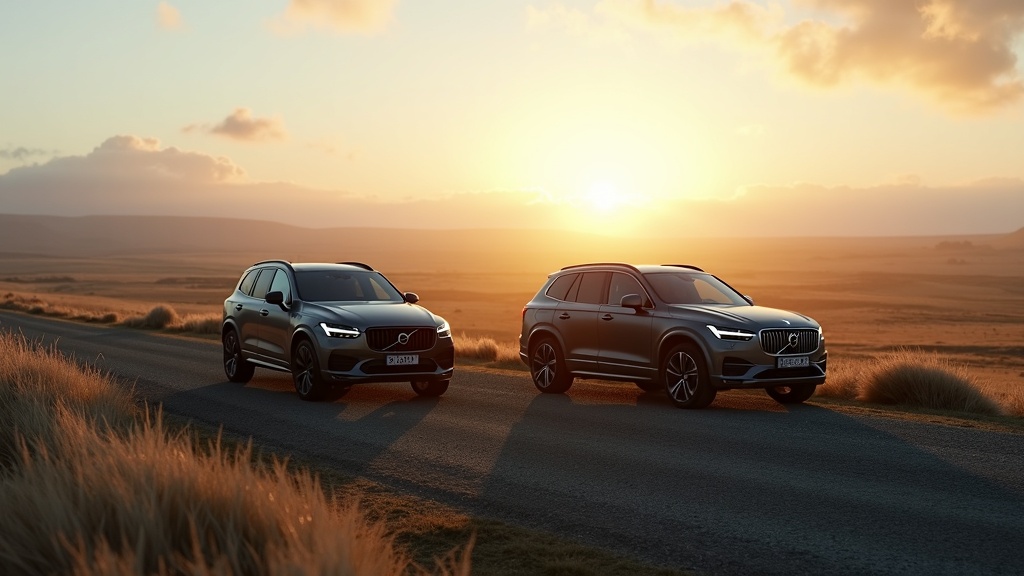
Diesel SUV vs hybrid import: what it actually costs per kilometre in Canterbury
The NZ Angle
Road User Charges on diesel vehicles sit at $76 per 1,000 kilometres for light vehicles as of 2024, and that figure is not going anywhere. The Clean Car Discount, which once softened the price gap between fossil-fuel SUVs and cleaner imports, ended in December 2023. Those two facts, taken together, change the maths for anyone shopping in the $18,000 to $30,000 used SUV bracket in Canterbury right now. Canterbury driving tends to be a genuine mix: school runs and supermarket trips in Christchurch, weekend runs to Methven, Hanmer, or the Lewis Pass, maybe a farm visit or a bach down near Lake Coleridge. That kind of mixed profile is exactly where the diesel versus hybrid argument gets interesting, because neither powertrain is a clean winner across every kilometre. Diesel rewards long open-road runs. Hybrids reward stop-start urban work. Canterbury buyers, frankly, do both. The question is which way the numbers tip when you total up fuel, RUCs, servicing, and what you actually paid at the gate.
With RUCs fixed and the Clean Car Discount gone, Canterbury buyers weighing a used diesel X-Trail or CX-5 against a hybrid import face a genuine cost calculation worth doing properly.
The used SUV market in New Zealand has settled into a fairly predictable shape. On one side you have the Japanese-spec diesel workhorses: the Nissan X-Trail in T32 form, the Mazda CX-5 in 2.2 diesel, both well-regarded, both carrying a decade of reputation for reliability. On the other side you have the hybrid imports: the Toyota RAV4 hybrid, the Honda CR-V hybrid, maybe a Mitsubishi Outlander PHEV if someone wants to complicate things. Prices across this bracket run roughly $18,000 at the bottom for a higher-mileage diesel to $32,000 or so for a tidy late-model hybrid. The gap at purchase is real. So is the gap in running costs. The question is whether one gap cancels the other out.
Let's start with the diesel cost stack.
What a diesel X-Trail or CX-5 actually costs to run
A 2016 Nissan X-Trail 2.0 diesel doing 15,000 kilometres a year in Canterbury mixed driving will consume somewhere around 7.5 to 8.5 litres per 100km across that combined cycle. Call it 8.0L/100km as a working figure. At $2.50 per litre for diesel at the pump, that is $2.00 per 100km in fuel alone. Over 15,000km, you are spending $3,000 on fuel annually.
Then add RUCs. At $76 per 1,000km for a light diesel, that is $1,140 per year. Every year, without exception, regardless of how efficient the engine is or how gently you drive.
So the annual fuel-plus-RUC bill for a diesel SUV at 15,000km per year sits around $4,140. Per kilometre, that is just under 28 cents.
The CX-5 2.2D is a more frugal engine and a more refined car. Real-world consumption in mixed driving tends to come in around 6.8 to 7.5L/100km. At 7.0L/100km, fuel drops to $2,625 per year. Add $1,140 in RUCs and you are at $3,765, or about 25 cents per kilometre. Meaningfully better than the X-Trail diesel, though the CX-5 commands a higher purchase price to begin with.
What a comparable hybrid actually costs to run
A 2018 Toyota RAV4 hybrid in Canterbury mixed driving typically returns 5.5 to 6.5L/100km in real-world use. The urban portion drags fuel consumption down noticeably because the battery takes over at low speeds, and Canterbury's in-town driving is not especially punishing. Use 6.0L/100km as the working figure. At petrol prices sitting between $2.50 and $3.00 per litre, call it $2.75: that is $1.65 per 100km, or $2,475 per year at 15,000km.
No RUCs. That is the line that changes everything.
Annual fuel cost: $2,475. Per kilometre: about 16.5 cents. Against the diesel X-Trail's 28 cents, that is a gap of 11.5 cents per kilometre. Over 15,000km per year, the hybrid saves roughly $1,665 annually in fuel and RUCs alone.
Over five years, that compounds to around $8,300 in operational savings, before you factor in any difference in servicing costs.
The purchase price gap and how long it takes to close
Here is where the diesel buyer's argument still has some life. A solid 2016 X-Trail diesel with 80,000km on it can be found for $19,000 to $22,000. A comparable 2018 RAV4 hybrid with similar mileage will sit $5,000 to $8,000 higher on the lot. That gap is real money at the point of signing.
At $1,665 in annual running cost savings, you need between three and five years to recover a $6,000 purchase premium. For buyers who keep their cars, that is not an unreasonable horizon. For buyers who trade every two or three years, the maths shifts back toward diesel.
The CX-5 2.2D complicates the comparison helpfully. It is a genuinely good car, more fuel-efficient than the X-Trail diesel, and often priced closer to hybrid territory anyway. If you are buying a CX-5 diesel at $26,000 and comparing it to a RAV4 hybrid at $28,000, the annual saving drops to around $1,290 and the payback stretches toward six or seven years. At that point you are really buying the hybrid on preference, which is fine, but let's not dress it up as ruthless financial logic.
Servicing costs tend to favour the hybrid modestly over time. Diesel engines require more frequent oil changes, diesel particulate filter maintenance becomes a real consideration on urban-heavy driving cycles, and timing chain or belt service intervals add up. The RAV4 hybrid's regenerative braking also extends brake pad life noticeably, which Canterbury drivers who spend time on gravel roads will notice over time.
The honest answer for a Canterbury buyer doing genuine mixed driving: if you are keeping the car five or more years and you cover decent annual mileage, the hybrid wins on total cost of ownership by a margin that is hard to argue with. If you are buying short-term, doing mostly open-road kilometres, or you find a diesel at the right price, the equation tightens considerably.
The RUC is the quiet variable most buyers underestimate. It does not feel painful the way a fuel receipt does, but it charges you equally whether you drove efficiently or not. For a diesel, frugality only helps you on one half of the cost equation.
By Paul Gray. See our editorial standards or email sales@premiumwholesalecars.co.nz with corrections.
More automotive
EV road user charges are live: what Canterbury drivers actually owe
The RUC exemption for light electric vehicles ended in 2024. Here is what Canterbury EV owners now pay per kilometre, how to buy licences, and whether the numbers still make sense.
EV running costs in 2026: do the numbers still work?
The RUC exemption is gone and per-kilometre charges are now a real line item. We run the actual numbers for Leaf, Ioniq 5 and MG4 owners against petrol and hybrid alternatives.
Leaf vs petrol hatch: what the real running costs look like now
RUC charges for light EVs have been in place a year. We crunch the actual per-kilometre cost gap between a used Nissan Leaf and a comparable petrol hatch for Canterbury drivers doing average ks.