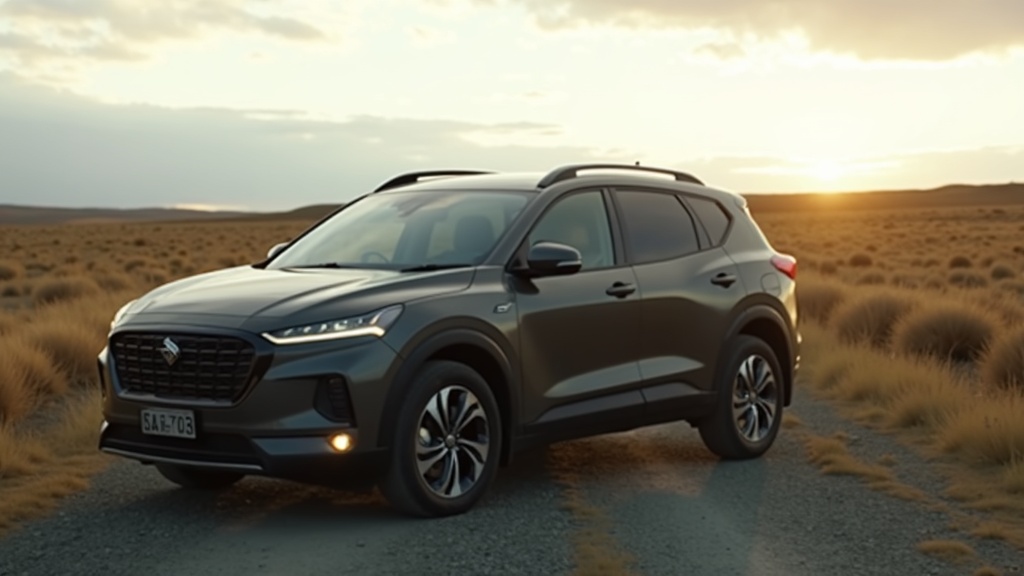
Diesel SUV vs hybrid: do the numbers still work for Canterbury drivers?
The NZ Angle
Road user charges on light diesel vehicles have climbed steadily, sitting at $76 per 1000 km as of mid-2025, and that figure applies from the first kilometre you drive. There is no free allowance, no grace period. You buy the RUC before you use the road. Combine that with diesel at $2.30 to $2.50 at the pump in Christchurch and the cost arithmetic that made a second-hand diesel SUV look clever three or four years ago starts to look shakier. Petrol hybrids like the Aqua and RAV4 Hybrid pay standard petrol excise, built into the pump price, and nothing more. For a Canterbury buyer who commutes into town on weekdays and does a run to Methven or Hanmer on the weekend, the mix of short cold-start trips and longer open-road stints is actually a reasonable test of both powertrains. The diesel rewards the highway kilometres and punishes the short hops. The hybrid does the opposite and then some. Neither answer is wrong, but the one that costs less over three years is increasingly obvious, and it is not the one most people assumed when they walked onto a used-car yard two years ago.
RUC increases and pump diesel above $2.30 have changed the running cost picture. We run the actual numbers on X-Trail and CX-5 diesel against hybrid Aqua and RAV4 for mixed Canterbury driving.
The used diesel SUV has had a good run in New Zealand. The CX-5 2.2 diesel and the Nissan X-Trail 2.0 dCi both earned their reputations on merit: torquey, reasonably frugal on the open road, capable enough when the shingle starts. Canterbury buyers liked them because they suited the life here, long straights, the odd gravel detour, a ski rack on top without the car feeling strangled. That reputation is now costing some buyers money they did not expect to spend.
The maths is not complicated, but it requires you to use the real numbers rather than the optimistic ones.
What the diesel actually costs to run
Take a CX-5 2.2d, the diesel variant that came through in reasonable numbers as a Japanese import. Fuel consumption in mixed driving sits around 7.0 to 7.5 litres per 100 km once you account for the cold starts and the town work that Canterbury winters demand. At $2.40 per litre, that is roughly $168 to $180 per 1000 km in fuel alone. Add the RUC at $76 per 1000 km and you are at $244 to $256 per 1000 km total. For someone driving 18,000 km a year, that is between $4,390 and $4,610 annually just to keep it moving.
The X-Trail diesel is a similar story. The 2.0-litre unit is less torquey than the Mazda's 2.2 and drinks slightly more in stop-start conditions, closer to 7.5 to 8.0 litres per 100 km in real Canterbury use. The RUC applies identically. You will likely land above $4,600 a year on the same mileage.
The one thing diesel defenders will correctly point out is that open-road consumption improves meaningfully. A run to the West Coast or down to Queenstown genuinely does pull consumption toward 5.5 or 6.0 litres per 100 km, and that helps. But most Canterbury buyers are not doing West Coast runs every week. They are doing the school drop-off, the supermarket, and one decent drive on the weekend. The diesel does not reward that pattern.
What a petrol hybrid actually costs
A used RAV4 Hybrid in similar spec to a mid-range CX-5 diesel sits at comparable purchase prices now, somewhere between $35,000 and $48,000 depending on year and kilometres. The Aqua is considerably cheaper to buy but is also a smaller, lighter car in a different class entirely, so the comparison is not quite apples for apples if you are cross-shopping SUVs.
The RAV4 Hybrid in mixed driving runs around 5.5 to 6.2 litres per 100 km. That figure is harder to achieve than Toyota's published number suggests if you drive the way most people do, but it is genuinely attainable with light throttle inputs and some patience in traffic. At $2.70 per litre for 95 octane, you are at around $149 to $167 per 1000 km. No RUC. No diesel surcharge. Just petrol excise rolled into the pump price.
On 18,000 km a year, the RAV4 Hybrid lands at roughly $2,680 to $3,010 annually. Against the CX-5 diesel at $4,390 to $4,610, that is a saving of $1,400 to $1,900 per year. Over three years, you are looking at $4,200 to $5,700 back in your pocket. Enough to cover a significant slice of the price difference if you paid a small premium for the hybrid.
The Aqua sharpens that further. Sitting in a different class but genuinely useful for buyers who do not need all-wheel drive, a used Aqua runs at 4.0 to 4.8 litres per 100 km in Canterbury conditions. Fuel costs drop to around $108 to $130 per 1000 km. The annual running cost on 18,000 km comes in around $1,940 to $2,340. The gap against the diesel SUVs is now enormous.
The driving question people forget to ask
Running costs are one thing. What you live with every day is another.
The CX-5 diesel is genuinely good to drive. The 2.2 unit has mid-range torque that the hybrid four-cylinder does not match in feel, and on a long Canterbury straight with a full load, you feel the difference. The car wants to cover ground in a relaxed, unhurried way that suits touring. On the limit it is predictable, the weight settles early into a corner and the front end tracks honestly.
The RAV4 Hybrid is not a driver's car in that sense. The CVT and the combined outputs produce reasonable pace but little sensation. What it does well is disappear. You stop thinking about it because it never asks you to think about it. For most buyers, that is a feature.
If you genuinely do more than 30 percent of your kilometres on open highway, the diesel case gets stronger. Below that, the numbers favour the hybrid by a widening margin, and the RUC trajectory is not pointing in diesel's favour.
By Paul Gray. See our editorial standards or email sales@premiumwholesalecars.co.nz with corrections.
More automotive
EV road user charges are live: what Canterbury drivers actually owe
The RUC exemption for light electric vehicles ended in 2024. Here is what Canterbury EV owners now pay per kilometre, how to buy licences, and whether the numbers still make sense.

EV running costs in 2026: do the numbers still work?
The RUC exemption is gone and per-kilometre charges are now a real line item. We run the actual numbers for Leaf, Ioniq 5 and MG4 owners against petrol and hybrid alternatives.
Leaf vs petrol hatch: what the real running costs look like now
RUC charges for light EVs have been in place a year. We crunch the actual per-kilometre cost gap between a used Nissan Leaf and a comparable petrol hatch for Canterbury drivers doing average ks.