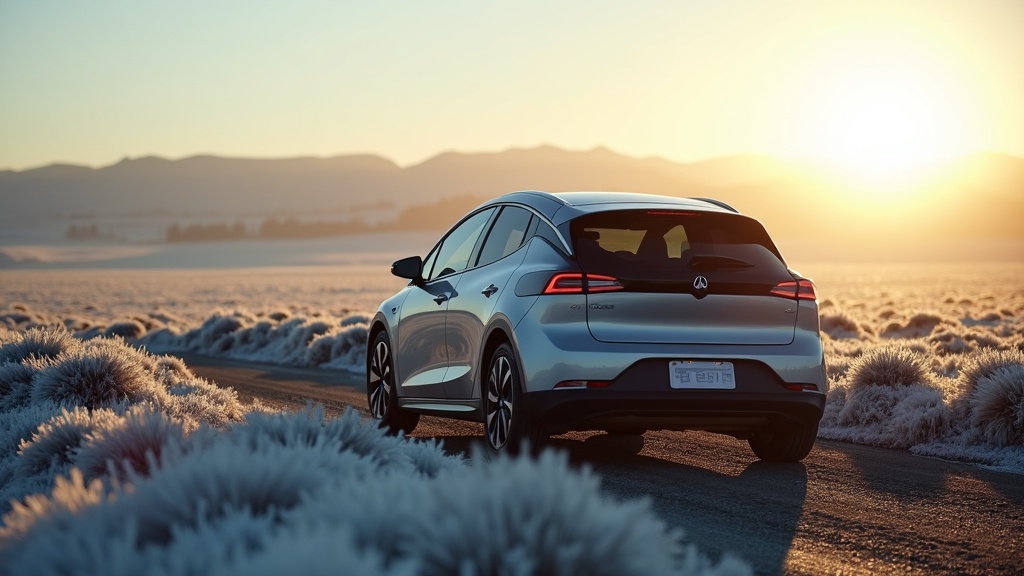
Leaf and Outlander PHEV prices have found their floor — here is what Canterbury buyers are actually paying
The NZ Angle
New Zealand's Clean Car Discount closed at the end of 2023, and for a while the used EV market looked like a slow-motion accident. Leafs that sold for $28,000 in 2022 were moving for $16,000 by mid-2024. The Outlander PHEV, which briefly wore a $45,000 price tag on the strength of rebate-inflated demand, drifted back toward reality. That correction has now largely played out. Prices have been broadly stable for the past two or three quarters, and Canterbury dealers are reporting steadier stock turnover than they saw through 2024. What has not settled is buyer confusion around running costs, specifically Road User Charges. EVs and PHEVs in New Zealand pay RUCs rather than a fuel excise component built into petrol pricing. For a Leaf driver covering 15,000 km a year, the current RUC rate of $76 per 1,000 km adds up to $1,140 annually before you have touched a charging cable. Outlander PHEV owners pay a lower rate for the electric kilometres but must also buy petrol for the combustion side, which complicates the cost picture in ways the sticker price does not capture. Canterbury's longer inter-town distances and cold-weather battery performance losses make those numbers more pointed than they might be for an Auckland commuter.
The Clean Car Discount is two years gone and used EV and PHEV prices have stopped falling. Here is what a Nissan Leaf or Mitsubishi Outlander PHEV actually costs a South Island buyer in April 2026, RUCs included.
The used EV market had a difficult couple of years after the rebate scheme closed. Buyers who had paid a premium expecting the government to subsidise their choice suddenly found the subsidy gone and resale values adjusting to match. It was messy, and a lot of people lost money. That phase is done.
In April 2026, a clean 40 kWh Nissan Leaf — the generation-two car with the larger battery, built from 2018 onwards — is sitting at $17,000 to $21,000 at Canterbury dealers, depending on kilometres and specification. The older 24 kWh first-gen Leaf has largely dropped off reputable yards and into private listings, where they change hands for $9,000 to $13,000. At that price point the battery degradation question becomes serious, and unless you have had a Nissan dealer run a battery health check, you are buying blind.
The Mitsubishi Outlander PHEV has landed somewhere around $28,000 to $38,000 for 2016 to 2020-build cars, with the GX4 and GSR trim variants at the top of that range. The more recent 2022-onward PHEV on the new platform commands $48,000 and up, which puts it in a different conversation entirely.
What 12 months of RUCs actually looks like
Here is where Canterbury buyers need to do the arithmetic honestly. Road User Charges apply to all light EVs and plug-in hybrids in New Zealand, replacing the fuel excise duty that petrol and diesel drivers pay at the pump. The current rate for battery-electric vehicles sits at $76 per 1,000 km. For a Leaf driver doing 15,000 km a year — a reasonable figure for someone living in Rolleston or Rangiora and commuting to Christchurch with the occasional run to Queenstown — that is $1,140 in RUCs per year, paid in advance via the NZTA system.
The Outlander PHEV is more complicated. It pays a lower RUC rate for its electric range, currently $38 per 1,000 km on the electric portion, but the combustion engine kicks in regularly on longer runs and in cold weather, so you are also buying petrol. A realistic Outlander PHEV owner in Canterbury, given the distances involved, might see 60 to 70 percent of kilometres on electric. At 15,000 km a year, that is roughly $342 in RUCs on the electric portion, plus petrol costs on the remaining 4,500 to 6,000 km. At current pump prices somewhere in the $2.60 to $2.80 per litre range, and assuming the PHEV's real-world mixed consumption of around 5.5 to 7 litres per hundred on the combustion side, you are adding another $640 to $900 in fuel. Total energy cost for the year: somewhere around $1,000 to $1,250. Roughly comparable to a Leaf on RUCs alone, but with the convenience of no range anxiety between Christchurch and Wanaka.
For the Leaf, charging costs are the other variable. A home charger using a standard overnight rate of around 28 to 32 cents per kWh puts 15,000 km of charging at approximately $600 to $720. Total annual energy cost including RUCs: $1,740 to $1,860. That is not nothing, but it is still well below what a similar petrol car costs to run.
The cold weather factor
Canterbury winters matter more than the marketing suggests. A 40 kWh Leaf in good battery health claims around 270 km of range under official testing conditions. In a Christchurch July, with the heater running and temperatures around zero, real-world range drops to 180 to 220 km. For city driving that is still adequate. For the run to Mount Hutt or down to Tekapo it starts requiring attention.
The Outlander PHEV's electric range is modest by design — around 50 km on the 2016-to-2020 cars — so Canterbury winters knock that back to 35 to 45 km in practice. The combustion engine fills the gap, which is exactly why the PHEV formula suits South Island buyers who travel longer distances but still want electric running for the daily commute.
Where the value sits in April 2026
Frankly, the 40 kWh Leaf at $18,000 to $20,000 is good buying if the battery checks out. Annual WoF, the standard NZTA compliance history, and a battery health report from a Nissan dealer are the three non-negotiables before signing anything. The first-gen 24 kWh cars are only worth the risk at the very bottom of the private market, and even then you should be budgeting for a potential battery replacement conversation within a couple of years.
The Outlander PHEV at $30,000 to $34,000 for a tidy 2018 or 2019-build GSR represents the more practical choice for a Canterbury buyer who regularly leaves Christchurch. The all-wheel drive, the combustion range backstop, and the reasonable electric commuting capability make it a sensible compromise. The running costs are higher than the Leaf but lower than a comparable petrol SUV, and you are not anxious about the Lindis Pass in winter.
The market has found its level. Buyers who waited out the post-rebate correction are now in a reasonable position. Whether the RUC bill fits your situation depends entirely on how far you drive and how honest you are with yourself about it before you commit.
By Paul Gray. See our editorial standards or email sales@premiumwholesalecars.co.nz with corrections.
More automotive
EV road user charges are live: what Canterbury drivers actually owe
The RUC exemption for light electric vehicles ended in 2024. Here is what Canterbury EV owners now pay per kilometre, how to buy licences, and whether the numbers still make sense.
EV running costs in 2026: do the numbers still work?
The RUC exemption is gone and per-kilometre charges are now a real line item. We run the actual numbers for Leaf, Ioniq 5 and MG4 owners against petrol and hybrid alternatives.
Leaf vs petrol hatch: what the real running costs look like now
RUC charges for light EVs have been in place a year. We crunch the actual per-kilometre cost gap between a used Nissan Leaf and a comparable petrol hatch for Canterbury drivers doing average ks.