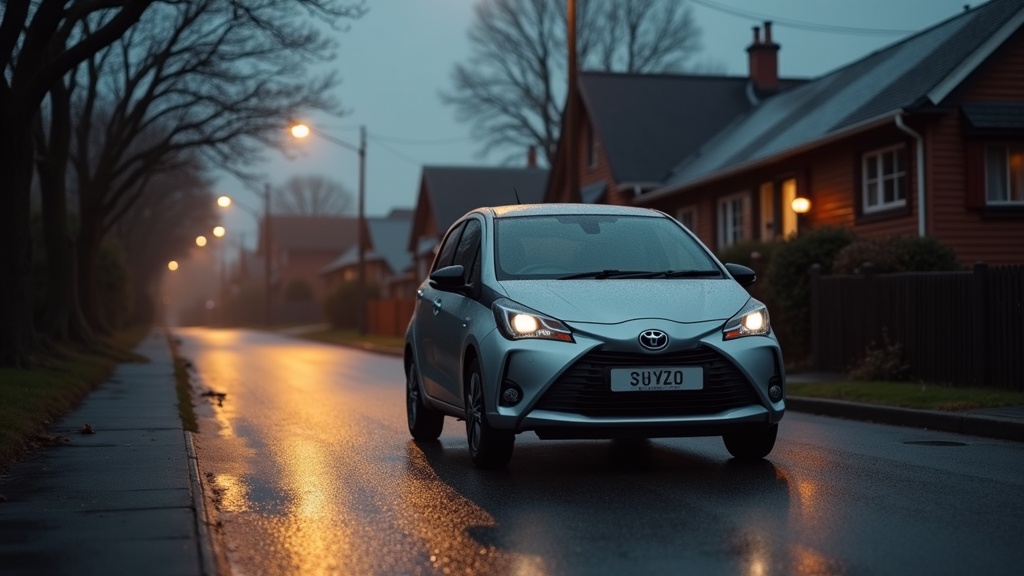
Where used Leaf and Aqua prices have landed a year on
The NZ Angle
The Clean Car Discount was axed in December 2023, and the market has spent the year since working out what an EV or hybrid is actually worth without government help. For Canterbury buyers, that question has real teeth. Christchurch winters are cold enough to matter for EV range, the commuter belt runs from Rolleston and Rangiora into the CBD, and RUCs on electric vehicles have been in place since April 2024 at $76 per 1,000km. That RUC rate does not sound brutal until you run the maths on a 20,000km annual commute: $1,520 a year, on top of electricity and WoF. For a Leaf bought at $10,000, that changes the ownership equation significantly. The Aqua sits outside RUCs entirely as a petrol-electric hybrid, which is a genuine cost advantage that the market has not fully priced in yet at the entry level. NZTA compliance costs for Japanese-import Leafs and Aquas are already baked into the prices you see on dealer yards, but private imports still carry frontal impact certification requirements that add to landed cost. The current Canterbury used-car market has stock, has motivated sellers, and has buyers who are still working out the new maths.
Twelve months after the Clean Car Discount ended, wholesale values for used Nissan Leafs and Toyota Aquas have found a new floor. Here is what Canterbury buyers are actually paying.
A year ago, the Clean Car Discount was still alive and a registered-new Tesla Model 3 qualified for $8,625 back from the government. Used imports shared a rebate structure that pushed buyers toward EVs and plug-in hybrids regardless of whether the numbers otherwise stacked up. Now that subsidy is gone, and the prices on Canterbury forecourts reflect a market that has had twelve months to recalibrate without it.
The recalibration has not been orderly. Wholesale values for 24 kWh Nissan Leafs dropped hard through early 2024, bottomed around mid-year, and have since steadied. The 30 kWh cars have held up slightly better. At auction and trade-in, a tidy 2016 Leaf with 50,000 to 70,000km is clearing in the $7,500 to $9,500 range wholesale. Retail on Canterbury yards right now sits $10,000 to $13,500 for the same car depending on battery health, condition, and whether the dealer has bothered to get a battery state-of-health report in front of the listing. Some have. Many have not.
The 40 kWh Leaf, 2018 model year and later, is a different story. Those are retailing $14,000 to $18,000 for reasonable examples, which puts the better ones outside the sub-$15,000 window this piece is looking at. If you want a 40 kWh car under $15k, you are shopping the higher-mileage end, 80,000km-plus, and you need to be comfortable reading a battery health report yourself or paying someone to.
What RUCs actually cost you
Electric vehicles have paid road user charges since April 2024. The rate sits at $76 per 1,000km for light EVs. Do 15,000km a year and you are paying $1,140. Do 20,000km and it is $1,520. That is not a rounding error on a $10,000 car; it is a meaningful chunk of annual running cost that did not exist two years ago.
The practical effect is that the Leaf's ownership case has softened, though it has not collapsed. Home charging on a standard overnight rate runs somewhere around two to three cents per kilometre depending on your power plan and your charger setup. Add RUCs and you are looking at roughly eight to nine cents per kilometre all-in on electricity and road charges. Against petrol at current Christchurch pump prices, a frugal 1.5-litre petrol car doing six litres per 100km is spending around 16 to 18 cents per kilometre on fuel alone. The Leaf still wins on per-kilometre running cost, but the gap has narrowed.
The Toyota Aqua does not pay RUCs. It is a petrol-electric hybrid with no plug, so it sits in the same road-tax structure as any other petrol car. At 15,000km a year it uses around 700 litres of petrol. At current prices, call it $1,900 to $2,100 a year in fuel. No RUC bill. That is a real advantage that the Aqua's retail price does not fully reflect at the moment.
Aqua pricing on Canterbury yards: a 2014 to 2016 G-grade or S-grade in honest condition with 60,000 to 90,000km is sitting $9,500 to $13,000. The newer 2021-on second-generation Aqua starts around $18,000 retail and climbs fast, so that is out of this conversation. The first-gen cars are the buy. Known issues at higher mileage: the hybrid battery degrades but rarely fails outright before 150,000km on the NZ fleet, inverter coolant pump is a watch item, and the CVT needs fresh fluid if the service history is missing.
Is the buying window open or closing
The honest answer is that it is open now, and probably for another six to twelve months, but there are signs it will not stay open indefinitely.
Dealer stock of sub-$15k Leafs and Aquas in Canterbury is reasonable right now. Japanese export prices on used Leafs have stabilised after the post-subsidy dumping cleared through the pipeline. Importers are buying at more considered prices, which means the wave of deeply discounted stock that hit NZ yards through 2024 is largely done. What arrives from here is priced to reflect a more settled market.
For a buyer whose use case is a daily Christchurch commute of 30 to 60km each way, the 24 kWh Leaf at $10,000 to $11,500 is a functional buy with clear eyes about range, winter degradation, and the RUC bill. The battery on a good example is doing 130 to 150km real-world in summer, less in winter. That covers the Rolleston-to-CBD run comfortably. It does not cover an Ashburton day trip and back without planning.
The Aqua at $11,000 to $13,000 is arguably the sharper buy for a buyer who wants simplicity. No home charging infrastructure needed. Resale is steadier. Running costs are predictable. The hybrid system is mature and has a long service history in NZ.
If your commute is under 60km each way and you have off-street parking with a powerpoint, the Leaf at current prices makes sense. If you want fewer variables and genuinely do not care about plugging in, the Aqua is the move. Both of them represent decent value at the current floor. That floor will not stay this low once import supply tightens and the remaining motivated sellers have cleared their stock.
By Paul Gray. See our editorial standards or email sales@premiumwholesalecars.co.nz with corrections.
More automotive

EV road user charges are live: what Canterbury drivers actually owe
The RUC exemption for light electric vehicles ended in 2024. Here is what Canterbury EV owners now pay per kilometre, how to buy licences, and whether the numbers still make sense.

EV running costs in 2026: do the numbers still work?
The RUC exemption is gone and per-kilometre charges are now a real line item. We run the actual numbers for Leaf, Ioniq 5 and MG4 owners against petrol and hybrid alternatives.
Leaf vs petrol hatch: what the real running costs look like now
RUC charges for light EVs have been in place a year. We crunch the actual per-kilometre cost gap between a used Nissan Leaf and a comparable petrol hatch for Canterbury drivers doing average ks.